Databases & Storage

39 tools

programming Databases & Storage39 tools curated by the community. Most popular: RecQL, pg-dry-run, Syncle. Each tool comes with a review, tags and alternatives to help you choose.

❓ Frequently asked questions about Databases & Storage

What is Databases & Storage?

Databases & Storage groups 39 tools curated by the mySelectas community. Most popular: RecQL.

What are the best free Databases & Storage tools?

mySelectas lists several free options in this category. See in particular: RecQL, pg-dry-run, Syncle.

What is the best alternative to RecQL?

Discover alternatives to RecQL on mySelectas. See all alternatives →

39 tools
RecQLNew
Databases & Storage🌐 EN

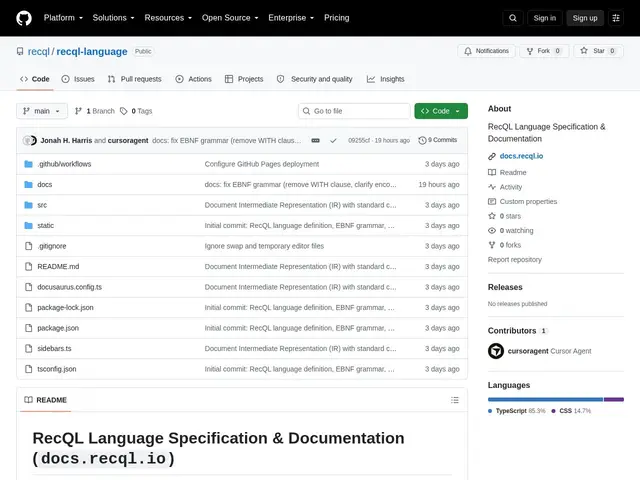
Declarative, SQL-like query language for building recommendation systems and search platforms, compiling to run across PostgreSQL, MongoDB, SQL Server, Oracle, and MariaDB.

#database#open-source#search-engine#data-engineering#api
github.com
📄 Full details →
💬 Review

The short version: an ambitious, technically sound idea — one query language for recommendation/search logic across five different databases — that's still early enough to require some faith in a young project. There's no direct equivalent doing cross-database declarative recommendation queries with this breadth; the usual alternative is hand-rolling backend-specific query and scoring logic, or adopting a single-vendor recommendation platform that locks you into one database. RecQL's honest risk is maturity: a formal EBNF spec and reference implementations are a serious foundation, but produc…

👥 Target audience

Ingénieurs logiciels construisant des systèmes de recommandation, recherche ou ranking multi-bases.

🌍 Target countries

Marché anglophone international, communauté open source

🗣️ Available languages
EN
🔄 Alternatives
Logique de requête écrite à la main par backendPlateforme de recommandation propriétaire mono-fournisseur
🔗 Visit RecQL
pg-dry-runNew
Databases & Storage🌐 EN

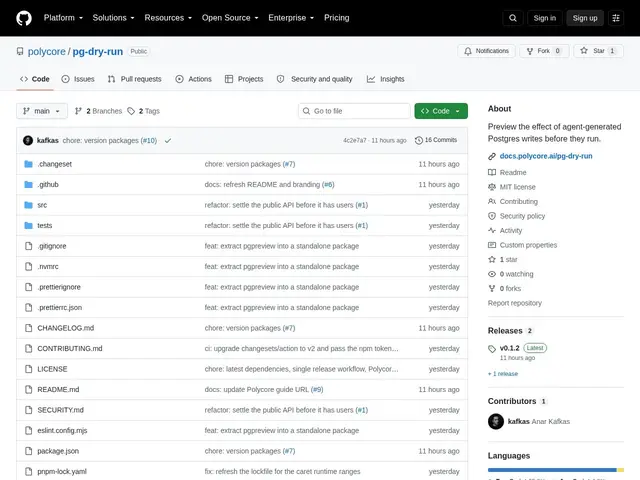
A free, open-source tool that lets AI agents preview exactly what a Postgres write would change — including cascades and constraint hazards — before it actually runs.

#database#ai-agents#sql#open-source#free
github.com
📄 Full details →
💬 Review

The short version: pg-dry-run addresses a real and underserved safety gap — letting AI agents touch production data without blind trust — and being free, open source, and narrowly focused makes it easy to adopt without much risk. The manual alternative most teams reach for is wrapping writes in a transaction and rolling back to inspect the effect, which works but doesn't give you cascade detection, trigger warnings, or a structured approval workflow the way pg-dry-run does out of the box. Database branching platforms like Neon or PlanetScale solve a related but different problem — giving you …

👥 Target audience

Développeurs d'agents IA, administrateurs de bases de données, équipes conformité

🌍 Target countries

Marché anglophone, communauté développeurs internationale

🗣️ Available languages
EN
🔄 Alternatives
Transactions manuelles avec ROLLBACKNeon (branching de base de données)PlanetScale
🔗 Visit pg-dry-run
SyncleNew
Databases & Storage🌐 EN

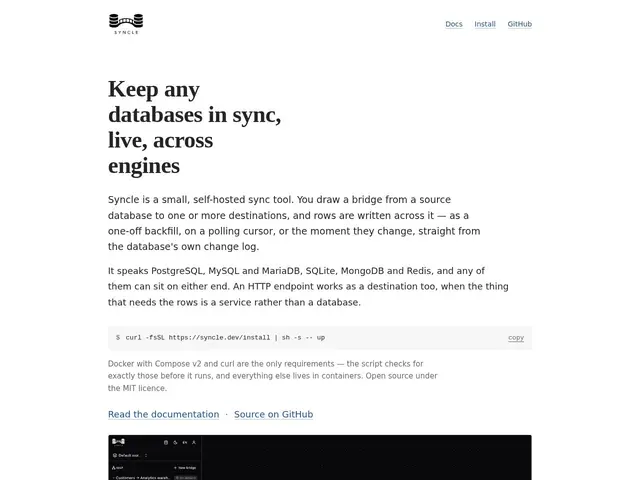
Open-source self-hosted tool for real-time data replication across multiple database engines (PostgreSQL, MySQL, MongoDB, Redis, SQLite, MariaDB). Eliminates need for Kafka or Debezium with lightweight synchronization via CDC, polling, or backfill.

#database#docker#open-source#etl#data-engineering
syncle.dev
📄 Full details →
💬 Review

The short version: Syncle solves a real, common problem — keeping two different databases in sync — without forcing you to stand up Kafka or Debezium just to do it. Its differentiator is breadth and simplicity combined: heterogeneous replication across six database engines with multiple sync strategies (CDC, polling, backfill) in one lightweight, self-hosted Docker package, versus the operational overhead of a full Kafka/Debezium deployment or the recurring cost of a managed service like Airbyte. The honest limitation is that it's built for a single operator or small team, not a multi-user de…

👥 Target audience

Développeurs indépendants et petites équipes cherchant une synchronisation de bases de données légère, sans plateforme de données d'entreprise.

🌍 Target countries

Marché anglophone, développeurs et petites équipes techniques internationales

🗣️ Available languages
EN
🔄 Alternatives
KafkaDebeziumAirbyte
🔗 Visit Syncle
TabularisNew
Databases & Storage🌐 EN

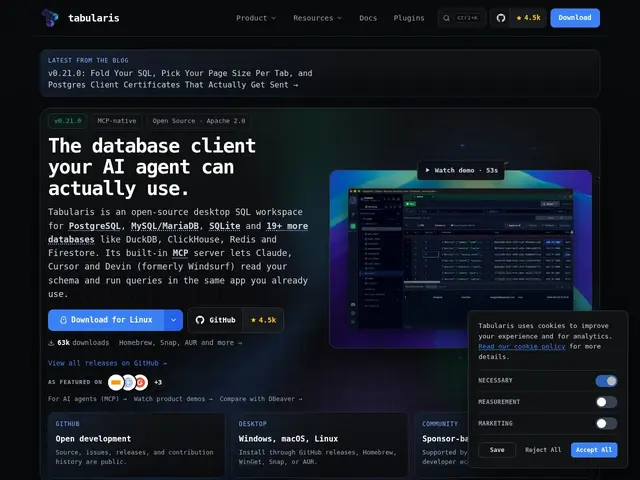
Free, open-source desktop SQL client for Postgres, MySQL, SQLite and 19+ other databases, with a built-in server that lets AI coding agents query your schema safely.

#sql#free#desktop-app#open-source#database
tabularis.dev
📄 Full details →
💬 Review

The short version: Tabularis is a legitimately capable free database client with a real differentiator — native MCP support for AI agents — that established tools like DBeaver and TablePlus don't build in the same way. Against DBeaver, the long-standing free/open-source default, Tabularis is younger and has a smaller plugin ecosystem, but it's purpose-built around the reality that developers now query databases through AI agents as often as by hand — its MCP server means an agent can inspect your schema and run queries without you manually feeding it context. Against TablePlus, a slick paid n…

👥 Target audience

Développeurs, data engineers, et agents IA (utilisateurs de Claude, Cursor, Devin) ayant besoin d'un accès sûr et conscient du schéma à leurs bases de données

🌍 Target countries

International

🗣️ Available languages
EN
🔄 Alternatives
DBeaverDataGripTablePlusBeekeeper Studio
🔗 Visit Tabularis
Valv DesktopNew
Databases & Storage🌐 EN

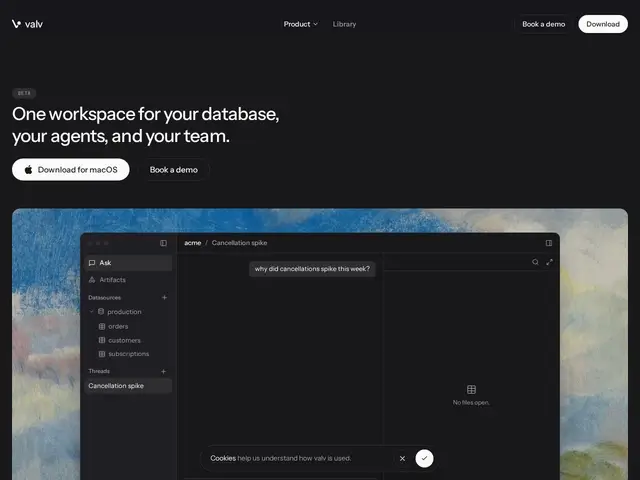
Free macOS desktop app for browsing and querying databases in natural language, built for teams pairing AI coding agents with real data.

#code-editor#database#ai-agents#sql#ai
valv.sh
📄 Full details →
💬 Review

The short version: Valv Desktop is a solid, genuinely local-first database client for teams already working with AI coding agents day to day, but its macOS-only beta status and thin public documentation mean you should treat it as an early-stage tool, not a finished product to bet a workflow on yet. Compared to established database GUIs like TablePlus, DBeaver, or Postico, which have been refined over years and work cross-platform, Valv Desktop's pitch is narrower but more current: natural-language querying and native support for the specific AI coding agents (Claude Code, Cursor, Codex, Grok…

👥 Target audience

Équipes data et utilisateurs d'agents IA (Claude Code, Cursor, Codex, Grok) voulant explorer des bases de données sans multiplier abonnements/clés API

🌍 Target countries

International

🗣️ Available languages
EN
🔄 Alternatives
TablePlusDBeaverPostico
🔗 Visit Valv Desktop
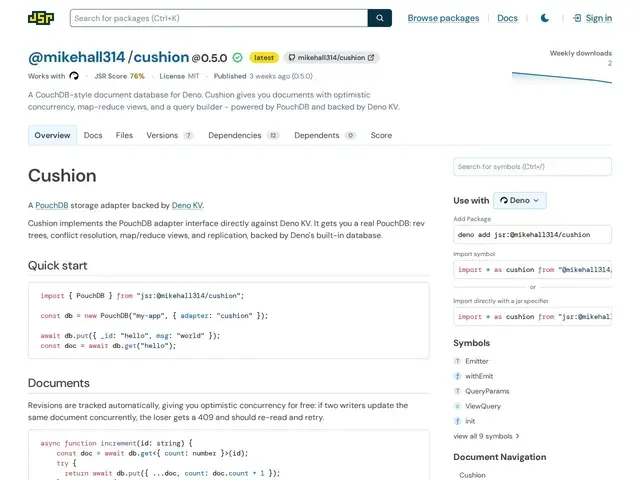
CushionNew
Databases & Storage🌐 EN

CouchDB-style document database library for Deno, built on PouchDB and backed by Deno KV.

#backend#typescript#database#nosql#open-source
jsr.io
📄 Full details →
💬 Review

The short version: if you're already committed to Deno and want a document-database API without standing up a separate CouchDB instance, Cushion is a lightweight, free way to get that — but it's a very young, single-maintainer library, so treat it as an interesting building block rather than a battle-tested production dependency yet. Against running actual CouchDB or PouchDB against IndexedDB in the browser, Cushion's advantage is native Deno KV integration with no extra server to manage; the trade-off is a much smaller community and no track record. If you need a proven document database tod…

👥 Target audience

Développeurs Deno/TypeScript cherchant une base de données documents type CouchDB

🌍 Target countries

International

🗣️ Available languages
EN
🔄 Alternatives
PouchDBCouchDBDeno KV natif
🔗 Visit Cushion
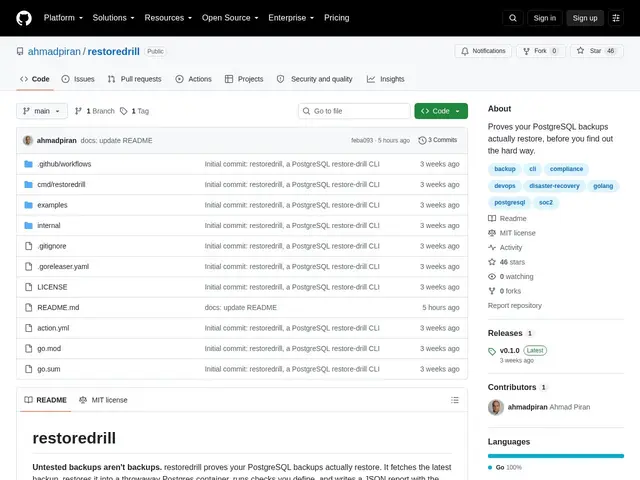
restoredrillNew
Databases & Storage🌐 EN

Automatically restores your latest PostgreSQL backup into a throwaway container and proves it actually works, with an audit-ready report.

#open-source#database#sql#backup#ci-cd
github.com
📄 Full details →
💬 Review

The short version: restoredrill fills a genuinely underserved niche, proving PostgreSQL backups actually restore, with paper trail, cleanly and for free, and it's actively maintained. General backup platforms like Databasus cover more databases (MySQL, MongoDB, MariaDB) with a web UI but don't focus specifically on audit-grade restore proof, while BackupDrill targets Supabase specifically; restoredrill's niche is PostgreSQL-first compliance evidence via CI. Its fail-closed default (an unrunnable check counts as failure, not a silent pass) is exactly the right instinct for anything feeding an …

👥 Target audience

Équipes DevOps/SRE PostgreSQL sous exigences d'audit (SOC2, ISO27001, AWS FTR)

🌍 Target countries

International

🗣️ Available languages
EN
🔄 Alternatives
DatabasusBackupDrill
🔗 Visit restoredrill
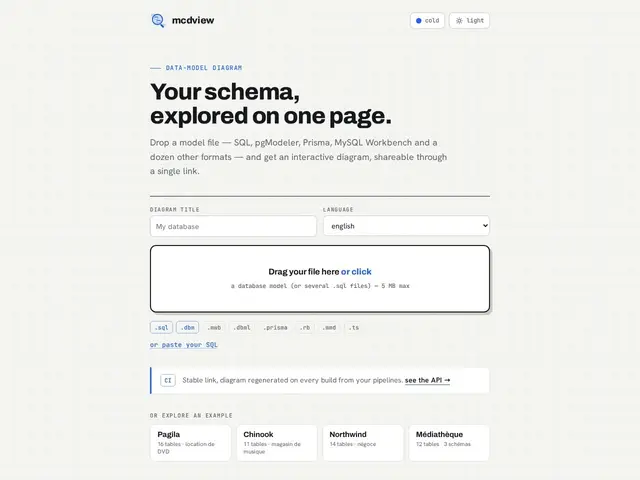
mcdviewNew
Databases & Storage🌐 EN

Drop in a SQL schema, Prisma file, or pgModeler export and get back an interactive, shareable ER diagram — no install, no account needed.

#database#open-source#documentation-tool#api#sql
mcdview.dev
📄 Full details →
💬 Review

The short version: mcdview is a genuinely useful, free, no-friction tool for the specific job of turning a schema file into a diagram you can actually share with a link — worth bookmarking even if you already own a heavier modeling tool. Compared to dbdiagram.io or DrawSQL, which cover similar ground but often gate collaboration or export behind paid tiers, mcdview's free, open-source, no-account model is the clear draw — you lose nothing by trying it on a real schema. Against full database design tools like pgModeler or MySQL Workbench (which it explicitly imports from), mcdview isn't trying…

👥 Target audience

Database developers and engineering teams documenting or sharing schemas

🌍 Target countries

Global

🗣️ Available languages
ENGLISHFRENCH
🔄 Alternatives
dbdiagram.ioDrawSQLpgModelerMySQL Workbench
🔗 Visit mcdview
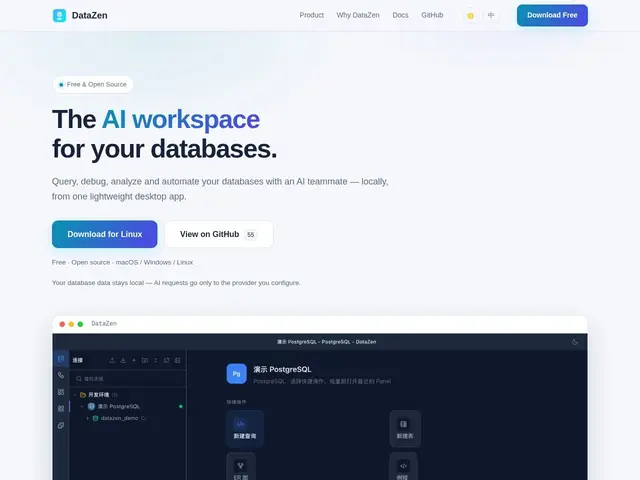
DataZenNew
Databases & Storage🌐 EN

A desktop app for browsing and querying your databases that lets you ask questions in plain English instead of writing SQL, and works the same way whether your data is in Postgres, MySQL, MongoDB, or four other engines at once.

#database#ai#data-visualization#sql#open-source
flyxl.github.io
📄 Full details →
💬 Review

The short version: DataZen's cross-database-in-one-tool pitch plus a genuinely useful AI layer (error diagnosis, index suggestions, natural-language queries) makes it a strong pick if your work spans multiple database engines, and being open source and local-first is the right call for a tool that touches your actual data. Against general-purpose GUI clients like TablePlus or DBeaver, DataZen's AI assistance is the differentiator — those tools are solid at browsing and running queries but don't explain a cryptic Postgres error for you or suggest an index automatically. Against newer AI-native…

👥 Target audience

Backend and full-stack developers who regularly work across more than one database engine.

🌍 Target countries

Global

🗣️ Available languages
ENGLISH
🔄 Alternatives
TablePlusDBeaverOuterbasepgAdmin
🔗 Visit DataZen
AlarikNew
Databases & Storage🌐 EN

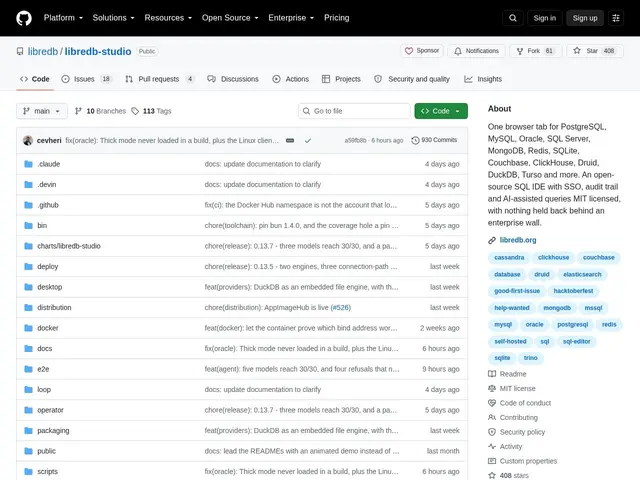
Open-source, self-hosted object storage that speaks the same S3 API as Amazon's cloud storage, so existing tools and scripts work unchanged while your files stay on your own servers.
#object-storage#self-hostable#open-source#devops
alarik.io
📄 Full details →
💬 Review

The short version: Alarik is a technically interesting, genuinely open S3-compatible storage option worth watching if you like the idea of a memory-safe alternative to MinIO, but it's beta software from a young project and MinIO remains the far safer default for anyone who needs self-hosted object storage in production today.

👥 Target audience

Teams building self-hosted cloud infrastructure, developers needing S3-compatible local development storage, and organizations seeking alternatives to expensive cloud storage.

🌍 Target countries

Global

🗣️ Available languages
ENGLISH
🔄 Alternatives
MinIOAWS S3CephSeaweedFSGarage
🔗 Visit Alarik
provensqlNew
Databases & Storage🌐 EN

A formal verification tool that mathematically proves whether a SQL query edit changes the result — not a heuristic guess, a definitive yes-or-no answer.

#open-source#testing#sql#database#ci-cd
github.com
📄 Full details →
💬 Review

The short version: a rare case of a tool that promises certainty and actually delivers it — provensql doesn't guess whether a SQL edit is safe, it proves it or shows you exactly why it isn't, which is a categorically different (and stronger) guarantee than anything based on parsing heuristics or an LLM's opinion. Compared to tools like sqlglot or sqlfluff (which help you parse or lint SQL) or an LLM reviewing a diff, provensql's SMT-solver-backed proof is the real differentiator: a formal EQUIVALENT verdict is something you can trust in a way a linter's pass or an LLM's 'looks fine to me' nev…

👥 Target audience

Équipes data engineering utilisant dbt/BigQuery et voulant valider automatiquement les changements de requêtes SQL

🌍 Target countries

Worldwide

🗣️ Available languages
EN
🔄 Alternatives
sqlglotsqlfluffdbtrelecteurs LLM
🔗 Visit provensql
LatticeDBNew
Databases & Storage🌐 EN

An embedded, single-file database that combines graph relationships, vector similarity search, and full-text search — built for local AI, RAG, and agent-memory apps.

#database#vector-database#search-engine#open-source
github.com
📄 Full details →
💬 Review

The short version: a genuinely useful piece of infrastructure if you're building a local-first RAG system, knowledge tool, or agent-memory layer and don't want to run separate graph, vector, and search-index servers — the honest trade-off is you're picking a young, single-file engine over mature, battle-tested standalone databases. Combining graph traversal, vector search, and full-text search in one embedded file is the real differentiator versus running Neo4j, a vector database (Qdrant/Weaviate/LanceDB), and a search engine separately — for local or single-machine apps, that's a meaningful …

👥 Target audience

Développeurs construisant des applications RAG, des bases de connaissances ou des systèmes de mémoire d'agents IA en local

🌍 Target countries

Worldwide

🗣️ Available languages
EN
🔄 Alternatives
Neo4jPostgreSQLSQLiteWeaviateQdrant
🔗 Visit LatticeDB
CueMapNew
Databases & Storage🌐 EN

A deterministic, Rust-built memory engine for AI agents, offering sub-millisecond recall over millions of stored memories.

#vector-database#database#open-source#self-hosting
github.com
📄 Full details →
💬 Review

The short version: a technically serious piece of infrastructure if you're building AI agents that need genuinely reliable, fast, contextual memory rather than a generic vector-search bolt-on — the determinism and sub-millisecond recall claims are the differentiators worth verifying yourself on your own workload. Compared to general-purpose vector databases (Pinecone, Weaviate, Chroma) that store embeddings and let you handle recall logic yourself, CueMap bakes in the memory-specific ranking (recency, reinforcement, contextual cues) as a first-class feature rather than something you build on …

👥 Target audience

Développeurs d'agents IA et équipes construisant des systèmes RAG auto-hébergés

🌍 Target countries

Worldwide

🗣️ Available languages
EN
🔄 Alternatives
PineconeWeaviateChroma
🔗 Visit CueMap
DBLiftNew
Databases & Storage🌐 EN

A database migration and release-safety platform for Python teams — preview SQL, validate state, and add review checks before running migrations.

#database#sql#open-source
dblift.com
📄 Full details →
💬 Review

The short version: a safety-first take on database migrations for Python teams who've been burned by a migration script doing something unexpected in production — the 'preview before execute' and evidence-reporting angle is the real differentiator over just running Alembic or Django migrations blind. Alembic (for SQLAlchemy) and Django's built-in migrations are the default free tools most Python teams already use, and they don't include DBLift's review/evidence layer out of the box — DBLift's open-source core sits on top of that same territory, with the Pro/Enterprise tier adding the governan…

👥 Target audience

Équipes Python gérant des migrations de base de données en production

🌍 Target countries

Worldwide

🗣️ Available languages
EN
🔄 Alternatives
AlembicDjango migrations
🔗 Visit DBLift
Weavit UINew
Databases & Storage🌐 EN

A free, open-source cross-platform desktop GUI for the Weaviate vector database with collection browsing, search, and management capabilities.

#desktop-app#database#open-source#vector-database
github.com
📄 Full details →
💬 Review

The short version: if you work with Weaviate regularly and don't want to live in the CLI or write throwaway scripts just to peek at your data, Weavit UI is a solid, no-cost desktop client — it's not flashy, but it covers the essentials well and doesn't get in your way. Weaviate already ships a free official web console, Weaviate Studio, so Weavit UI isn't filling a total void — it's competing with a browser tab. The real case for it is being a native desktop app: no tab to lose, faster for repeated local work, and built as an independent open-source project rather than a first-party tool tied…

👥 Target audience

Développeurs et ingénieurs ML qui utilisent Weaviate comme base de données vectorielle et préfèrent une interface graphique à la ligne de commande ou à l'API pour gérer leurs collections, objets et recherches.

🌍 Target countries

Worldwide

🗣️ Available languages
EN
🔄 Alternatives
Weaviate StudioQdrant DashboardMilvus Attu
🔗 Visit Weavit UI
DBackup
Databases & Storage🌐 EN

A free, self-hosted tool that automatically backs up your databases and files, encrypts them, and ships them off to cloud storage on a schedule — the boring, essential job most self-hosters put off until they lose something.

#backup#database#self-hosting#open-source#security
github.com
📄 Full details →
💬 Review

The short version: DBackup's feature list reads like it was built by someone who's actually been burned by a bad backup strategy before — multi-database support, real encryption, a proper retention model, and a web UI for restores cover the things generic backup scripts usually get wrong or skip entirely. The database breadth (nine engines, including less commonly supported ones like Firebird and Azure SQL) is unusual for a self-hosted tool at this scale, and pairing that with proper GFS retention and nine cloud/protocol destinations means it's genuinely trying to be a complete backup platfor…

👥 Target audience

Admins système/DevOps qui auto-hébergent plusieurs bases de données et veulent une automatisation de backup unifiée

🌍 Target countries

Worldwide

🗣️ Available languages
EN
🔄 Alternatives
ResticBorgDuplicati
🔗 Visit DBackup
turbovec
Databases & Storage🌐 EN

A free, open-source vector search library that finds similar items (for AI search, recommendations, RAG) faster and using far less memory than the previous standard, FAISS.

#vector-database#rust#open-source#rag
github.com
📄 Full details →
💬 Review

The short version: if you're building a RAG system or any semantic search feature and currently default to FAISS out of habit, turbovec is worth a serious look — its own benchmarks claim roughly 3.4x faster search than FAISS's comparable quantized index, with better memory efficiency. The core differentiator is architectural: FAISS generally requires a training step to build its index structure before you can search, which is awkward for systems where data keeps arriving; turbovec's online ingestion means you can add vectors and search immediately. The 16x compression ratio and SIMD accelerat…

👥 Target audience

Développeurs construisant des systèmes RAG ou de recherche sémantique nécessitant vitesse et efficacité mémoire

🌍 Target countries

Worldwide

🗣️ Available languages
EN
🔄 Alternatives
FAISS
🔗 Visit turbovec
Gogress
Databases & Storage🌐 EN

A small, from-scratch SQL database written in Go, built around write-ahead logging for crash recovery — an educational project, not a production database.

#open-source#cli#database#go#sql
github.com
📄 Full details →
💬 Review

The short version: Gogress is a well-structured educational project for understanding database internals (WAL, crash recovery) in Go — not something to run in production, but a solid read or starting point if you're building your own storage engine. Compared to production embedded databases like SQLite or BoltDB, Gogress is intentionally minimal — its value is in the clarity of its WAL and crash-recovery implementation, not in feature completeness or battle-tested reliability. If you need an actual embedded database for an application, SQLite is the safe, mature choice; if you're studying how…

👥 Target audience

Développeurs Go étudiant les internals de bases de données, projets pédagogiques, hobbyistes systèmes

🌍 Target countries

Worldwide

🗣️ Available languages
EN
🔄 Alternatives
SQLiteBoltDB
🔗 Visit Gogress
Pluton
Databases & Storage🌐 EN

Self-hosted, open-source backup tool with end-to-end encryption and support for 70+ cloud storage providers.

#open-source#self-hosting#free#backup#encryption
usepluton.com
📄 Full details →
💬 Review

The short version: Pluton is a well-built, free wrapper around Restic that makes multi-provider, encrypted backups much easier to set up and monitor than driving Restic by hand from the command line. Against a commercial backup service like Backblaze's own client or Duplicati, Pluton's advantages are that it's fully free and open-source, supports 70+ storage providers rather than being tied to one vendor, and layers in notifications and a lightweight footprint that fits homelab and embedded hardware well. Because it's built on Restic, it inherits Restic's proven, well-audited encryption and d…

👥 Target audience

Utilisateurs homelab et petites infrastructures voulant des sauvegardes chiffrées multi-fournisseurs

🌍 Target countries

International

🗣️ Available languages
EN
🔄 Alternatives
ResticDuplicatiBackblaze
🔗 Visit Pluton
DbGate
Databases & Storage🌐 EN

Unified database client for 16+ engines (PostgreSQL, MySQL, MongoDB, SQL Server…) with a free community edition.

#database#ai#sql#open-source#nosql
github.com
📄 Full details →
💬 Review

The short version: DbGate is a strong, genuinely free-to-start alternative to DBeaver or TablePlus if you regularly jump between different database engines and want AI-assisted querying without paying for it upfront. Against DBeaver, the long-standing free multi-database client, DbGate's edge is a more modern interface and built-in AI chat for querying databases in natural language, though DBeaver has a larger plugin ecosystem and longer track record. Against paid tools like TablePlus or Navicat, DbGate's community edition covers a comparable range of databases for free, with Premium ($12-15/…

👥 Target audience

Développeurs et équipes gérant plusieurs bases de données différentes

🌍 Target countries

International

🗣️ Available languages
EN
🔄 Alternatives
DBeaverTablePlusDataGripNavicat
🔗 Visit DbGate
Loading...