Community-governed, truly open-source secrets manager — a Linux Foundation fork of Vault, born when Vault went source-available.
openbao.org
240 tools found
Community-governed, truly open-source secrets manager — a Linux Foundation fork of Vault, born when Vault went source-available.
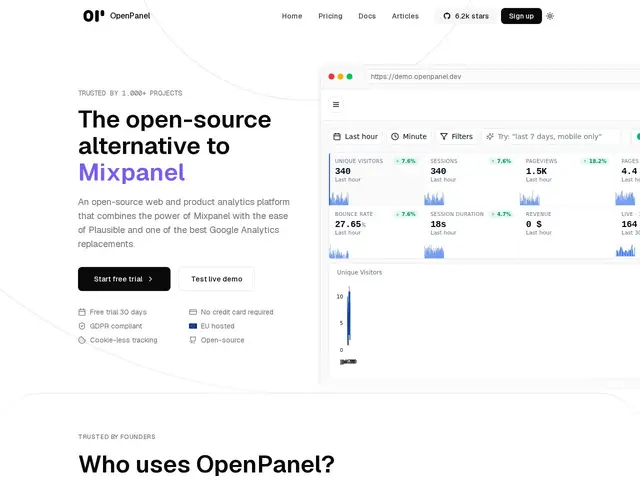
Open-source product + web analytics: funnels, cohorts, session replay and revenue tracking, self-hostable for free.
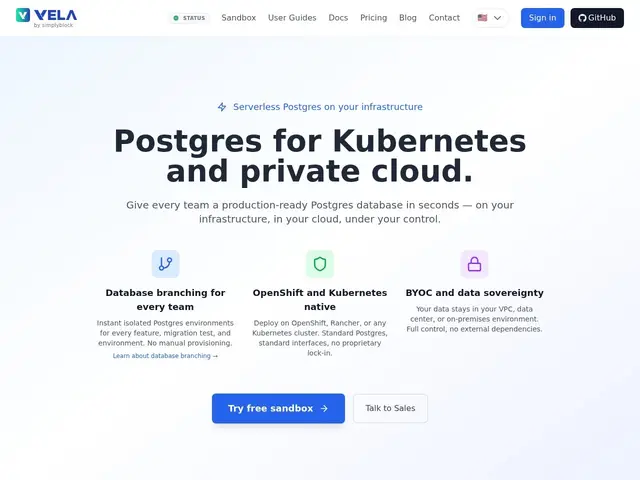
Serverless, Git-style branchable PostgreSQL platform for Kubernetes and private cloud, built on distributed NVMe storage for instant, full-copy database branches.
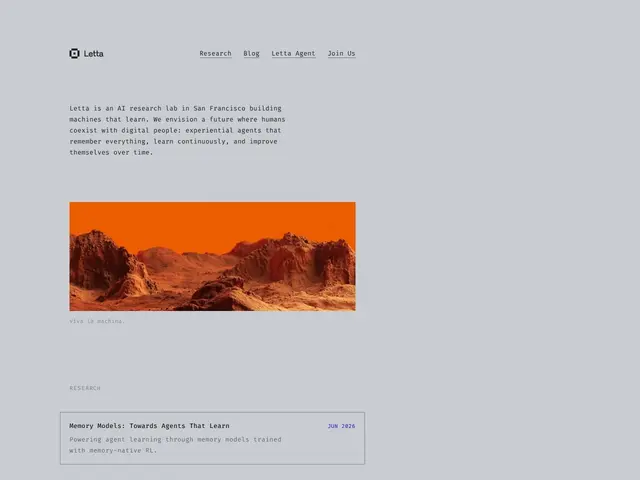
An open-source framework for building AI agents that keep their state and memory under your own control — self-hostable, built on academic research (MemGPT) — instead of relying on a third-party's hosted black box.
A Slack/Discord-style team chat app you can run yourself on a single 50MB file, so your conversations live on your own server instead of someone else's cloud.
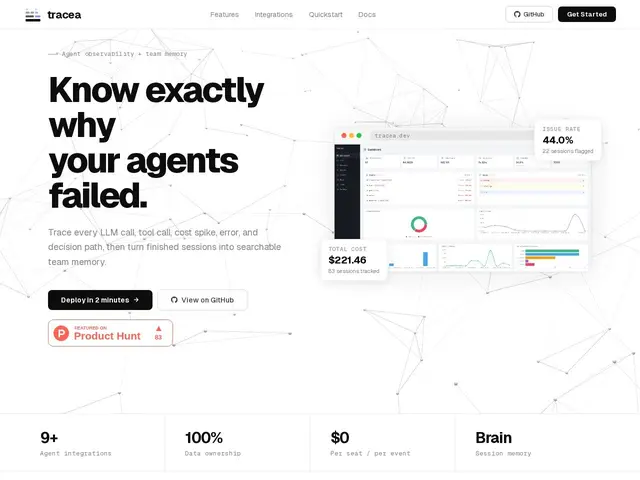
A free, self-hosted dashboard that shows you exactly what your AI agents did, why they cost what they cost, and where they broke.
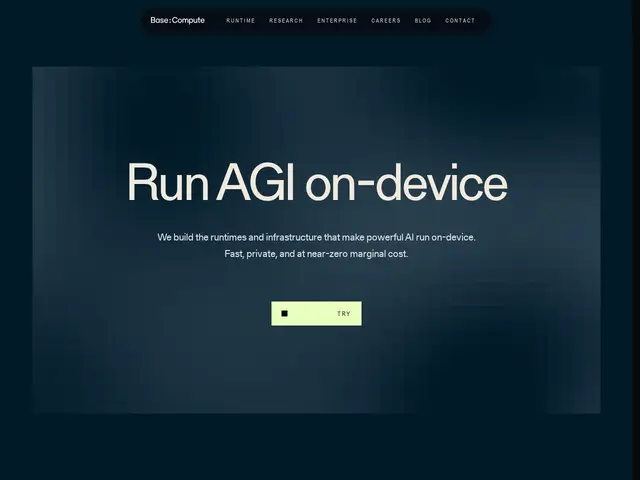
BaseRT runs AI language models directly on your Mac's own chip instead of a data center — once it's running, there's no per-message bill because there's no server in the loop at all.
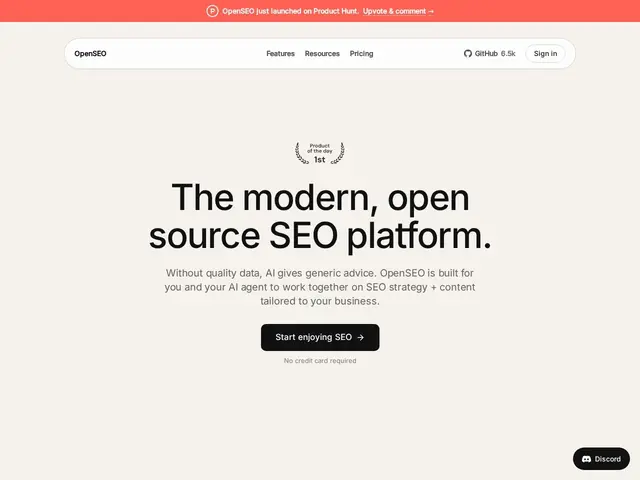
OpenSEO does the same keyword research and backlink checking as Ahrefs, but it's open source and starts at $10/month instead of $129 — self-host it for free if you don't mind running your own server.
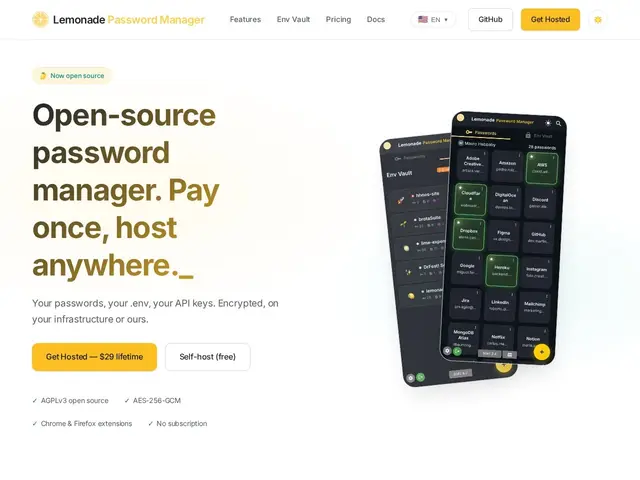
A password manager built by a developer, for developers — it stores your regular logins alongside the messier stuff, like .env files and API keys, that most password managers weren't really designed to hold.
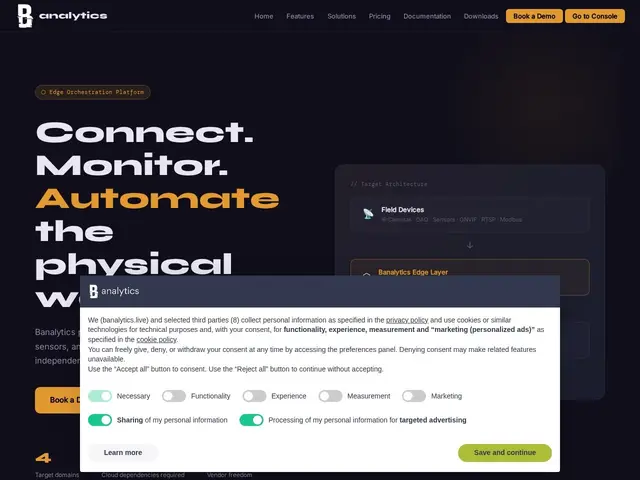
A control panel for the physical stuff a business runs on — cameras, sensors, machines — that keeps the data on your own hardware instead of shipping it to someone else's cloud.
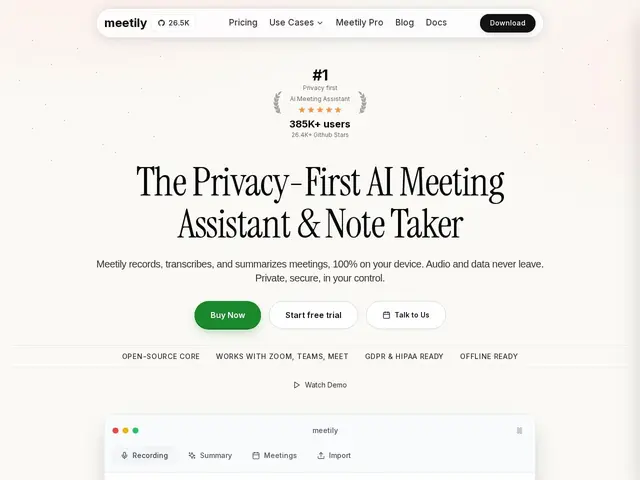
An AI note-taker for meetings that transcribes and summarizes everything on your own computer instead of uploading the recording to someone else's server — built for people who can't risk sensitive conversations leaving their infrastructure.
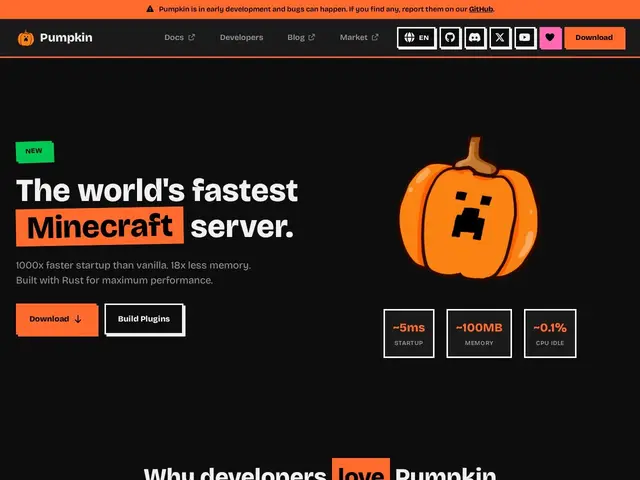
A free program that lets you run your own Minecraft server, rebuilt from scratch to be faster and lighter on your computer's resources than the official server software.
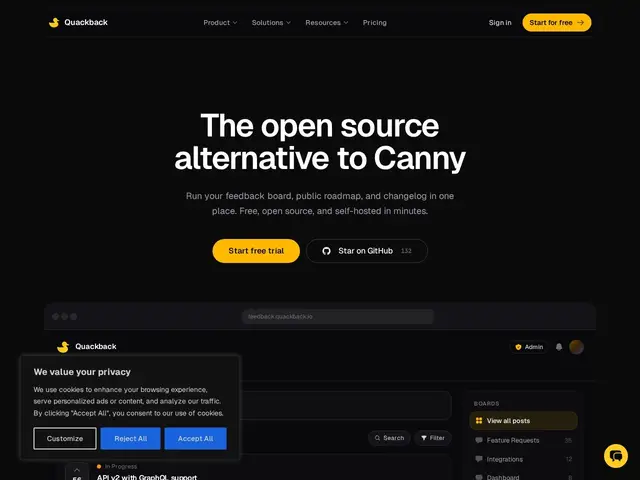
A place for customers to post feature requests and vote on them, with an open-source option so you can run the whole thing on your own servers instead of paying a SaaS forever for what is, underneath, a fairly simple voting board.
Tailscale makes it painless to connect all your devices into a private network, but it runs through Tailscale's own servers — Headscale is the same idea with the control server running on your own machine instead, so no company sits in the middle.
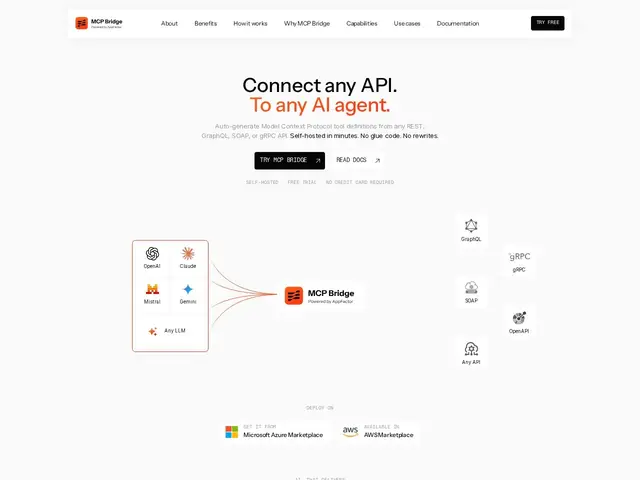
A translator that sits in front of your existing company APIs — the REST endpoints your backend already has — and automatically turns them into tools an AI agent like Claude or GPT can call, without anyone rewriting those APIs.
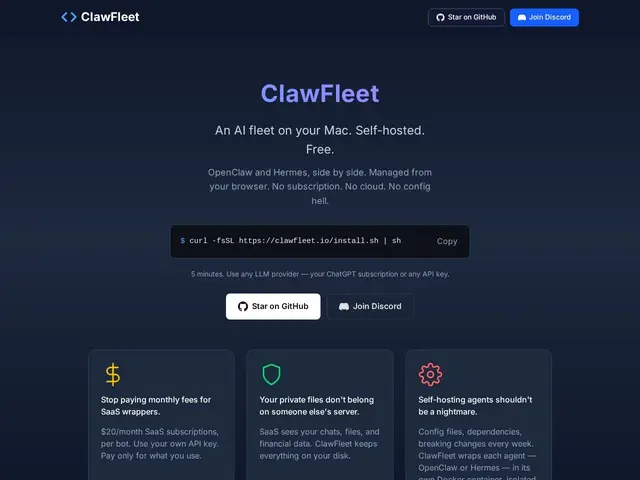
A free, open-source tool that lets you run a whole team of AI agents on your own computer instead of paying for cloud AI-agent hosting, with a simple dashboard to watch and control them all.
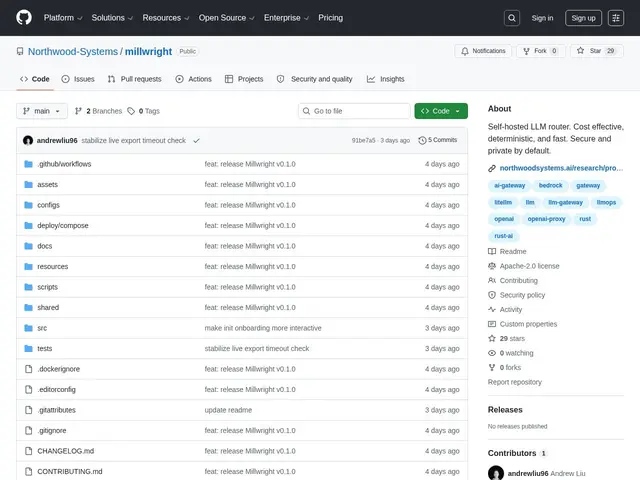
A free, open-source tool you run yourself that sits between your app and AI providers like OpenAI or Anthropic, automatically picking the cheapest model that can do the job and switching providers if one goes down.
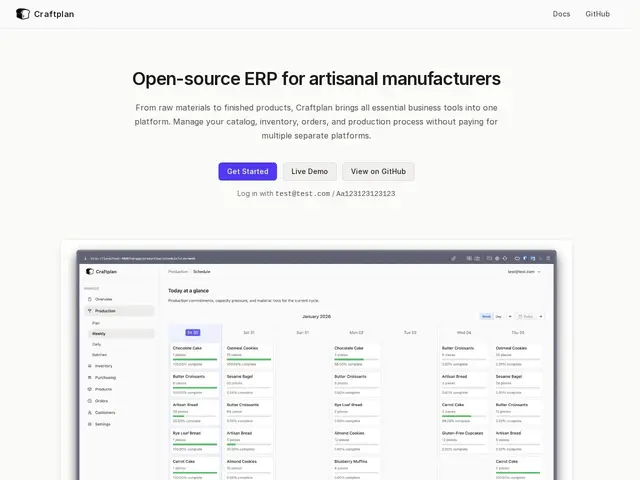
Free, self-hosted software that helps small bakeries and craft manufacturers plan production, track ingredients, and manage orders instead of juggling spreadsheets.
A backend-in-a-box for building apps and AI agents that need a database, file storage, real-time updates, and their own APIs — similar to Firebase or Supabase, but built with AI agents as first-class users, not just an afterthought.
A private app-store-style catalog a company can run behind its own firewall, where teams publish and reuse pre-built 'skills' for their AI agents instead of every team quietly rebuilding the same capability from scratch.