Butterbase
A backend-in-a-box for building apps and AI agents that need a database, file storage, real-time updates, and their own APIs — similar to Firebase or Supabase, but built with AI agents as first-class users, not just an afterthought.
🔗 Visit Butterbase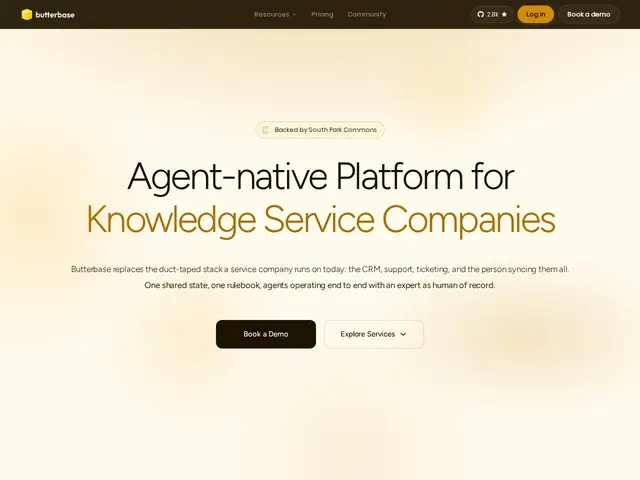
Description
Building any real app or AI agent product means stitching together a database, authentication, file storage, background jobs and often several other business tools like a CRM or invoicing system — usually from different vendors that don't talk to each other well. Butterbase packages the technical building blocks into one backend, and its bigger pitch is unifying the surrounding business tools too, so a company can run from one shared system instead of five disconnected ones.
Butterbase is an open-source (Apache 2.0, 2,800+ GitHub stars) backend-as-a-service with a PostgreSQL data plane (row-level security included), Deno-based serverless functions, a key-value store with TTL and audit trails, S3/R2-backed file storage, realtime WebSocket subscriptions, an AI gateway for chat and embeddings with RAG support, and a built-in MCP server for agent integration. It's used by 1,000+ businesses according to its case studies (law firms, consulting, real estate, security), with pricing running from a free Playground tier ($0/month, 500MB database, 10K MAUs) through Launch ($19/month) and Certified ($90/month) to a custom Enterprise tier, plus usage-based overages for AI credits, storage and bandwidth.
💬 Our review
The short version: Butterbase covers the same technical ground as Firebase or Supabase — database, auth, functions, storage, realtime — but adds an AI gateway and MCP server as native pieces rather than bolted-on extras, which matters if AI agents are a core part of what you're building rather than a side feature.
Against Supabase specifically (the closer comparison, since both are Postgres-based and open-source), Butterbase's pricing starts a bit higher at the paid tiers ($19/month Launch vs Supabase's $25/month Pro is actually competitive, but the credit-based overage system for AI usage adds complexity Supabase's flatter pricing doesn't have). The bigger differentiator is Butterbase's stated ambition to also replace fragmented business tools like CRM, ticketing and invoicing — a much larger scope than Firebase or Supabase ever claimed, and one worth being skeptical of until it's proven out further than the current case studies suggest. For a straightforward app backend, Supabase's larger ecosystem and longer track record are the safer default; for a team specifically building AI-agent products who want the backend and the AI gateway to be the same system, Butterbase's agent-native design is a genuine differentiator worth evaluating on the free Playground tier first.
💰 Pricing
📊 Global score
🤖 AI-enriched data
Playground gratuit (500 Mo DB, 10K MAU, 1$ de crédits IA). Launch : 19$/mois. Certified : 90$/mois. Enterprise : sur devis. Dépassements facturés à l'usage (stockage, bande passante, crédits IA).
Pros
Passerelle IA et serveur MCP natifs, pas des ajouts a posteriori
Open-source (Apache 2.0), pas de lock-in propriétaire
Base PostgreSQL avec row-level security intégrée
Déjà utilisé par 1000+ entreprises selon les études de cas publiées
Cons
Système de crédits IA plus complexe que la tarification plate de Supabase
Ambition d'unifier CRM/facturation/support encore à prouver
Écosystème et historique plus courts que Supabase/Firebase