Learning & Documentation

71 tools

learn Learning & Documentation71 tools curated by the community. Most popular: Academa, Flostep, SlideOps. Each tool comes with a review, tags and alternatives to help you choose.

❓ Frequently asked questions about Learning & Documentation

What is Learning & Documentation?

Learning & Documentation groups 71 tools curated by the mySelectas community. Most popular: Academa.

What are the best free Learning & Documentation tools?

mySelectas lists several free options in this category. See in particular: Academa, Flostep, SlideOps.

What is the best alternative to Academa?

Discover alternatives to Academa on mySelectas. See all alternatives →

71 tools
AcademaNew
Learning & Documentation🌐 EN

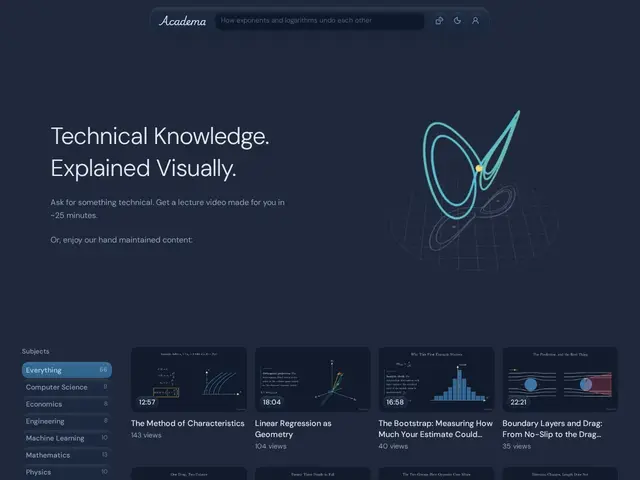
AI-generated STEM lecture videos, maintained and updated like code rather than static recordings, covering eight technical disciplines.

#learning#courses#generative-ai#ai#freemium
academa.ai
📄 Full details →
💬 Review

The short version: an interesting bet on treating educational video as an editable, regenerable asset instead of a fixed recording — genuinely novel, but still unproven against far larger, established libraries. Against Khan Academy, Coursera, or MIT OpenCourseWare, Academa can't yet compete on catalog breadth — 66 free lectures is a small fraction of what those platforms offer. Its real pitch is the "lecture as code" idea: content that stays current and can be regenerated in other languages on demand, which established platforms with human-recorded content structurally can't match as cheaply…

👥 Target audience

Étudiants et apprenants cherchant une formation technique dans des disciplines STEM.

🌍 Target countries

Marché anglophone international

🗣️ Available languages
EN
🔄 Alternatives
Khan Academy (gratuit, catalogue plus large)CourseraMIT OpenCourseWareUdemy
🔗 Visit Academa
FlostepNew
Learning & Documentation🌐 EN

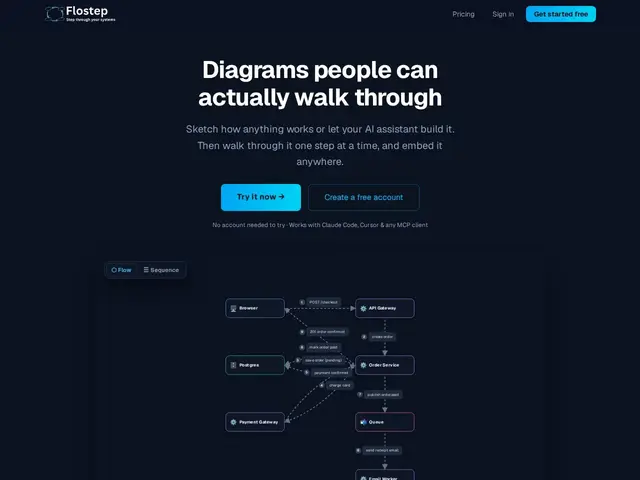
A browser-based tool for building interactive, step-through system diagrams that walk viewers through how a system works one step at a time, embeddable in Confluence, Notion, and blogs.

#freemium#productivity#documentation-tool#collaboration#saas
flostep.dev
📄 Full details →
💬 Review

The short version: Flostep's step-through interactivity is a genuinely different approach from static diagramming tools, and it's worth trying for system-design documentation or interview prep specifically — the free plan makes that low-risk. Excalidraw and tldraw are the popular free/open-source options for quick sketching, but they're static canvases — nothing walks a viewer through the diagram step by step the way Flostep does. Lucidchart and Miro are the established enterprise diagramming and whiteboarding tools, with far broader feature sets (templates, real-time multi-user editing, inte…

👥 Target audience

Ingénieurs logiciels, architectes système, tech leads — préparation d'entretiens, documentation, onboarding

🌍 Target countries

Marché anglophone, développeurs internationaux

🗣️ Available languages
EN
🔄 Alternatives
ExcalidrawLucidchartMiro
🔗 Visit Flostep
SlideOpsNew
Learning & Documentation🌐 EN

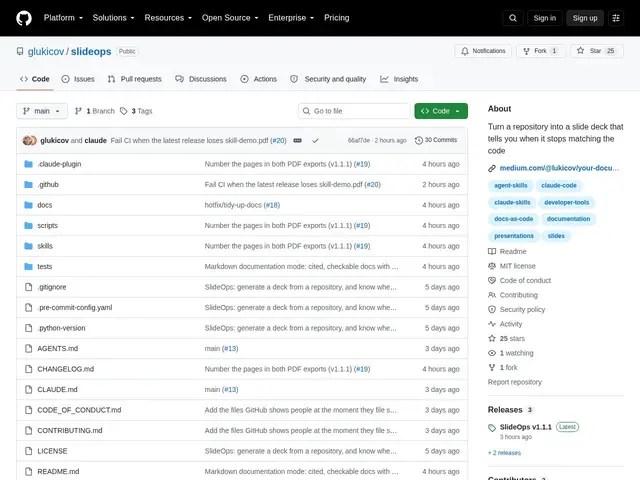
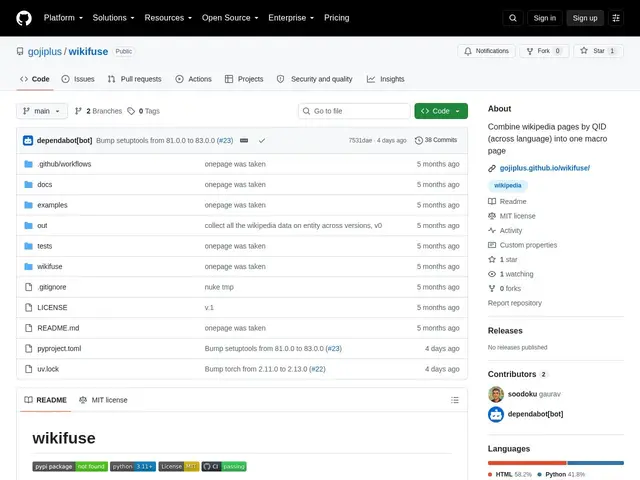
Open-source tool that generates slide decks directly from a code repository and automatically flags slides whose code citations have gone stale, so documentation decks don't quietly drift from the actual codebase.

#ci-cd#git#docs#documentation-tool#open-source
github.com
📄 Full details →
💬 Review

The short version: SlideOps solves a small but real and unglamorous problem — decks and diagrams that silently go stale — and does it for free with a CI integration that catches drift automatically instead of relying on someone remembering to update a slide. General presentation tools like Google Slides, PowerPoint, or even developer-favorite Marp have no concept of "this code citation is now wrong" — they're static documents with zero connection to the repo they describe. SlideOps' actual differentiator is treating a deck as a build artifact with automated freshness verification, which is cl…

👥 Target audience

Équipes de développement utilisant Claude Code ou des agents IA compatibles, cherchant une documentation technique fiable

🌍 Target countries

Marché anglophone, communauté développeurs open source internationale

🗣️ Available languages
EN
🔄 Alternatives
Google SlidesMicrosoft PowerPointMarp
🔗 Visit SlideOps
KisoNew
Learning & Documentation🌐 EN

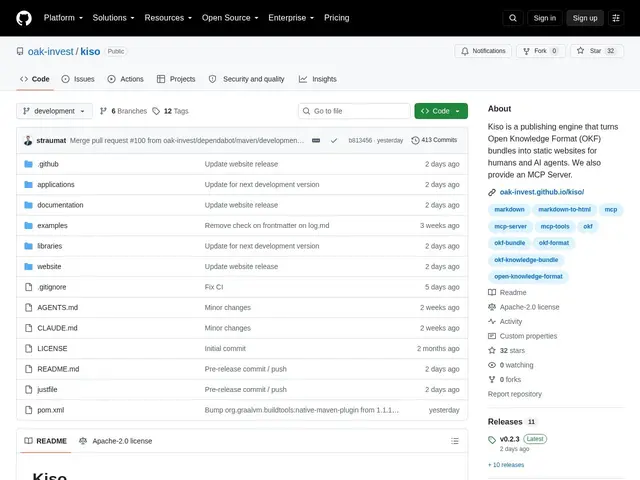
A publishing engine that transforms Open Knowledge Format (OKF) bundles into static websites for humans and exposes them to AI agents via Model Context Protocol (MCP). Includes both CLI tools and MCP server for knowledge distribution and automated CI/CD i

#ai-agents#knowledge-base#cli#open-source#self-hostable
github.com
📄 Full details →
💬 Review

The short version: Kiso is a clever, timely idea — one knowledge base that serves both your team's browser tabs and their AI agents — but it's early enough that you're adopting a young open-source project, not a mature platform. Its real differentiator against Docusaurus or MkDocs is the built-in MCP server: instead of just publishing readable pages, it makes the same content queryable by Claude, Cursor, or any MCP-compatible agent out of the box, which none of the established static-site generators do natively. That said, it demands buy-in to the Open Knowledge Format standard and a Java too…

👥 Target audience

Créateurs de bases de connaissances, équipes techniques utilisant des workflows CI/CD, organisations qui intègrent des assistants IA, développeurs de systèmes de gestion de connaissances.

🌍 Target countries

Marché anglophone, écosystème développeurs/open source international

🗣️ Available languages
EN
🔄 Alternatives
DocusaurusMkDocsLlamaIndex for RAG systemsGitBook
🔗 Visit Kiso
MurfyNew
Learning & Documentation🌐 EN

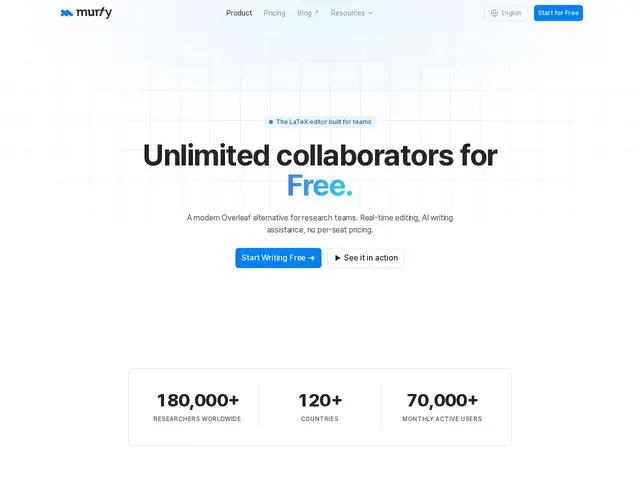
AI-assisted online LaTeX editor for researchers, built as a faster, collaborative alternative to Overleaf.

#docs#collaboration#freemium#learning#ai
murfy.ai
📄 Full details →
💬 Review

The short version: if you already use Overleaf and mainly want it faster with an AI assistant that fixes your compile errors instead of making you decode them, Murfy is a direct, reasonable swap. Overleaf remains the default for a reason — it's the most widely used LaTeX editor in academia and every co-author already has an account — so Murfy's pitch has to be materially better, and the claimed 2x compile speed plus built-in AI review are the real differentiators rather than marketing fluff. Pricing is competitive: a genuinely usable free tier (1,000 AI credits/month) and a Pro tier priced in…

👥 Target audience

Chercheurs et équipes académiques rédigeant des articles scientifiques

🌍 Target countries

International

🗣️ Available languages
EN
🔄 Alternatives
Overleaf
🔗 Visit Murfy
MkteroNew
Learning & Documentation🌐 EN

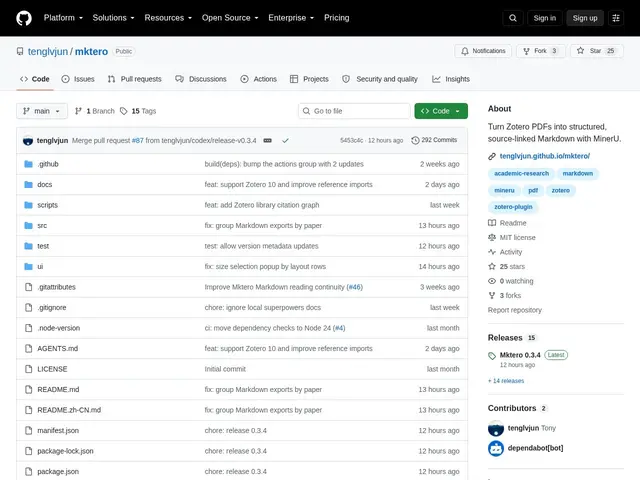
Zotero extension that converts academic PDFs into structured, source-linked Markdown notes.

#open-source#knowledge-base#productivity#learning#note-taking
github.com
📄 Full details →
💬 Review

The short version: if you're a researcher who lives in Zotero and wants your PDF highlights and notes in clean, portable Markdown instead of being trapped in a PDF viewer, Mktero does exactly that for free, and the ability to click back from a note to its exact source page is genuinely useful for citation-heavy writing. Compared to just exporting Zotero notes manually or using a general PDF-to-Markdown tool like Pandoc, Mktero is built specifically for the academic workflow — it understands citations, figures, and page mapping in a way generic converters don't. The trade-off is that it's a yo…

👥 Target audience

Chercheurs et étudiants utilisant Zotero pour gérer leurs sources académiques

🌍 Target countries

International

🗣️ Available languages
EN
🔄 Alternatives
ObsidianPandocZotero (natif)
🔗 Visit Mktero
Atlas:FaceNew
Learning & Documentation🌐 EN

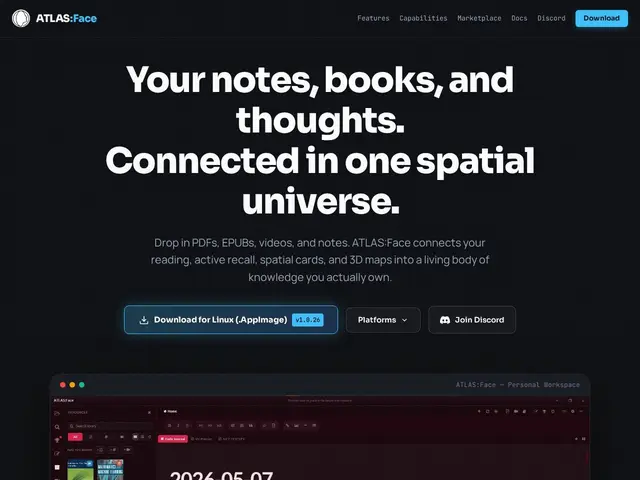
Free, open-source desktop app that turns your notes, PDFs, and videos into a 3D linked knowledge map with built-in spaced-repetition flashcards.

#note-taking#learning#knowledge-base#free#open-source
atlasface.resistancelabs.tech
📄 Full details →
💬 Review

The short version: if you're the kind of learner who actually uses spaced repetition and wants your reading, note-taking, and flashcard creation in one local, free, open-source app instead of three separate subscriptions, Atlas:Face is a genuinely ambitious attempt at that — you just have to accept it's early and unpolished in places. It's competing with a fragmented but well-established field: Obsidian (linked notes, huge plugin ecosystem, free for personal use), Anki (the gold standard for spaced repetition, free and open source), and Notion (all-purpose notes, freemium). Atlas:Face's bet i…

👥 Target audience

Étudiants, chercheurs et apprenants autonomes gérant des sujets complexes, préférant des outils locaux

🌍 Target countries

International

🗣️ Available languages
EN
🔄 Alternatives
ObsidianAnkiNotion
🔗 Visit Atlas:Face
AI Docs Standard (documentation.ai.md)New
Learning & Documentation🌐 EN

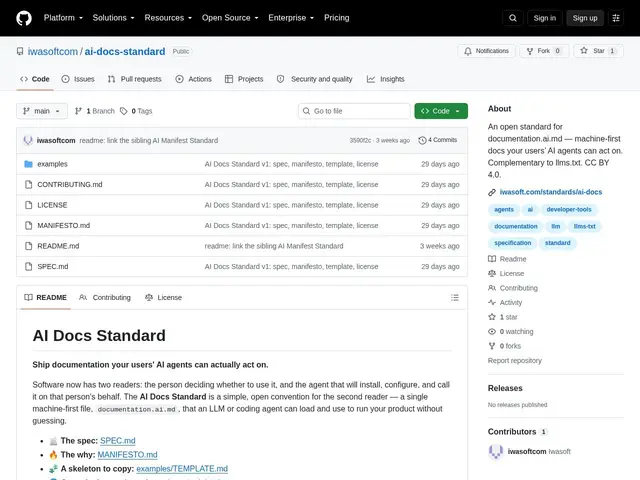
Open standard for a single Markdown file that lets AI agents install, configure, and operate your software without a human reading the docs first.

#open-source#llm#generative-ai#documentation-tool#ai-agents
github.com
📄 Full details →
💬 Review

The short version: this is a genuinely useful idea at an early stage — worth adopting if you're building software you want AI agents to be able to install and operate on their own, but it's a proposal from a single maintainer, not yet an industry-wide standard, so don't expect broad tooling support around it today. The closest comparison is llms.txt, which is already seeing wider adoption for describing a website's content to LLMs; documentation.ai.md is narrower and more operational, focused on install/configure/run instructions rather than general content description, so the two are complem…

👥 Target audience

Mainteneurs de logiciels self-hosted voulant les rendre installables/opérables par des agents IA

🌍 Target countries

International

🗣️ Available languages
EN
🔄 Alternatives
llms.txt
🔗 Visit AI Docs Standard (documentation.ai.md)
TermyNew
Learning & Documentation🌐 EN

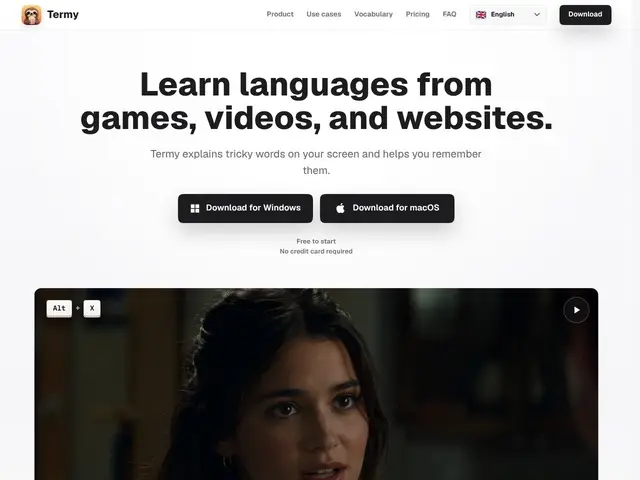
Desktop app for one-keystroke, context-aware word lookups while gaming, watching videos, or browsing, then turns them into FSRS spaced-repetition flashcards, with Anki export. Supports 30 languages.

#freemium#desktop-app#privacy#productivity#learning
termy.ai
📄 Full details →
💬 Review

The short version: Termy solves a real, narrow problem well — looking up a word without leaving the game, video, or app you're in — but it's a companion tool, not a full language-learning system, and the free tier's 20-lookup cap will feel tight for anyone doing serious immersion. Compared to the established players, Termy occupies a specific slot. LanguageReactor and Migaku do deep language-learning inside the browser, mostly for streaming subtitles, and Readlang targets web-page reading specifically — Termy's pitch is broader coverage (any desktop app, game, or window) at the cost of the de…

👥 Target audience

Language learners who engage with native content through games, videos, websites, and other desktop applications

🌍 Target countries

International / English-speaking market, no geographic restriction specified

🗣️ Available languages
30 LANGUAGES SUPPORTED (FULL LIST NOT PUBLICLY DETAILED)
🔄 Alternatives
AnkiLanguageReactorMigakuReadlang
🔗 Visit Termy
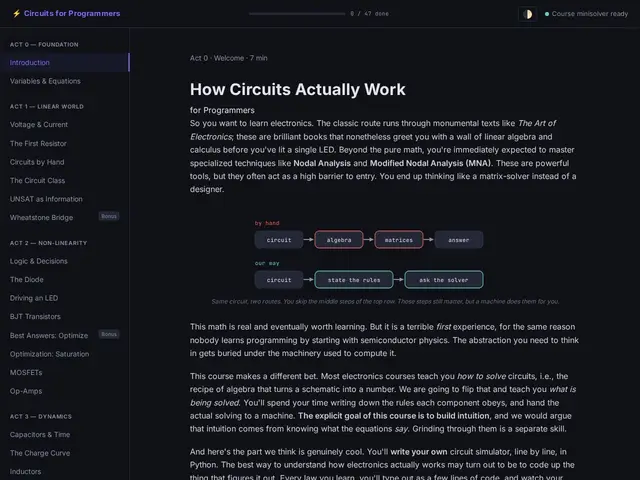
How Circuits Actually Work — for Programmers
Learning & Documentation🌐 EN

A free interactive course that teaches electronics and embedded systems to software developers, from basic circuits to microcontroller integration.

#learning#tutorials#courses#web-app
spicycircuits.dev
📄 Full details →
💬 Review

The short version: if you're a developer who's always nodded along at "it's just Ohm's law" without really knowing what that means, this free interactive curriculum is one of the more approachable ways to actually learn it, built around your existing mental model instead of an EE textbook's. Most electronics education is written for electrical-engineering students and assumes prior vocabulary and math notation. This resource inverts that: it's written for people who already think in loops, state and debugging, and maps electronics concepts onto that frame. The progressive five-act structure w…

👥 Target audience

Développeurs logiciels souhaitant comprendre l'électronique et les systèmes embarqués sans formation d'ingénieur électronique

🌍 Target countries

International (contenu en anglais)

🗣️ Available languages
EN
🔄 Alternatives
freeCodeCamp (modules embarqué)SparkFun tutorialsBen Eater (cours matériel)
🔗 Visit How Circuits Actually Work — for Programmers
Hammer
Learning & Documentation🌐 EN

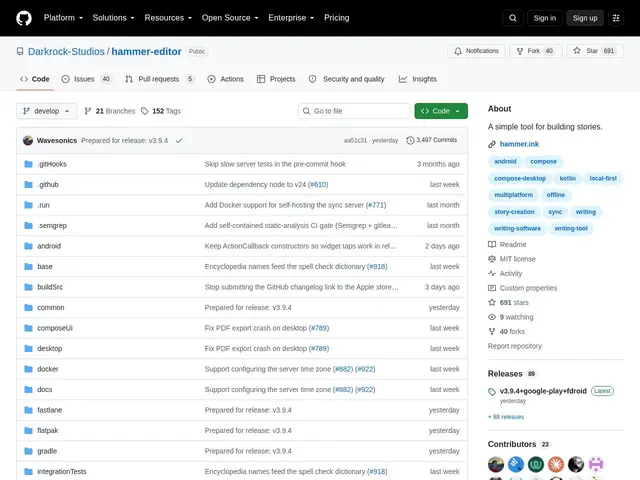
Free, local-first novel-writing app for Android, iOS, Windows, macOS and Linux, storing every scene as a plain text file with optional self-hosted sync.

#open-source#productivity#free#self-hosting#mobile-app
github.com
📄 Full details →
💬 Review

The short version: Hammer's local-first, plain-text-file philosophy is a real differentiator from cloud-native writing tools like Scrivener's newer cloud features or Notion-based writing setups — your manuscript stays as ordinary files you control, not a proprietary database you have to export from. Against Scrivener, the long-standing standard for long-form fiction writing, Hammer is fully free and multiplatform (including mobile) where Scrivener charges per platform and has historically weaker mobile support. Against generic note apps repurposed for writing (Obsidian, Notion), Hammer's buil…

👥 Target audience

Écrivains, romanciers et concepteurs narratifs cherchant un outil local-first transparent et multiplateforme

🌍 Target countries

International

🗣️ Available languages
EN
🔄 Alternatives
ScrivenerObsidianNotion
🔗 Visit Hammer
Vidocu
Learning & Documentation🌐 EN

A tool that takes a screen recording, video, or document you already have and automatically rewrites it into a finished SOP, help article, or training video — one source, multiple polished formats.

#video-editing#ai#internal-tools#documentation-tool#api
vidocu.ai
📄 Full details →
💬 Review

The short version: Vidocu's real value is turning one recording into multiple output formats automatically — video, article, and SOP from a single capture — which is genuinely useful for teams who currently have to make that content two or three separate times by hand; the free tier (4-minute video, 1 article) is enough to see the output quality before paying. Against Guidde, which is squarely video-first, Vidocu's multi-format output (SOPs and help articles alongside video) is the differentiator if written documentation matters as much as video to your team. The pricing jump is steep, though…

👥 Target audience

Organisations voulant produire documentation et formation multi-format sans équipe dédiée vidéo/rédaction

🌍 Target countries

International

🗣️ Available languages
EN
🔄 Alternatives
GuiddeScribeLoom
🔗 Visit Vidocu
Socrati
Learning & Documentation🌐 EN

A mobile app that turns a PDF, video, or your own notes into a structured course you can listen to like a podcast, complete with bite-sized lessons, exercises, and spaced repetition to help it actually stick.

#ai#freemium#learning#courses#mobile-app
socrati.app
📄 Full details →
💬 Review

The short version: if you have source material (a PDF, a recorded lecture, your own messy notes) that you know you should study but never get around to, Socrati's automatic course-and-audio generation removes the biggest barrier — turning raw material into a structured plan — and the free tier (2 active courses) is enough to see whether the format actually works for you before paying $12.99/month. Against Arusto, which targets institutional and corporate L&D teams producing SCORM-compliant training at scale, Socrati is squarely an individual consumer product — simpler, cheaper, and built for …

👥 Target audience

Étudiants en révision d'examens, professionnels en développement de compétences, personnes en déplacement, apprenants de langues

🌍 Target countries

International

🗣️ Available languages
EN
🔄 Alternatives
ArustoScrimbaBlinkist
🔗 Visit Socrati
Scribe
Learning & Documentation🌐 EN

A browser extension that watches you perform a task once and automatically turns it into a step-by-step how-to guide with screenshots, so nobody has to write documentation by hand again.

#internal-tools#saas#browser-extension#automation#documentation-tool
scribe.com
📄 Full details →
💬 Review

The short version: if your team's process documentation currently lives in people's heads or in a Google Doc nobody updates, Scribe's capture-once workflow is one of the fastest ways to fix that — the free tier alone (web apps only) is enough to try it on real onboarding pain before paying anything. Against Guidde or Vidocu, which lean toward polished narrated video output, Scribe stays closer to a classic written step-by-step guide with screenshots, which tends to be faster to scan and easier to keep accurate after a UI changes. Against a plain screen-recording tool like Loom, Scribe's struc…

👥 Target audience

Équipes RH, Finance, Opérations et IT dans des organisations documentant des processus internes et l'onboarding

🌍 Target countries

International

🗣️ Available languages
EN
🔄 Alternatives
GuiddeVidocuLoom
🔗 Visit Scribe
Guidde
Learning & Documentation🌐 EN

A screen recorder that turns a workflow capture into a polished tutorial video automatically, adding an AI voiceover, captions, and highlights, so you skip the editing and narration work entirely.

#video-editing#ai#enterprise#documentation-tool#internal-tools
guidde.com
📄 Full details →
💬 Review

The short version: if your team needs polished training videos but nobody has time to actually edit video, Guidde's automatic voiceover-and-caption pipeline removes the single biggest bottleneck in tutorial creation, and the free 25-video tier is generous enough to genuinely test the workflow before paying. Against Vidocu, which leans toward converting recordings into written SOPs and help articles, Guidde stays firmly video-first with AI narration as its core value proposition. Against Scribe, which produces text-and-screenshot guides instead of video, Guidde is the right pick specifically w…

👥 Target audience

Entreprises et équipes documentant des workflows pour l'onboarding, la formation client et les SOP sur des logiciels complexes

🌍 Target countries

International

🗣️ Available languages
EN
🔄 Alternatives
VidocuScribeLoom
🔗 Visit Guidde
FlashCards.dev
Learning & Documentation🌐 EN

A flashcard app that schedules reviews based on how well you actually remember something (spaced repetition), so you spend study time on what you keep forgetting instead of re-reading what you already know.

#web-app#free#learning#productivity#courses
flashcards.dev
📄 Full details →
💬 Review

The short version: if you've tried to memorize command-line flags, language syntax, or algorithm patterns by just rereading notes and it hasn't stuck, FlashCards.dev's spaced-repetition scheduling is a proven, evidence-based method that will genuinely work better — and since pricing isn't publicly listed, it's worth trying directly to see what, if anything, sits behind a paywall. Against Anki, the long-standing standard for spaced repetition, FlashCards.dev's web-first, developer-branded approach trades Anki's deep plugin ecosystem and offline desktop app for a simpler, more approachable brow…

👥 Target audience

Développeurs et apprenants internationaux voulant mémoriser du contenu technique via répétition espacée

🌍 Target countries

International

🗣️ Available languages
EN
🔄 Alternatives
AnkiSpaceRemNote
🔗 Visit FlashCards.dev
Embedenv
Learning & Documentation🌐 EN

A widget you drop into a blog post, doc page, or course that turns a static code snippet into a real, runnable program a reader can click "Run" on, without leaving the page.

#containers#ai-agents#documentation-tool#code-editor#api-first
embedenv.com
📄 Full details →
💬 Review

The short version: if you maintain documentation or a course where readers keep asking "does this code actually work?", embedding a live Embedenv playground answers that question for them instantly — but the credit-based, per-Run pricing means cost scales directly with how many people actually try your examples, which is worth modeling before rolling it out site-wide. Against Codapi, which advertises a simple flat free tier (1,000 runs/month) plus a $5/month paid tier, Embedenv's undisclosed credit pricing is the bigger risk for budget-conscious teams — you're committing before knowing the re…

👥 Target audience

Rédacteurs techniques, plateformes de documentation, bootcamps, blogueurs tech, applications LLM/agents ayant besoin d'exécuter du code de façon sécurisée

🌍 Target countries

International

🗣️ Available languages
EN
🔄 Alternatives
CodapiCodeSandboxSandpack
🔗 Visit Embedenv
CodersNote
Learning & Documentation🌐 EN

An AI programming tutor that shows you code running line by line — the call stack growing, memory changing, branches taken — instead of just explaining it in a paragraph of text.

#learning#tutorials#ai#code-editor#free
codersnote.com
📄 Full details →
💬 Review

The short version: for learners who get stuck on "why did that pointer move" or "why did the recursion return there," CodersNote's line-by-line visual execution tracer is a genuinely different and often clearer way to learn than reading static explanations — and since there's no visible pricing page or clear paywall at time of writing, it's effectively free to try right now. Against Scrimba's live-editable-video format, CodersNote goes deeper into execution mechanics (memory, call stack, control flow) rather than letting you freely edit and rerun a video lesson; against a plain AI chatbot tut…

👥 Target audience

Autodidactes et étudiants voulant comprendre l'exécution du code visuellement plutôt que par du texte statique

🌍 Target countries

International

🗣️ Available languages
EN
🔄 Alternatives
ScrimbafreeCodeCampCodecademy
🔗 Visit CodersNote
Codapi
Learning & Documentation🌐 EN

A small tool that adds a "Run" button under any code block in your documentation, so readers can execute the example on the spot instead of copy-pasting it into their own terminal.

#documentation-tool#free#open-source#self-hostable#code-editor
codapi.org
📄 Full details →
💬 Review

The short version: for documentation and course sites where readers keep having to trust that a code sample works, Codapi is one of the cheapest, most transparent ways to prove it — the free 1,000-runs/month tier and $5/month next step make it an easy yes for a personal blog or small doc site, and the open-source self-hosted option removes the pricing question entirely for teams willing to run it themselves. Compared to Embedenv, which uses an undisclosed credit-based pricing model, Codapi's flat, published tiers are simply easier to plan around — you know exactly what a busy month costs. It'…

👥 Target audience

Rédacteurs techniques, créateurs de documentation, instructeurs de cours en ligne, entreprises tech, blogueurs voulant du code exécutable

🌍 Target countries

International

🗣️ Available languages
EN
🔄 Alternatives
EmbedenvCodeSandboxStackBlitz
🔗 Visit Codapi
LemonSugar Ai
Learning & Documentation🌐 EN

An AI tutor you can photograph, type, or talk to about homework, that explains answers three different ways and remembers which topics you keep getting wrong before an exam.

#learning#ai#courses
lemonsugar.ai
📄 Full details →
💬 Review

The short version: LemonSugar is a genuinely thoughtful AI tutor — the three explanation modes plus weak-spot tracking go noticeably beyond "chatbot that answers homework questions," and the price is reasonable for what it includes. Generic AI chatbots can answer the same homework question, but they don't track what you're actually struggling with over time or structure a study plan around an exam date the way LemonSugar's spaced-repetition system does — that's the real value-add for someone prepping for a specific test rather than just needing one-off help. At $14.95/month with a generous fr…

👥 Target audience

Élèves et étudiants de 13 ans à niveau post-universitaire, candidats aux tests standardisés (SAT/ACT/AP/MCAT/GRE)

🌍 Target countries

Worldwide

🗣️ Available languages
EN
🔄 Alternatives
KhanmigoChatbot IA généraliste (ChatGPT, Claude)
🔗 Visit LemonSugar Ai
Loading...