A lightweight, self-hosted service health dashboard written in Go that auto-discovers Docker containers and monitors uptime via heartbeats and active HTTP/TCP/ICMP checks.
github.com
26 tools curated in this category — including Lantern, Silent Fail, CrawlPanel
techFind on mySelectas all sites and tools related to uptime. This selection of 26 resources is reviewed and maintained by the community. The most popular include Lantern, Silent Fail, CrawlPanel. Each tool comes with a review, tags, comparisons and alternatives to help you make the best choice.
A lightweight, self-hosted service health dashboard written in Go that auto-discovers Docker containers and monitors uptime via heartbeats and active HTTP/TCP/ICMP checks.
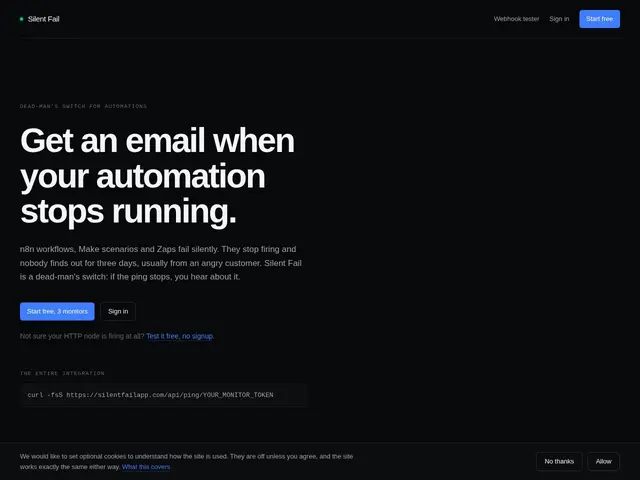
Dead-man's-switch monitoring for automation workflows — sends an email alert when your n8n, Make, or Zapier workflow stops pinging in, meaning it silently stopped running.
A monitoring tool that checks not just whether your website is online, but whether logins, forms and checkout actually work — with a screenshot as proof when something breaks.
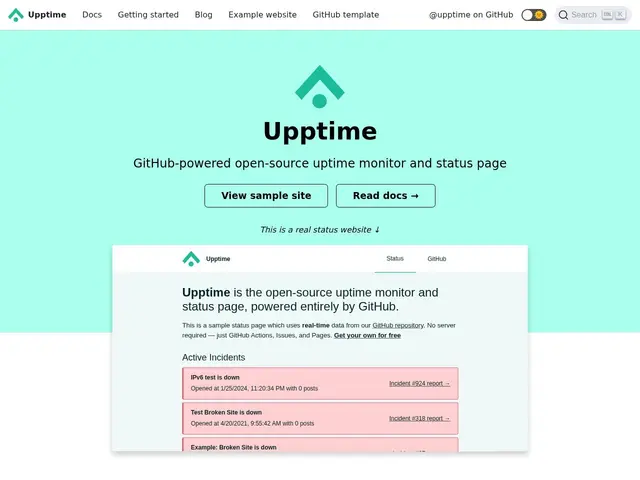
A free status page and uptime monitor that runs entirely on GitHub's infrastructure — no server to rent, no monitoring account to pay for, just a GitHub repository checking your website every few minutes.
A free, self-hosted uptime monitor you run on your own server — checks whether your sites, APIs, or Docker containers are up, alerts you when they're not, and gives you a public status page, without a monthly SaaS bill.
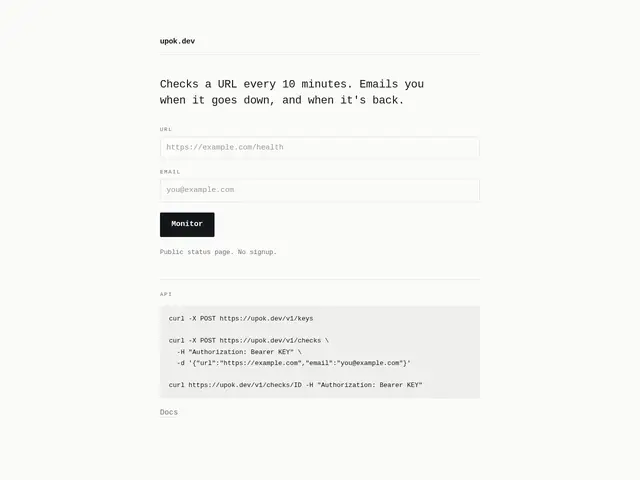
A minimal uptime monitor that checks a URL every 10 minutes and emails you on downtime or recovery, with a public status page requiring no signup.
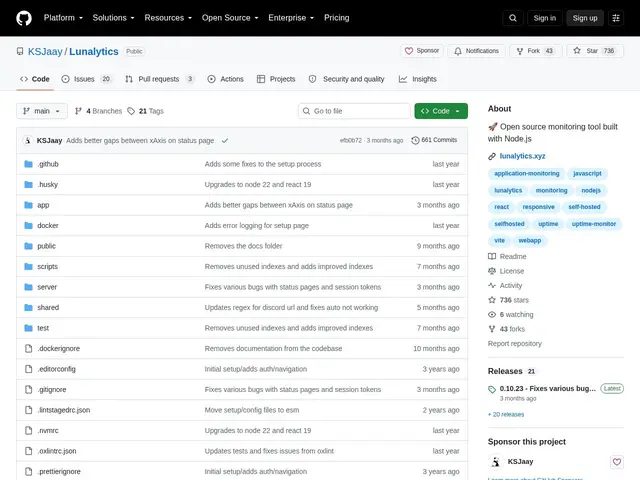
Self-hosted uptime monitoring and status pages with a typed Go/React stack and 20+ alert channels.
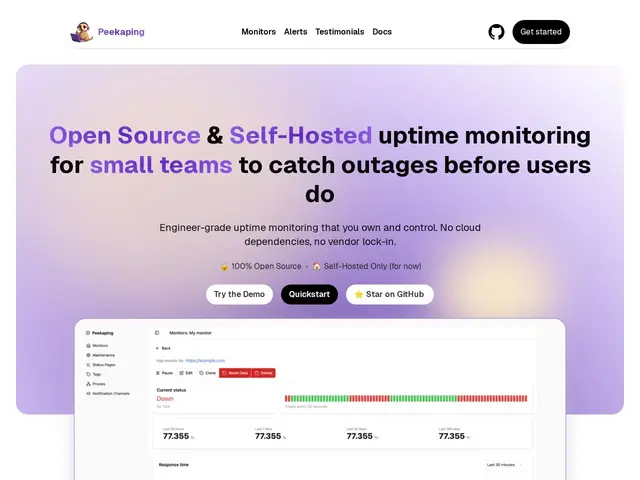
Free, self-hosted uptime and server monitoring with a modern dashboard, themed status pages, and 15+ notification channels.
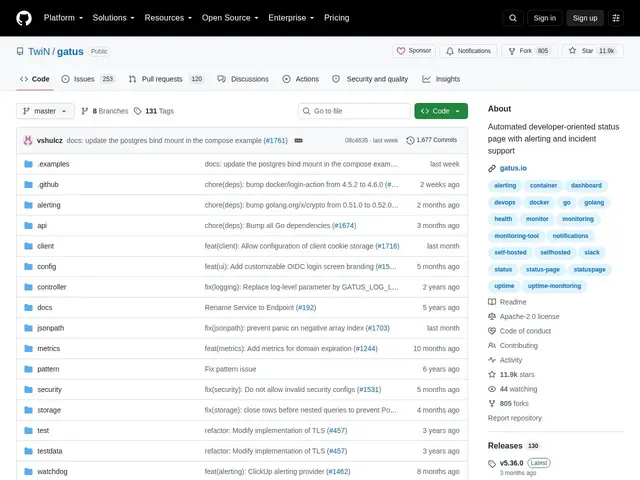
Self-hosted status-page and uptime monitor configured entirely as YAML in Git, so checks live in version control like everything else.
An uptime monitoring service with automated health checks and public status pages.
Watches your website or API from four continents at once and only pages you when the outage is confirmed from multiple locations — so a single flaky network route doesn't wake you up for a false alarm at 3am.
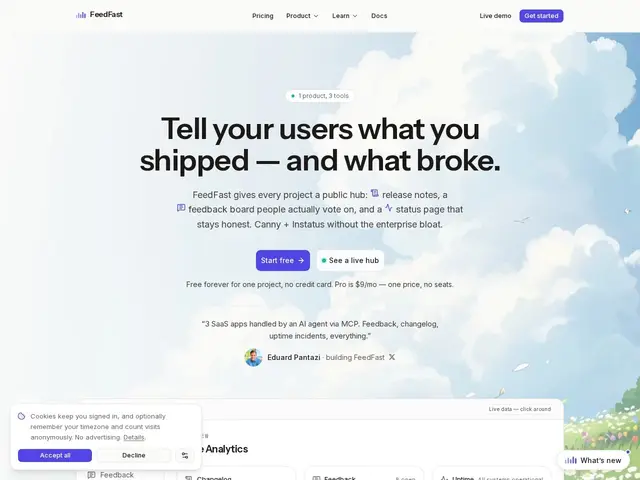
One dashboard to publish release notes, collect and vote on user feedback, and monitor uptime — built for indie makers who don't want three separate tools and three separate logins.
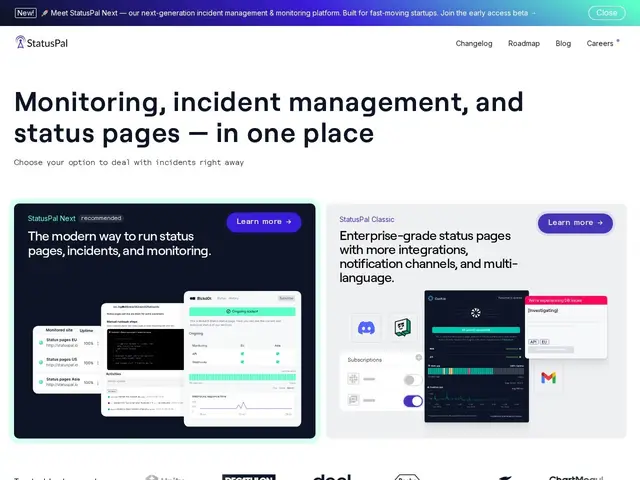
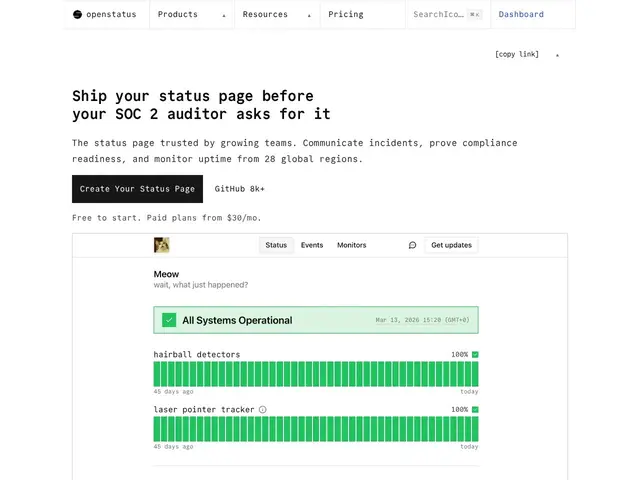
A hosted page where a company tells its customers "yes, we know it's down, here's what's happening" during an outage — plus the monitoring and alerts that spot the outage in the first place.
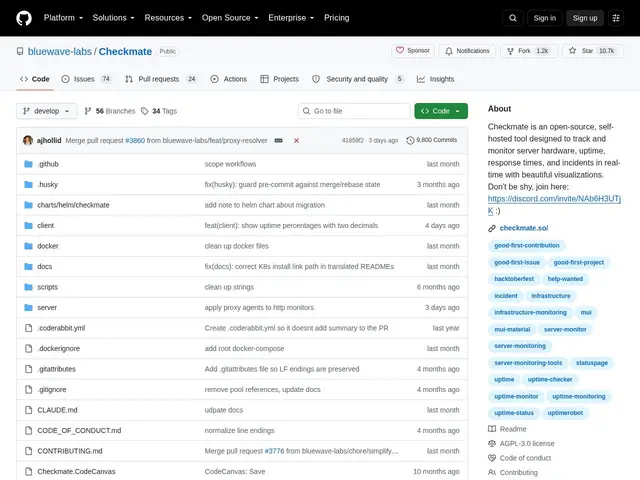
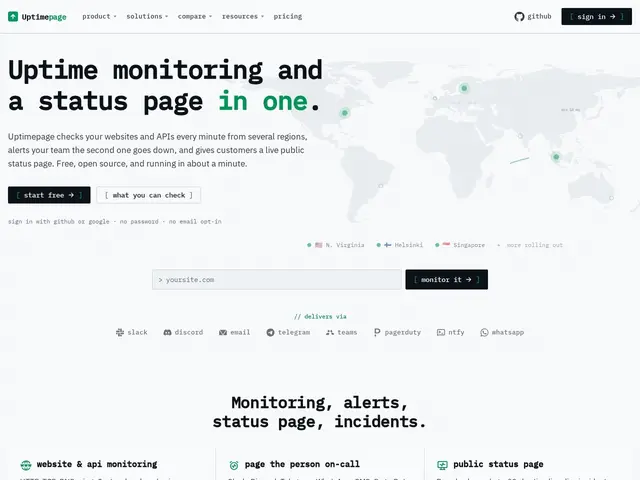
A free, self-hosted tool that runs automated checks on your websites from multiple locations and tells you the moment something breaks — before your customers notice.
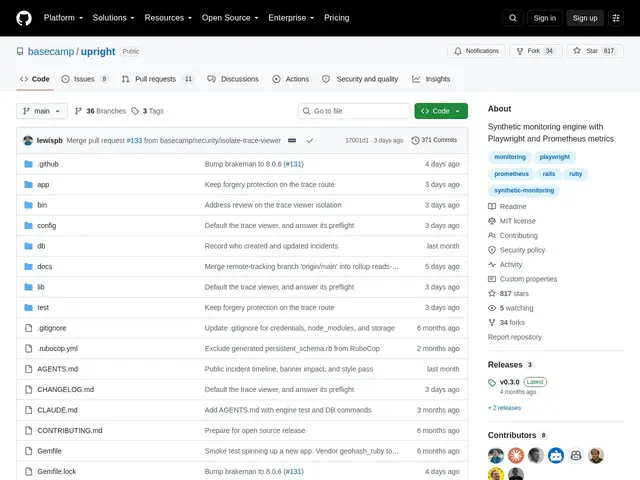
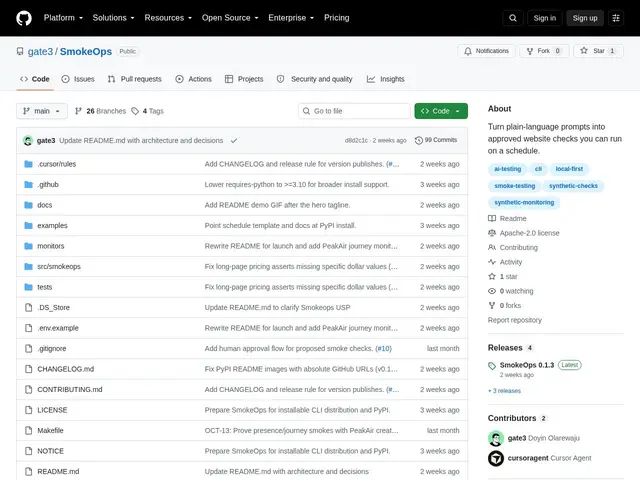
Turns a plain-language description of a critical user flow into an approved, schedulable browser check — no Playwright scripting required.
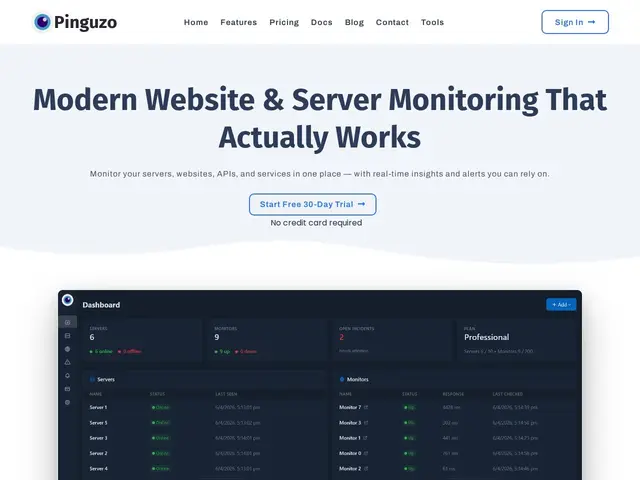
Watches your websites, APIs, and servers around the clock and pings you on Slack, Discord, email, or a webhook the moment something goes down or a disk is about to fail.
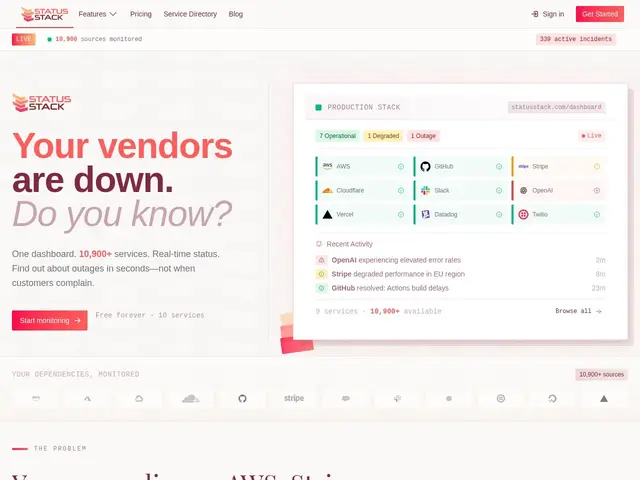
When AWS, Stripe or GitHub goes down, StatusStack tells you before your customers do — it watches over 10,900 third-party services you depend on and pings your team the moment one has a problem, instead of you finding out from an angry support ticket.
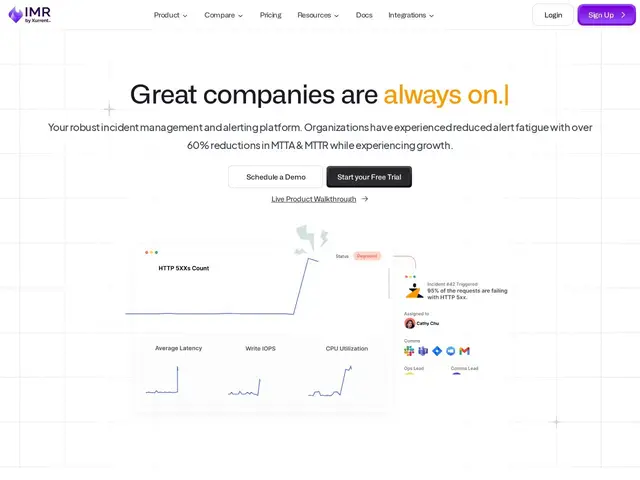
An on-call and incident response platform that pulls alerts from over 150 monitoring tools into one place and pages the right person automatically.
An open-source tool that watches whether your website is up and automatically publishes a public status page telling your users when something breaks.
Keeps an eye on your website around the clock and tells you about problems — broken forms, slow pages, SEO issues — before a customer stumbles into them first.