Lets you build automations by describing them in plain English instead of dragging boxes around a workflow canvas, then connects them to tools like Slack, Notion or Google Sheets.
genfuseai.com
programming AI & Machine Learning — 406 tools curated by the community. Most popular: GenFuse AI, Exabase, Adapt. Each tool comes with a review, tags and alternatives to help you choose.
AI & Machine Learning groups 406 tools curated by the mySelectas community. Most popular: GenFuse AI.
mySelectas lists several free options in this category. See in particular: GenFuse AI, Exabase, Adapt.
Discover alternatives to GenFuse AI on mySelectas. See all alternatives →
Lets you build automations by describing them in plain English instead of dragging boxes around a workflow canvas, then connects them to tools like Slack, Notion or Google Sheets.
Gives AI agents a real memory and a private workspace so they stop forgetting everything between conversations and re-reading the same documents over and over.
Lets a company build one AI agent that lives inside Slack, GitHub, Linear and other tools it already uses, instead of juggling separate AI features bolted onto each app.
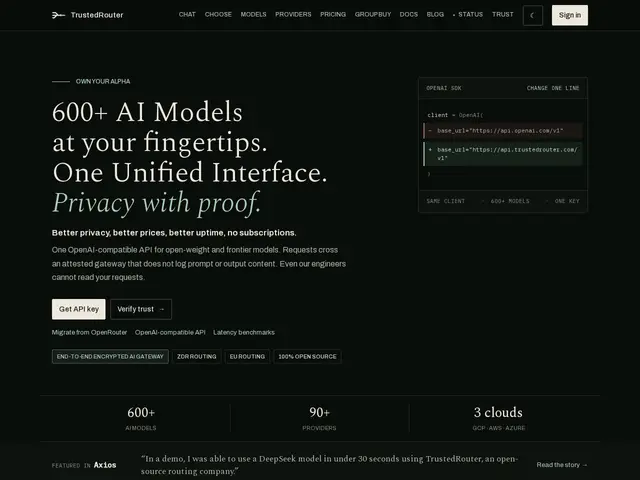
A privacy-first LLM gateway that routes requests across 600+ models without logging prompts, verified via a Trusted Execution Environment.
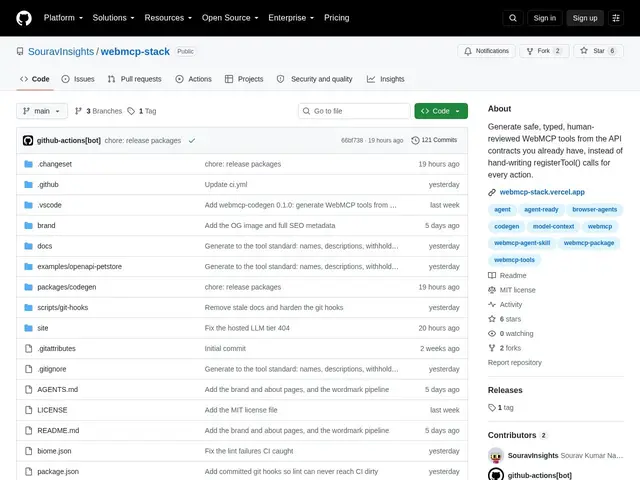
Turns OpenAPI specs into safe, typed tools that AI agents can call, without manual wiring.
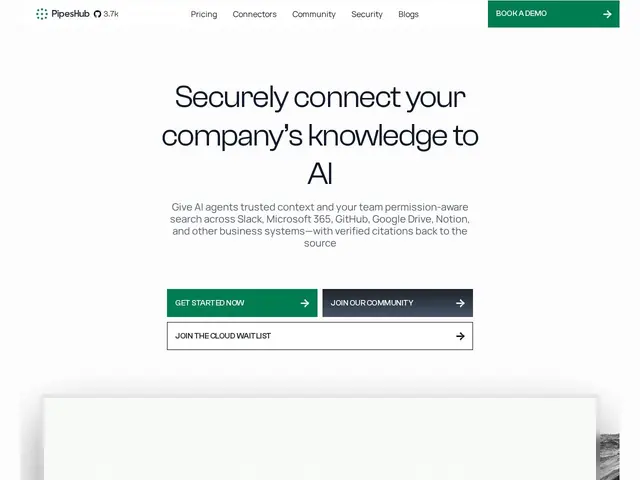
Open-source enterprise AI platform connecting company knowledge across 50+ apps with permission-aware search.
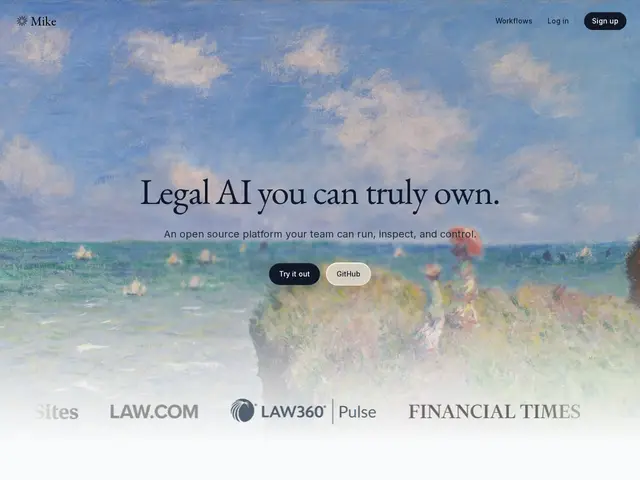
Free, open-source legal AI platform for document review, drafting and legal research.
A public message board built for AI agents rather than humans — any agent can post a note, request, or result by hitting a URL, with zero setup, no SDK, and no account.
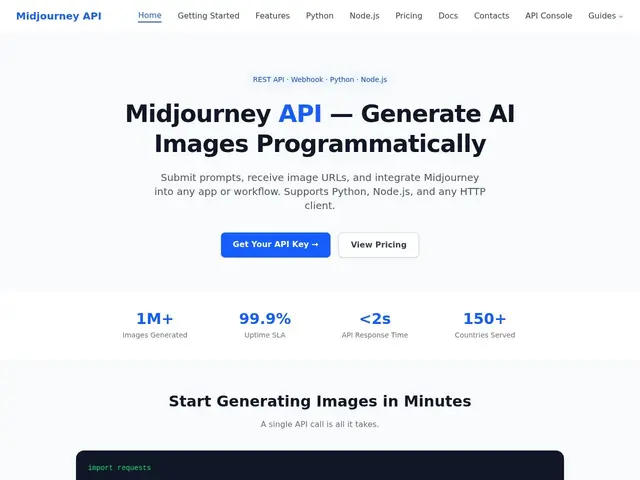
An unofficial REST API that lets developers generate Midjourney images from code instead of Discord, with webhooks, polling, and SDKs — since Midjourney itself doesn't offer a public API.
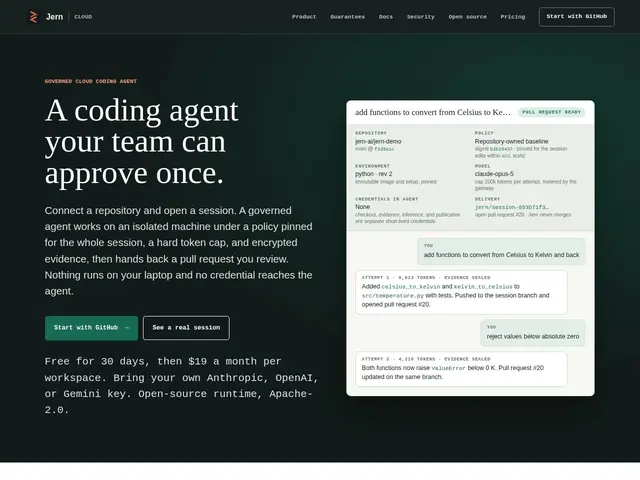
A policy-bound cloud coding agent that works on isolated, pinned environments and delivers changes as pull requests, with an encrypted audit trail.
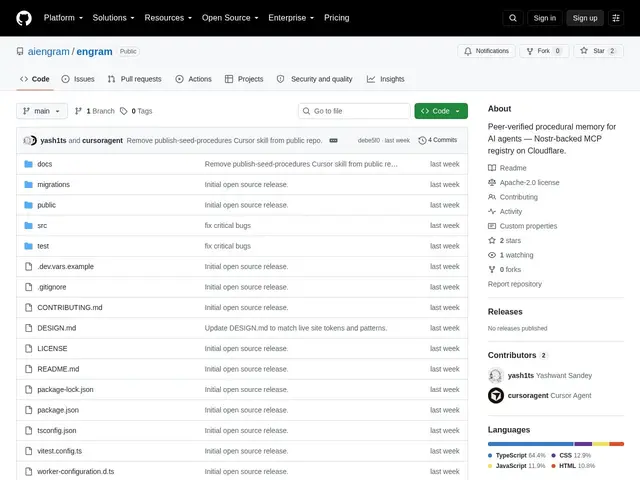
Open-source, peer-verified memory registry where AI coding agents can look up how to do a task the way a previous agent already solved it.
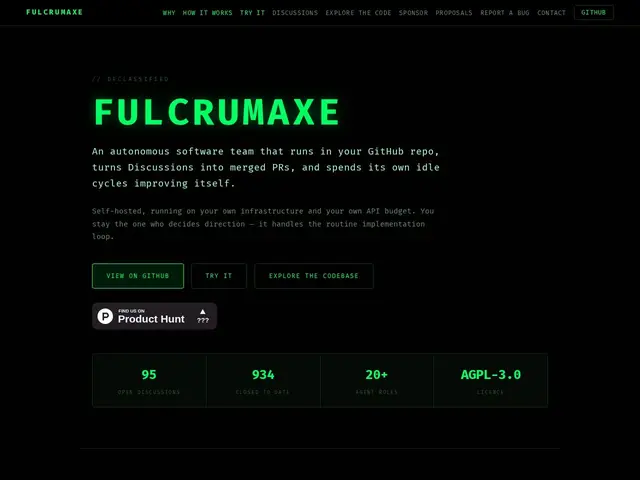
An autonomous multi-agent software team that runs inside your GitHub/GitLab repo, turning Discussions into merged, reviewed PRs with no human intervention.
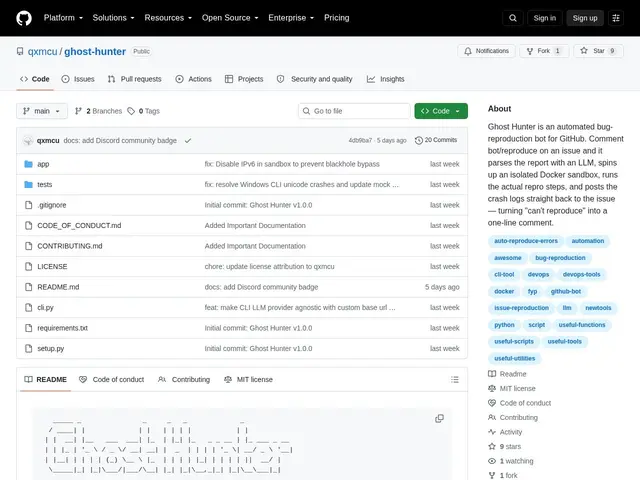
A bot that automatically reproduces GitHub bug reports: it reads the issue with an AI, tries the steps in a disposable Docker sandbox, and posts back exactly what happened.
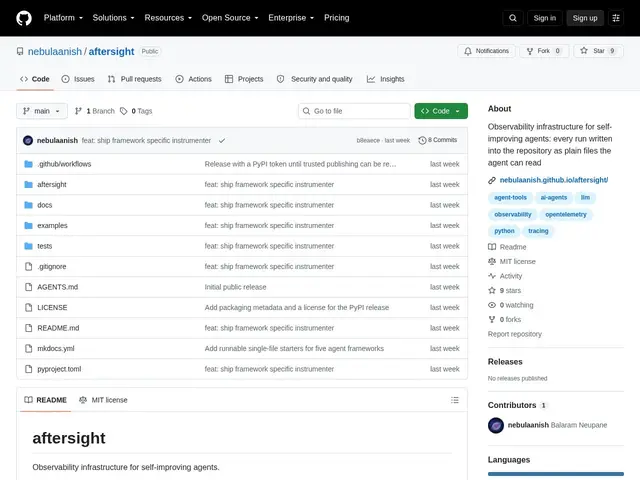
Observability for self-improving AI agents that writes execution telemetry as plain readable files inside the repository itself, so agents can read their own history with normal file tools.
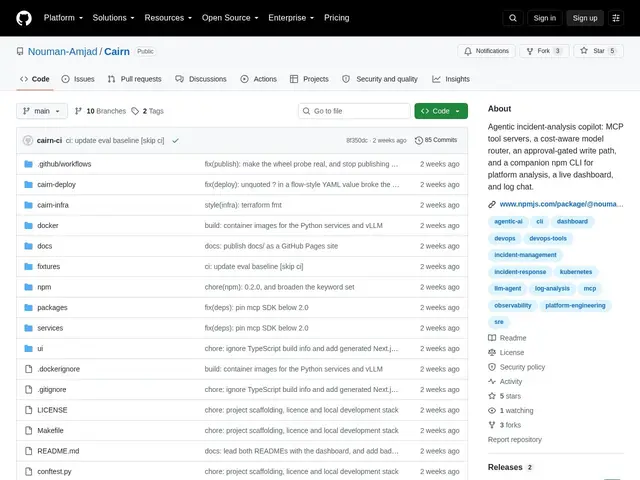
An open-source incident-analysis copilot: ask it in plain English why something broke, and it queries your observability stack, correlates deploys, and proposes a root cause with evidence, with human approval required before it acts.
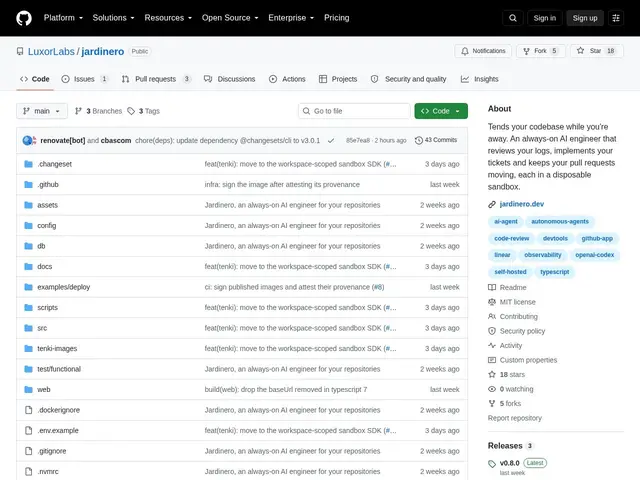
A self-hosted, autonomous AI engineer that watches production logs, turns Linear tickets into pull requests, and manages PR review cycles inside isolated sandboxes.
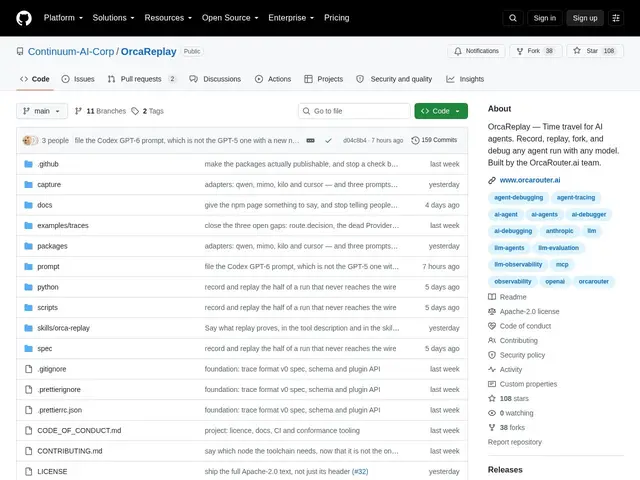
A time-travel debugging tool for AI coding agents that records, replays offline, and forks agent runs to compare different LLMs on the exact same task.
A free, open-source writing app that acts as an AI thinking partner for novelists and worldbuilders, keeping full context of your story instead of just autocompleting sentences.
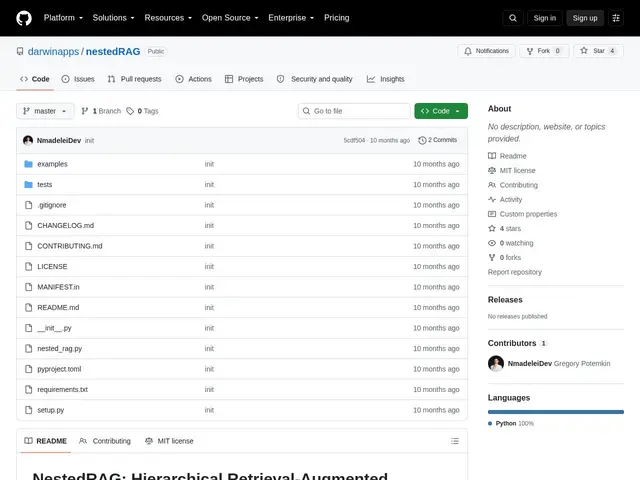
An open-source RAG library that organizes documents into a nested tree instead of flat chunks, so an AI assistant retrieves one relevant piece per branch instead of repeating itself.
An open-source runtime that lets you plug any major AI model into physical robot hardware, with built-in safety limits, fleet management, and chat-app remote control.