TypeScript framework for AI agents and workflows: typed tools, graph orchestration, memory, RAG and 90+ model providers.
mastra.ai
390 tools found
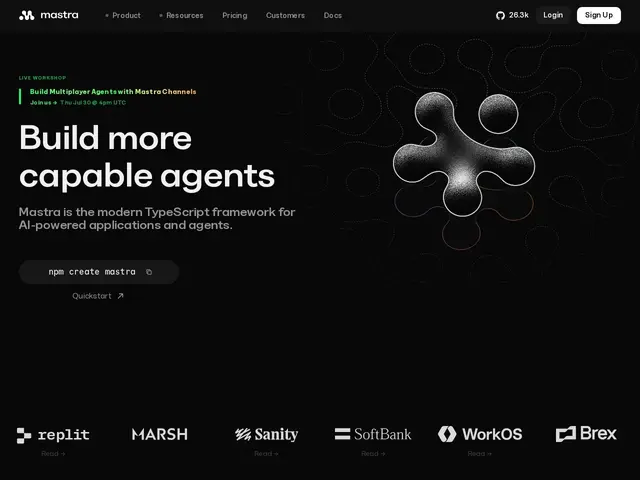
TypeScript framework for AI agents and workflows: typed tools, graph orchestration, memory, RAG and 90+ model providers.
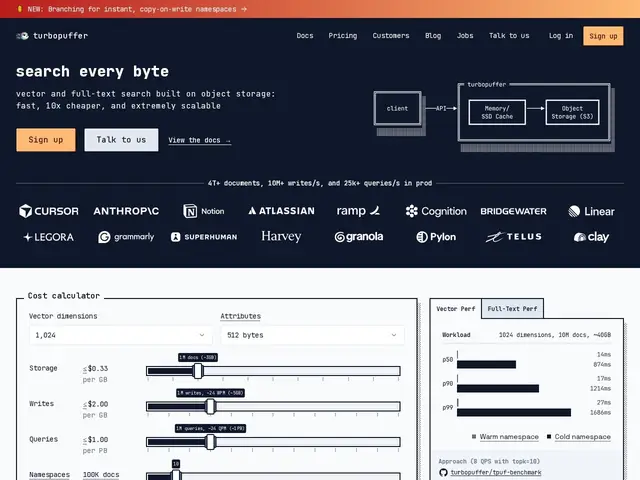
Vector + full-text search database built on object storage: cheap at scale, sub-10ms latency, used by Cursor, Notion and Linear.
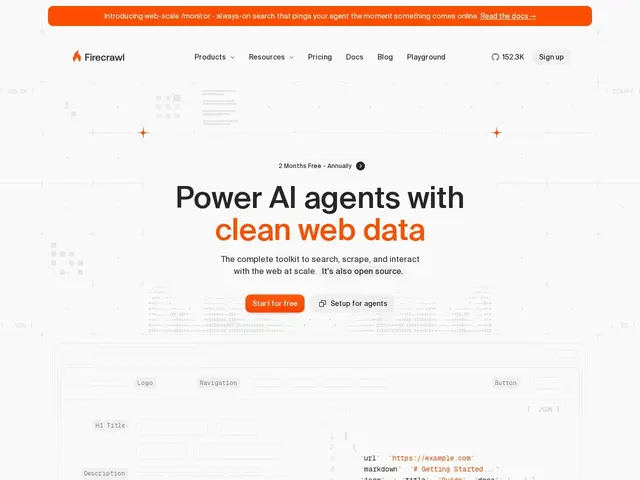
Web scraping and crawling API that turns entire websites into clean, structured data ready for AI models to read.
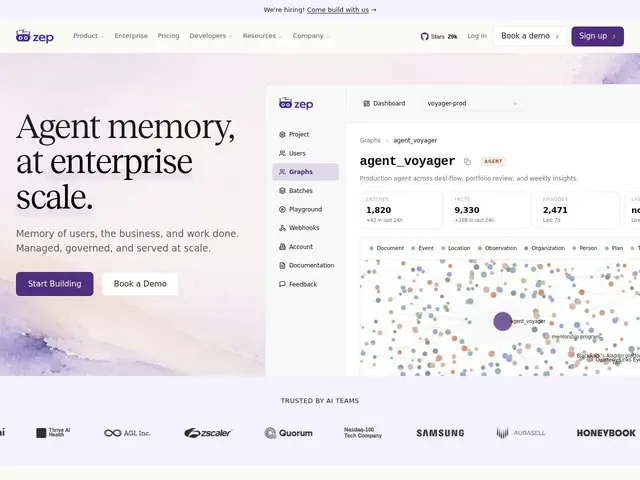
Builds a living map of everything a user has told an AI agent over time — and how those facts connect and change — so the agent can pull up exactly the right context in under 200 milliseconds instead of re-reading an entire chat history.
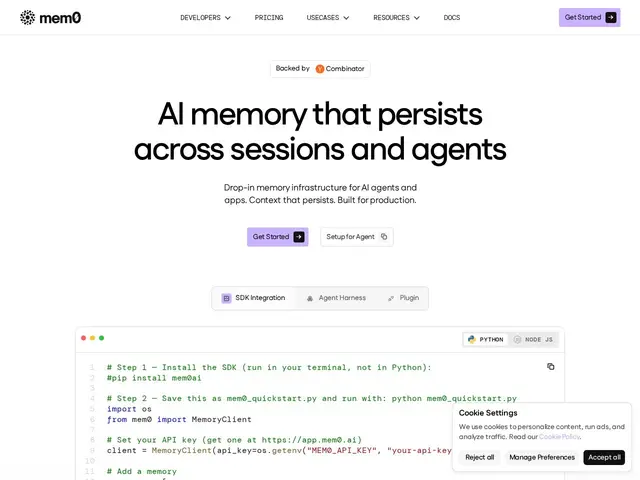
Gives AI chatbots and agents a real memory — so they remember what you told them last week — instead of forgetting everything the moment a conversation ends, the way most AI apps do by default.
A toolkit for building AI "employees" that actually finish a job reliably — instead of a chatbot that just talks, Timbal helps a company wire up an AI agent that can look things up, take real actions in other systems, and behave consistently every time.
A database that automatically connects your scattered documents, spreadsheets and files into a web of related facts, so an AI agent can actually understand how they relate instead of guessing.
A platform to build AI agents that know your company's specific documents and data, plus a newer tool (HarnessRouter) that lets an app plug into several different AI coding agents through one connection instead of wiring each one up separately.
A normal note-taking app only finds what you wrote if you remember the exact words you used. Atomic reads the meaning of your notes instead, so asking "what did I decide about pricing last month" can surface the right note even if you never typed the word
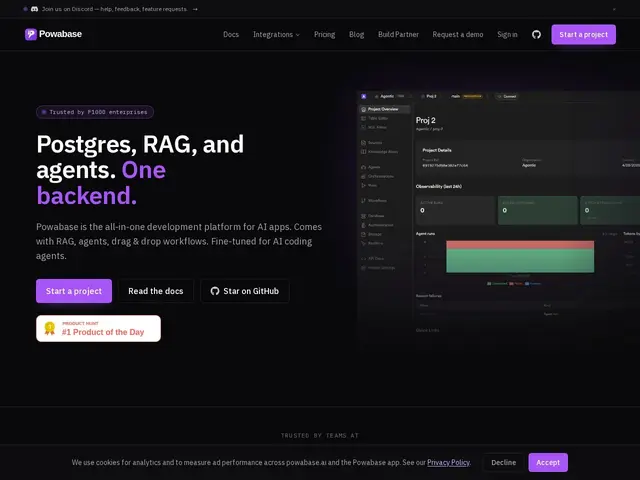
Think of it as a Supabase for AI apps specifically — a database, a document-search engine, and a visual agent builder bundled together, so building an AI product doesn't mean separately wiring up Postgres, a vector store, and an orchestration framework yo
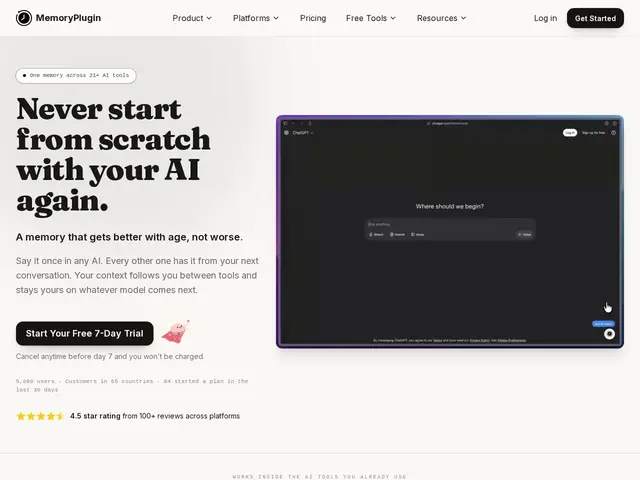
Cross-platform long-term memory system that maintains shared context across 21+ AI tools without requiring repetition.
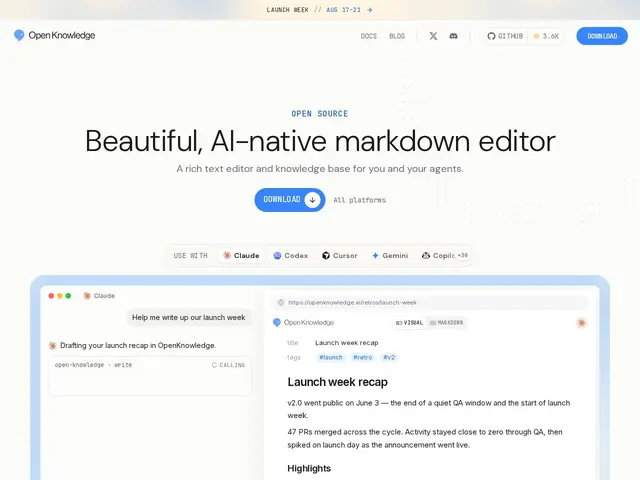
A notes app like Obsidian or Notion, but built so an AI coding assistant can read and edit your documents directly — useful for teams who keep specs, runbooks, or project docs that both humans and AI agents need to work from.
A platform from Structured Labs that turns a company's messy, unstructured internal knowledge into clean, structured data that AI systems and agents can actually reliably use — instead of AI agents guessing from scattered docs, wikis, and PDFs.
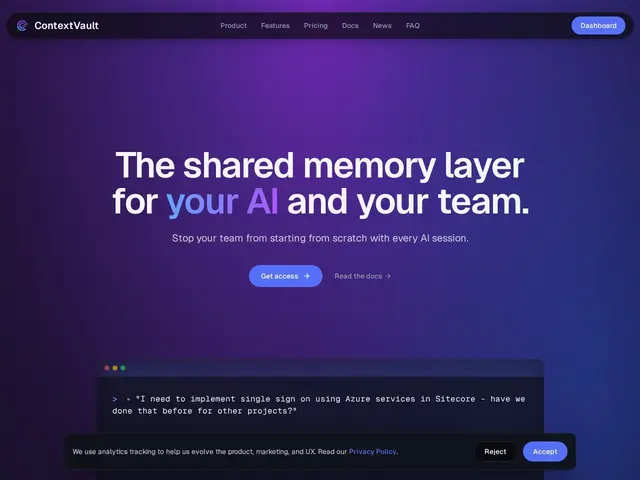
A shared memory layer that keeps context consistent across Claude, ChatGPT, Copilot and other AI tools, so you and your team stop re-explaining the same things to every new AI session.
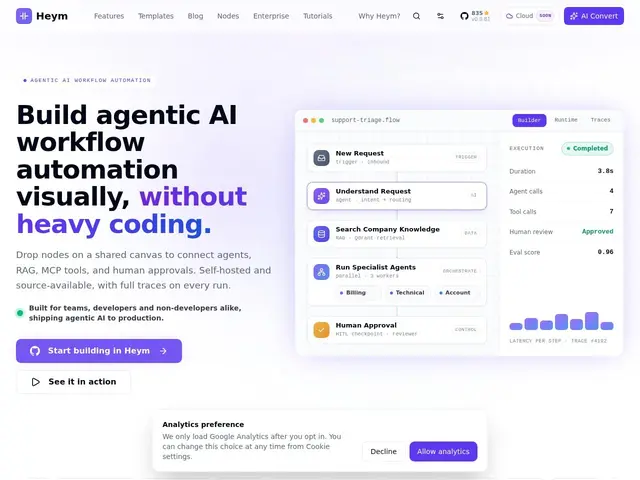
A workflow automation tool you host yourself, where you drag boxes onto a canvas to connect AI models, actions, and approval steps — instead of paying a monthly fee to a cloud automation platform.
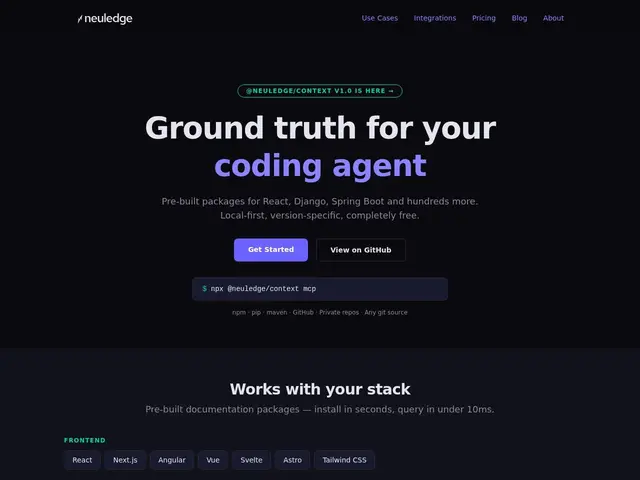
A free, offline library of documentation that AI coding assistants can search instantly, so they stop guessing about which version of a framework you're actually using.
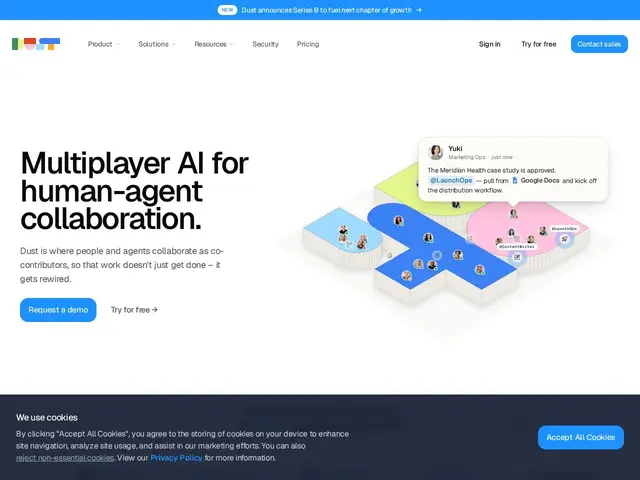
Lets a company plug an AI assistant into its own Slack, Notion, Drive and GitHub so employees can ask questions and get answers pulled from actual internal documents, not the open internet.
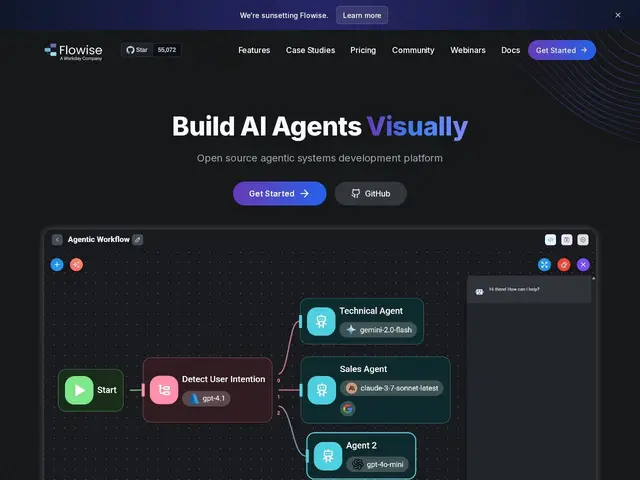
A free, open-source drag-and-drop builder for wiring together chatbots and AI agents out of LLM building blocks, without writing the underlying code.
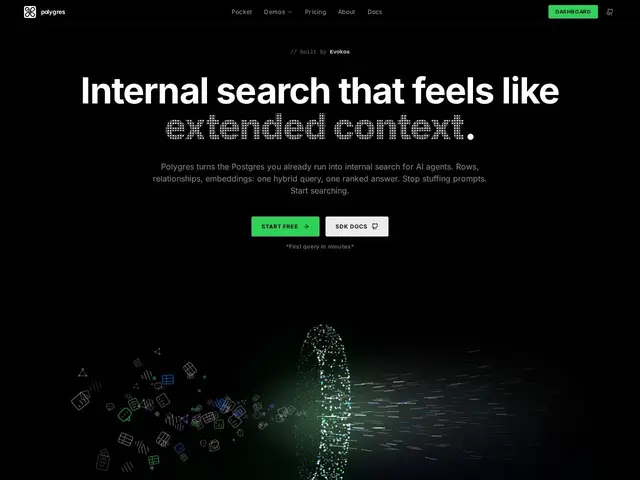
Turns a Postgres database into working memory for AI agents, with hybrid search across relational, graph, and vector queries in one call.
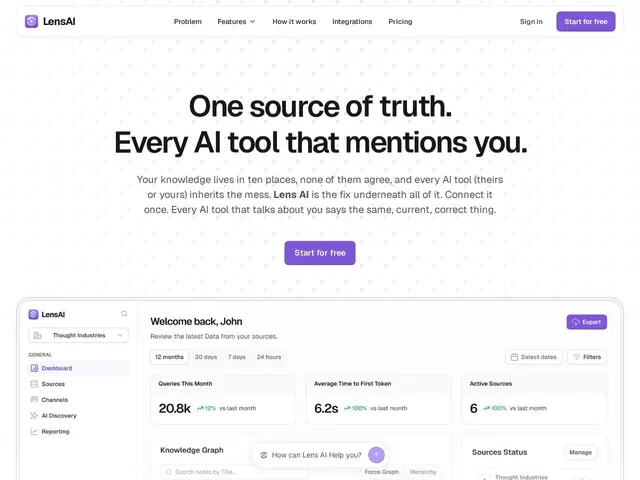
A knowledge layer that keeps every AI chatbot and assistant in your company answering from the same up-to-date source of truth.