DevOps, Cloud & Infrastructure

130 tools

programming DevOps, Cloud & Infrastructure130 tools curated by the community. Most popular: Manzanas, ReachPad Router, MailerLogic. Each tool comes with a review, tags and alternatives to help you choose.

❓ Frequently asked questions about DevOps, Cloud & Infrastructure

What is DevOps, Cloud & Infrastructure?

DevOps, Cloud & Infrastructure groups 130 tools curated by the mySelectas community. Most popular: Manzanas.

What are the best free DevOps, Cloud & Infrastructure tools?

mySelectas lists several free options in this category. See in particular: Manzanas, ReachPad Router, MailerLogic.

What is the best alternative to Manzanas?

Discover alternatives to Manzanas on mySelectas. See all alternatives →

130 tools
ManzanasNew
DevOps, Cloud & Infrastructure🌐 EN

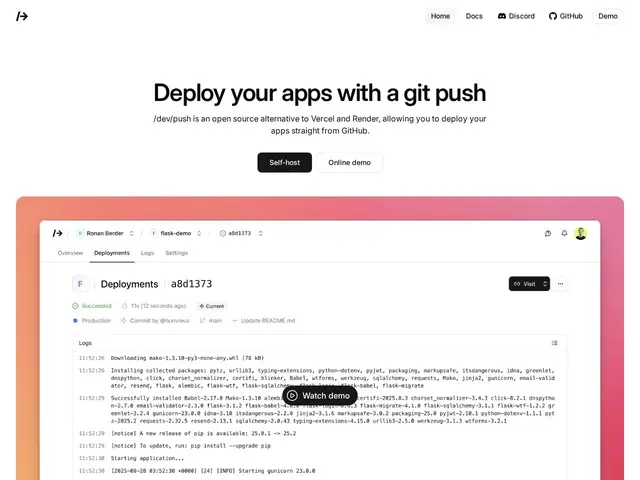
Orchestrates iOS simulator fleets on macOS, enabling multiple AI agents to simultaneously drive simulators without conflicts using TTL-bounded exclusive leases and warm pool management.

#ci-cd#debugging#ai-agents#testing#open-source
github.com
📄 Full details →
💬 Review

The short version: Manzanas solves a very specific, very real problem — AI agents can't safely share iOS Simulators without a broker — and the reported speedups (7s to 0.28s lease time) suggest the warm-pool approach genuinely works. Cloud device farms like BrowserStack App Automate or Sauce Labs solve a different problem (access to real/virtual devices without owning a Mac fleet), but they're not designed for the specific pattern of several coding agents hammering a shared local simulator pool with sub-second lease turnover; Appium-style automation, meanwhile, drives a simulator but doesn't …

👥 Target audience

Équipes de développement iOS et QA utilisant des agents IA (Claude Code, Cursor, Codex) pour piloter des tests automatisés sur simulateurs partagés.

🌍 Target countries

Marché anglophone, écosystème développement mobile/iOS international

🗣️ Available languages
EN
🔄 Alternatives
BrowserStack App AutomateSauce LabsAppium (sans gestion de contention)
🔗 Visit Manzanas
ReachPad RouterNew
DevOps, Cloud & Infrastructure🌐 EN

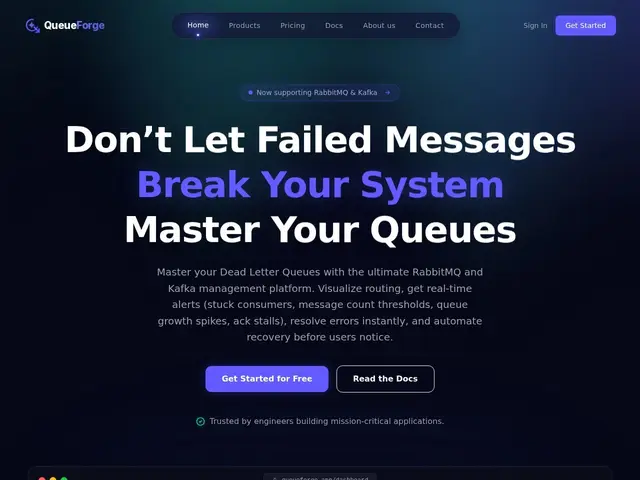
API that automatically finds and provisions the cheapest available cloud compute across multiple providers, billed per second, built for developers and AI agents that need short-lived machines fast.

#deployment#api#serverless#cloud#ai-agents
reachpad.dev
📄 Full details →
💬 Review

The short version: ReachPad Router does for ephemeral compute what a flight-price aggregator does for plane tickets — automatically finds the best deal across providers — with per-second billing and hard spending caps that make it genuinely safe to hand to an autonomous script or AI agent. The comparison points are cloud marketplaces and multi-cloud brokers (Vast.ai for GPU compute specifically, or general multi-cloud tools like Skypilot) that also aim to reduce manual provider comparison. ReachPad Router's specific angle — REST API access with SSH/HTTP exec, USDC billing, and explicit spend/…

👥 Target audience

Développeurs et agents IA ayant besoin de compute cloud éphémère, à la demande, avec facturation transparente

🌍 Target countries

International

🗣️ Available languages
EN
🔄 Alternatives
Vast.aiSkypilotFournisseurs cloud directs (AWS, DigitalOcean)
🔗 Visit ReachPad Router
MailerLogicNew
DevOps, Cloud & Infrastructure🌐 EN

Email delivery platform combining transactional Email API, SMTP relay, CRM, and built-in deliverability intelligence for developers and SaaS companies.

#devops#infrastructure-as-code#api#saas#backend-as-a-service
mailerlogic.com
📄 Full details →
💬 Review

The short version: MailerLogic's real pitch isn't "another email API" — it's separating your password-reset emails from your marketing blasts so one doesn't sink the other, plus a deliverability check before you hit send instead of finding out from a bounce report after. That stream-separation idea addresses a genuinely common failure mode: teams that route both transactional and bulk mail through the same sending domain and then watch a marketing campaign's spam complaints degrade delivery of critical account emails. Established players like SendGrid and Postmark can achieve the same result …

👥 Target audience

Développeurs, entreprises SaaS, e-commerce et agences ayant besoin d'un envoi d'email transactionnel et marketing fiable avec conformité et délivrabilité intégrées

🌍 Target countries

International, marché anglophone

🗣️ Available languages
EN
🔄 Alternatives
SendGridPostmarkMailgun
🔗 Visit MailerLogic
OtaKitNew
DevOps, Cloud & Infrastructure🌐 EN

OtaKit enables developers to push over-the-air updates directly to Capacitor apps without app store reviews, delivering updates to devices within seconds.

#mobile-app#ci-cd#devops#api-first#deployment
otakit.app
📄 Full details →
💬 Review

The short version: OtaKit does for Capacitor apps what CodePush famously did for React Native — near-instant updates without waiting on app store review — and it's priced to be a no-brainer for small teams while staying open enough (self-hostable core) not to lock in larger ones. The category isn't new — Microsoft's CodePush proved the model years ago before its eventual retirement, which left a gap for React Native and Capacitor teams that OtaKit and a few competitors (Capgo, for instance) are now filling specifically for Capacitor. What differentiates OtaKit here is the combination of a gen…

👥 Target audience

Équipes de développement construisant des applications mobiles avec Capacitor, de la startup à l'entreprise, ayant besoin de cycles de déploiement rapides

🌍 Target countries

International, marché anglophone

🗣️ Available languages
EN
🔄 Alternatives
CapgoMicrosoft CodePush (retiré)Soumission classique aux app stores
🔗 Visit OtaKit
ShedNew
DevOps, Cloud & Infrastructure🌐 EN

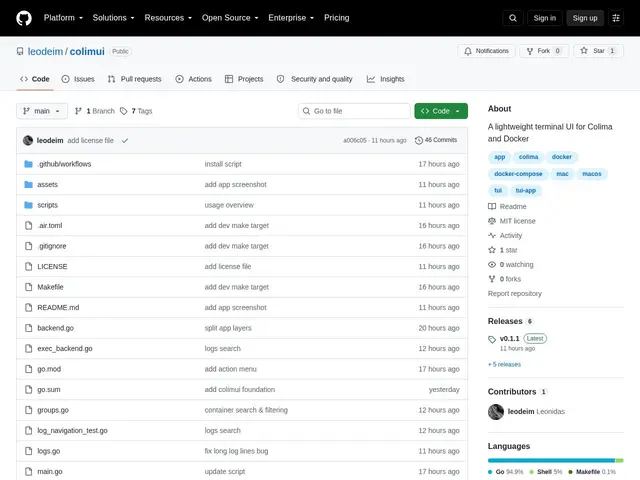
Terminal tool for managing git repository catalogs and providing disposable workspaces for coding agents.

#ai-agents#devops#git#version-control#cli-tool
github.com
📄 Full details →
💬 Review

The short version: Shed is a small, free, open-source fix for a very specific and very new annoyance — parallel AI coding agents stepping on each other's work in the same repo — and it solves it with a simple, sensible pattern (sync once, work in disposable copies). Before agent-heavy workflows, most developers just used git worktree or manual clones to isolate parallel branches, and that still works, but it's manual and doesn't scale well when you're running four or five agent sessions at once, each needing its own clean slate. Shed automates exactly that: one synced source of truth, cheap d…

👥 Target audience

Développeurs et équipes faisant tourner plusieurs sessions d'agents IA en parallèle sur le même dépôt, besoin d'isolation sans gestion manuelle de clones git

🌍 Target countries

International, marché anglophone

🗣️ Available languages
EN
🔄 Alternatives
git worktree (natif)Clones manuels multiplesDevcontainers isolés
🔗 Visit Shed
AmendableNew
DevOps, Cloud & Infrastructure🌐 EN

Git storage engine for AI agents and autonomous systems, enabling on-demand repository creation with API-driven management.

#ai-agents#git#api#infrastructure-as-code#devops
amendable.io
📄 Full details →
💬 Review

The short version: Amendable is infrastructure, not a tool you'll use directly unless you're building a platform that itself needs to spin up Git repos programmatically — think an AI coding agent SaaS, not an individual developer's workflow. The positioning is narrow but well-timed: as more products embed AI agents that write and commit code on a user's behalf, someone has to host all those repos, and doing that on top of GitHub's human-first API and rate limits is awkward. Amendable's API-first, OIDC-for-machines design is a sensible answer to a real, fairly new problem. The $10/month Pro ti…

👥 Target audience

Plateformes construisant des produits à base d'agents IA nécessitant une isolation de dépôts par client ou par tâche, équipes développant des produits Git sur mesure

🌍 Target countries

International, marché anglophone

🗣️ Available languages
EN
🔄 Alternatives
GitHub (API + orgs)GitLab self-hostedGitea auto-hébergé
🔗 Visit Amendable
mcptunnelsNew
DevOps, Cloud & Infrastructure🌐 EN

A one-command CLI that exposes a local MCP server to a public URL, so you can test or demo it with ChatGPT, Claude, or Cursor without deploying anything.

#cli#devops#api#deployment#self-hosting
terragohan.github.io
📄 Full details →
💬 Review

The short version: if you're iterating on an MCP server and keep needing to hand a working link to a colleague or wire it into ChatGPT/Claude for a quick test, mcptunnels removes the deploy-just-to-test friction in one command, for free. It's a narrow, well-scoped tool rather than a general tunneling replacement — you could do the same thing with ngrok or cloudflared plus a manual stdio-to-HTTP bridge, but mcptunnels bundles that specifically for MCP, which is the actual time saver. The trade-offs are the ones you'd expect from a free best-effort public relay: no uptime guarantee, 24-hour URL…

👥 Target audience

Développeurs qui construisent des serveurs MCP et veulent les tester ou les démontrer sans les déployer

🌍 Target countries

International

🗣️ Available languages
EN
🔄 Alternatives
ngrokcloudflaredbore
🔗 Visit mcptunnels
ServerboxNew
DevOps, Cloud & Infrastructure🌐 EN

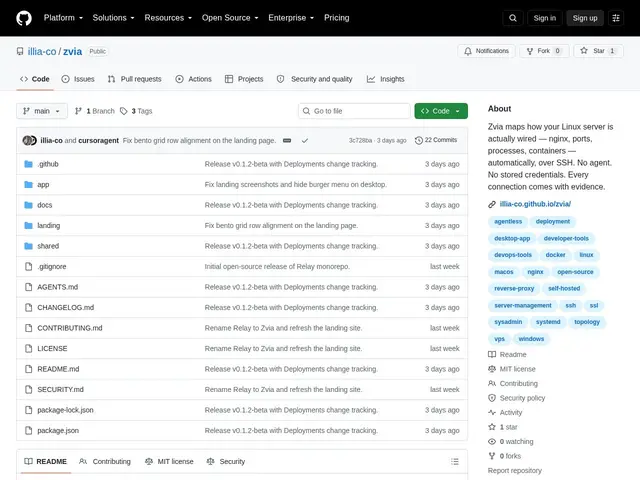
Free desktop app that gives Linux server admins a live dashboard, real terminal, file manager and Docker controls over plain SSH — nothing to install on the servers themselves.

#docker#self-hosting#homelab#devops#terminal
serverbox.stupidlabs.lol
📄 Full details →
💬 Review

The short version: Serverbox is a solid free replacement for juggling multiple SSH terminal tabs plus a separate monitoring tool, especially if you run a handful of personal or small-business Linux boxes and don't want to install a monitoring agent on each one. Against Cockpit or Webmin, both of which require you to set up a web UI on every server individually, Serverbox's whole pitch is that it's agentless and centralizes several machines into one desktop view over plain SSH. Against Termius, which is a strong SSH client but stops at terminal and basic file transfer, Serverbox adds the live …

👥 Target audience

Administrateurs de serveurs Linux et professionnels DevOps gérant plusieurs machines

🌍 Target countries

Marché anglophone, communauté self-hosting/homelab internationale

🗣️ Available languages
EN
🔄 Alternatives
CockpitWebminPortainerTermius
🔗 Visit Serverbox
SpinifexNew
DevOps, Cloud & Infrastructure🌐 EN

Open-source platform that runs AWS-compatible cloud services (EC2, S3, VPC, IAM) on your own bare-metal hardware, with zero external dependencies.

#infrastructure-as-code#edge#self-hosting#cloud#devops
mulgadc.com
📄 Full details →
💬 Review

The short version: Spinifex is a serious, deeply engineered piece of infrastructure software for anyone who needs 'real AWS' behavior without an AWS bill or an internet connection — but its AGPL license and bare-metal requirement mean it's built for organizations with hard sovereignty needs, not casual homelab tinkerers. Against LocalStack, a popular AWS emulator for local dev and CI, Spinifex is a different animal: LocalStack targets developer sandboxes, while Spinifex targets production workloads that must run fully offline — defense deployments, air-gapped enterprises, and edge sites witho…

👥 Target audience

Organisations défense/militaire, entreprises exigeant la souveraineté des données, sociétés IA cherchant une infra indépendante, déploiements edge ou en environnement déconnecté/air-gapped

🌍 Target countries

International

🗣️ Available languages
EN
🔄 Alternatives
LocalStackMinIOOpenStackProxmox
🔗 Visit Spinifex
ZukeNew
DevOps, Cloud & Infrastructure🌐 EN

Open-source, type-safe build automation system for Deno and TypeScript, letting you define build targets as ordinary TypeScript instead of YAML or a custom DSL.

#typescript#ci-cd#devops#deployment#open-source
zuke.build
📄 Full details →
💬 Review

The short version: Zuke is a genuinely interesting, well-built take on code-first build automation, worth trying if you're already on Deno/TypeScript, but it's a young, single-ecosystem tool going up against decades-old giants like Gradle, Maven and Bazel that have vastly more battle-testing and plugin ecosystems. Its closest philosophical relative is NUKE for .NET (cited as inspiration), typed builds instead of YAML, and that comparison is a fair one: if you value compile-time-checked dependencies over a build config that only fails at runtime, Zuke delivers that for the Deno/TypeScript worl…

👥 Target audience

Équipes Deno/TypeScript voulant une automatisation de build type-safe

🌍 Target countries

International

🗣️ Available languages
EN
🔄 Alternatives
GradleMavenBazel
🔗 Visit Zuke
ReleasaurusNew
DevOps, Cloud & Infrastructure🌐 EN

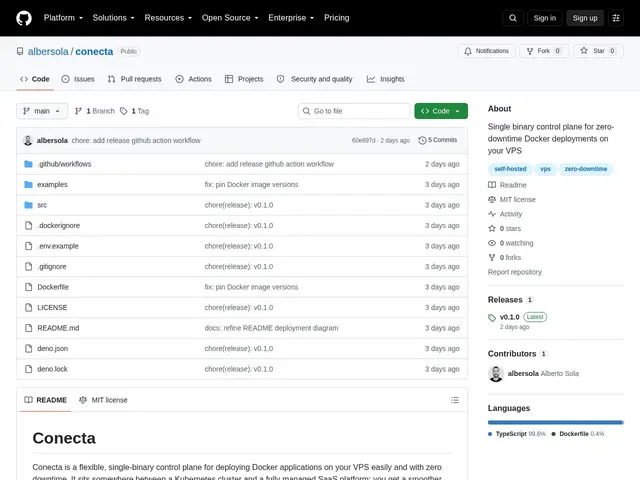
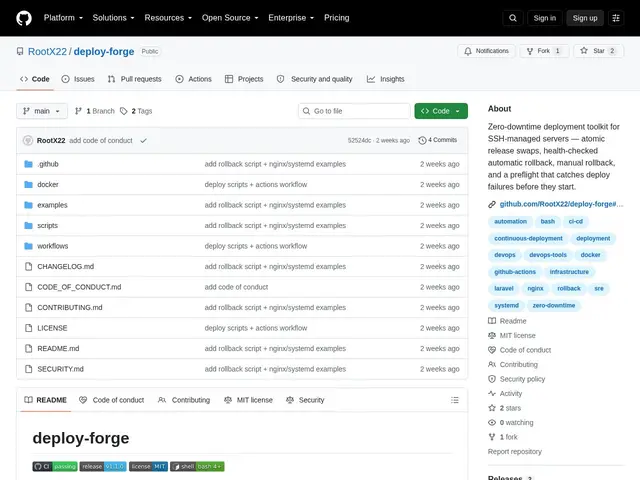
Open-source tool that automates software releases: changelog generation, version bumping and tagged releases, across multiple languages and git platforms.

#open-source#deployment#cli-tool#devops#ci-cd
github.com
📄 Full details →
💬 Review

The short version: Releasaurus does one job well, conventional-commits-driven release automation across an unusually wide range of languages and git platforms, and it's free and open-source, but it's a young project with a tiny community so far, so treat it as promising rather than battle-tested. The PR-based release-please style workflow (propose a release, let a human merge it) is the same pattern used by Google's release-please and semantic-release, both far more established with much larger communities; Releasaurus's edge is genuinely broader multi-language and multi-forge support out of …

👥 Target audience

Équipes gérant des releases multi-langages ou multi-forge

🌍 Target countries

International

🗣️ Available languages
EN
🔄 Alternatives
release-pleasesemantic-releasechangesets
🔗 Visit Releasaurus
fDeployNew
DevOps, Cloud & Infrastructure🌐 EN

Self-hosted deployment automation server for Windows teams pushing .NET applications to IIS across multiple environments.

#deployment#ci-cd#devops#enterprise
fdeploy.com
📄 Full details →
💬 Review

The short version: fDeploy is a solid, purpose-built deployment tool for .NET/IIS shops that generic Linux-first DevOps tools handle awkwardly at best, worth it if you're a Windows-only team tired of manual IIS deployments, though the pricing is steep for smaller teams. General CI/CD tools like Octopus Deploy cover similar ground (Octopus is the closest direct competitor, also strong on Windows/.NET deployment) but fDeploy differentiates on built-in NuGet hosting and deep IIS-specific features like certificate/binding management. At $2,900-$7,250 per server instance for the Professional tier…

👥 Target audience

Équipes .NET/Windows déployant sur IIS

🌍 Target countries

International

🗣️ Available languages
EN
🔄 Alternatives
Octopus DeployAzure DevOps PipelinesGitHub Actions
🔗 Visit fDeploy
BLASTNew
DevOps, Cloud & Infrastructure🌐 EN

Open-source sandbox orchestration tool with one API across Docker, SmolVM, and Hypeman backends.

#open-source#containers#docker#rust#deployment
github.com
📄 Full details →
💬 Review

The short version: BLAST is a lightweight, free way to get sandboxed command execution without hard-committing to one VM backend — useful if you're building agent infrastructure and don't want your sandboxing layer to become a lock-in point. The obvious comparison points are Docker (container isolation, but heavier and not VM-level), Firecracker and gVisor (proper VM-grade isolation, but lower-level and more setup), and Containerd (a container runtime, not really an orchestration API). BLAST doesn't replace any of these, it sits on top of them, so you can switch backends later without rewriti…

👥 Target audience

Ingénieurs infrastructure, équipes DevOps, développeurs d'agents IA ayant besoin de sandboxing

🌍 Target countries

International

🗣️ Available languages
EN
🔄 Alternatives
DockerFirecrackergVisorContainerd
🔗 Visit BLAST
Helm ValueTraceNew
DevOps, Cloud & Infrastructure🌐 EN

Helm plugin that traces every configuration value back to its exact source file and line.

#orchestration#devops#kubernetes#cli-tool#open-source
github.com
📄 Full details →
💬 Review

The short version: if your team's Helm charts have grown past three or four layers of values files and someone keeps asking why a setting is what it is, this tiny plugin pays for itself the first time it saves a 20-minute debugging session — and it costs nothing. There's no direct competitor doing exactly this — most teams either grep through values files by hand or reach for heavier tools like Kustomize (which solves a different problem: composing manifests, not tracing value provenance) or helm-secrets (which handles secret encryption, not debugging). ValueTrace is narrow by design: one job…

👥 Target audience

Ingénieurs DevOps, administrateurs Kubernetes, équipes platform engineering

🌍 Target countries

International

🗣️ Available languages
EN
🔄 Alternatives
helm-secretsKustomizekubeval
🔗 Visit Helm ValueTrace
MaritimeNew
DevOps, Cloud & Infrastructure🌐 EN

A hosting service built specifically for AI agents: every agent gets its own tiny, isolated virtual computer that goes to sleep when idle so you're not paying for it around the clock.

#cloud#ai-agents#devops#paas#serverless
maritime.sh
📄 Full details →
💬 Review

The short version: if you're shipping a product where each customer or use case needs its own persistent, isolated AI agent environment, Maritime removes the DevOps work of provisioning and babysitting that infrastructure yourself — the $1/month-per-agent pricing only makes sense at that kind of multi-agent scale, not for running one personal bot. This is a genuinely new infrastructure category — competing loosely with sandboxed-compute providers like E2B, Daytona and Modal, but specifically optimized for the "many small, mostly-idle agents" pattern rather than heavier compute jobs. The auto …

👥 Target audience

Développeurs indépendants, startups vendant des agents IA à leurs clients, entreprises nécessitant un déploiement sur site

🌍 Target countries

International

🗣️ Available languages
EN
🔄 Alternatives
E2BDaytonaModal
🔗 Visit Maritime
AgentCloudNew
DevOps, Cloud & Infrastructure🌐 EN

A cloud iOS Simulator built specifically for AI coding agents — Cursor, Claude Code, and similar tools can install, tap through, and inspect an iOS app remotely via MCP, without needing a Mac.

#api#ai-agents#mobile-development#cloud#testing
agentcloud.so
📄 Full details →
💬 Review

The short version: AgentCloud is solving a real, specific, and currently underserved problem — letting AI coding agents actually test iOS apps without a Mac — and its MCP-native design means it plugs directly into the agent tools people are already using. There's no direct mainstream competitor doing exactly this yet; cloud device farms like BrowserStack or Sauce Labs offer remote iOS testing, but they're built for human QA workflows and CI pipelines, not for an AI agent driving the simulator autonomously step by step via MCP. That first-mover position on the agent-specific use case is AgentC…

👥 Target audience

Developers using AI coding agents (Cursor, Claude Code, Windsurf, Gemini CLI, Codex) building iOS apps

🌍 Target countries

Global

🗣️ Available languages
ENGLISH
🔄 Alternatives
BrowserStackSauce Labslocal Xcode Simulator (Mac required)
🔗 Visit AgentCloud
HatchetNew
DevOps, Cloud & Infrastructure🌐 EN

An open-source orchestration engine for background tasks, AI agents, and durable workflows, self-hostable free or available as a managed cloud service.

#devops#open-source#orchestration#ai-agents#workflow-automation
hatchet.run
📄 Full details →
💬 Review

The short version: Hatchet is a solid, credible choice if you need a real task-orchestration layer and want the option to self-host for free rather than being locked into a managed service — the MIT license and healthy GitHub star count are good signs of a maintained, trustworthy project. Against Celery (Python) or BullMQ (Node), which are the traditional open-source task-queue defaults, Hatchet's pitch is a more modern feature set out of the box — DAG-based workflows, built-in observability, and specific support for orchestrating AI agent workflows — rather than requiring you to bolt those o…

👥 Target audience

Development teams building AI agents, data pipelines, background job systems, and event-driven applications needing reliability and observability

🌍 Target countries

Global

🗣️ Available languages
ENGLISH
🔄 Alternatives
CeleryBullMQTemporal
🔗 Visit Hatchet
RyvnNew
DevOps, Cloud & Infrastructure🌐 EN

A DevOps platform that lets software vendors deploy and manage their app inside enterprise customers' own cloud accounts, from one central control plane.

#devops#infrastructure-as-code#cloud#platform-engineering#deployment
ryvn.ai
📄 Full details →
💬 Review

The short version: Ryvn is solving a specific, painful, and expensive problem — supporting bring-your-own-cloud deployments — that most DevOps tools simply don't address, which makes it worth a serious look if that's genuinely your situation. Against building BYOC deployment tooling in-house with raw Terraform and CI/CD scripts, Ryvn's advantage is the fleet-management layer across many customer environments at once, plus AI-assisted remote debugging that reduces how often you need the customer's own engineers involved. Against not offering BYOC at all and just hosting everything yourself, Ry…

👥 Target audience

Software companies and SaaS vendors serving enterprise customers in regulated industries requiring bring-your-own-cloud deployment

🌍 Target countries

Global

🗣️ Available languages
ENGLISH
🔄 Alternatives
custom Terraform/CI-CD pipelinesReplicatedself-managed Kubernetes operators
🔗 Visit Ryvn
ArchLexNew
DevOps, Cloud & Infrastructure🌐 EN

An open-source domain-specific language that turns text descriptions of AWS, GCP, and Kubernetes architecture into validated, reviewable SVG diagrams — including a version AI coding agents can call directly.

#cloud#devops#open-source#infrastructure-as-code#kubernetes
archlex.dev
📄 Full details →
💬 Review

The short version: ArchLex is a genuinely useful idea — architecture-as-text with real semantic validation — executed as a solid, free open-source tool, though it's brand new and unproven at scale. Compared to established diagram-as-code tools like the Python diagrams library (draws cloud diagrams from code but doesn't semantically validate relationships) or Structurizr (the established C4-model architecture-as-code tool, free for basic use but oriented toward manual documentation rather than AI-agent workflows), ArchLex's real differentiator is validation plus native MCP support for AI agent…

👥 Target audience

Developers, cloud/platform engineers, and AI coding agents (Claude, Cursor, Codex) generating or reviewing AWS, GCP, and Kubernetes architecture diagrams

🌍 Target countries

Global

🗣️ Available languages
ENGLISH
🔄 Alternatives
diagrams (mingrammer)StructurizrCloudcraft
🔗 Visit ArchLex
Warren - Cloud Infrastructure PlatformNew
DevOps, Cloud & Infrastructure🌐 EN

Warren is a managed platform that lets service providers and enterprises run their own public or private cloud, combining KVM/QEMU compute, Ceph storage, SDN, billing, and self-service under one control plane.

#cloud#hosting#security#billing#devops
warren.io
📄 Full details →
💬 Review

The short version: Warren is a solid, if niche, alternative to hand-rolling your own cloud stack on top of OpenStack or Proxmox — it bundles compute, storage, networking, and billing into one managed control plane, but it's built for cloud operators and enterprises, not individual developers, and you won't find a price on the website. Technically, Warren competes in the same space as OpenStack (the open-source incumbent), Proxmox VE (the budget-friendly favorite for SMBs and homelabs), Platform9 (managed OpenStack/Kubernetes), and VMware Cloud Director (the legacy enterprise choice now destab…

👥 Target audience

Regional cloud providers and enterprises operating public or private cloud infrastructure

🌍 Target countries

Global (B2B, cloud service providers worldwide)

🗣️ Available languages
ENGLISH
🔄 Alternatives
OpenStackProxmox VEPlatform9VMware Cloud Director
🔗 Visit Warren - Cloud Infrastructure Platform
Loading...