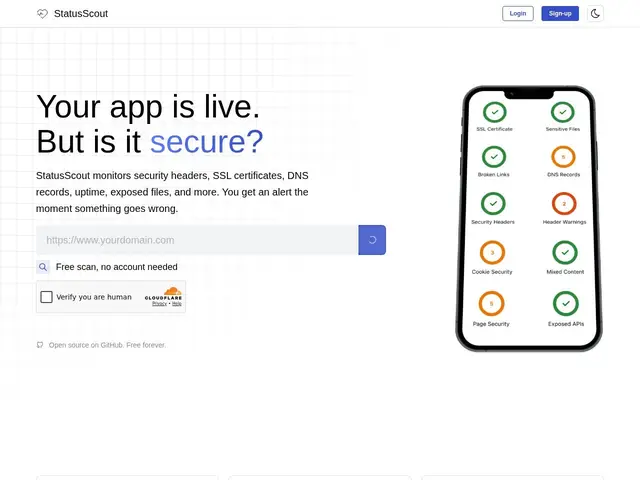
Open-source security and uptime monitoring that scans for missing security headers, expiring SSL certs, exposed secrets, and downtime.
statusscout.dev
Some things you need to track on the web don't fit an RSS feed or a single site's alerts — a competitor's pricing page changing, new mentions of your product, a hiring signal, a specific kind of listing appearing. The usual fix is checking manually or writing a one-off scraper, which breaks the moment the target site changes its layout. OpenMonitor turns that into a standing job: describe what you're looking for in plain language, pick which search engine should run it, and it re-runs the search on a schedule, only surfacing results that pass your filter. What sets OpenMonitor apart from a single-vendor monitoring product is that it's explicitly provider-agnostic — it can route the same monitoring job through Exa, Tavily, Brave, Perplexity, Kagi, Firecrawl, and eight others, rather than locking you into one search backend's blind spots and pricing. Filtering criteria are written as natural-language sentences rather than regex or rigid rules, results deliver via Slack or a generic webhook, and API keys for the underlying providers stay edge-managed rather than exposed to the agent itself. It's open source (github.com/diggerhq/openmonitor, from the team behind the Digger IaC tool) and runs serverless on the OpenComputer platform, with no public pricing listed as of this review.
| # | Tool | Best for | Price |
|---|---|---|---|
| 1 | Developers, freelancers, and agencies monitoring uptime and security posture for client sites | — | |
| 2 | DevOps/SRE teams, especially in regulated/data-residency-constrained environments | — | |
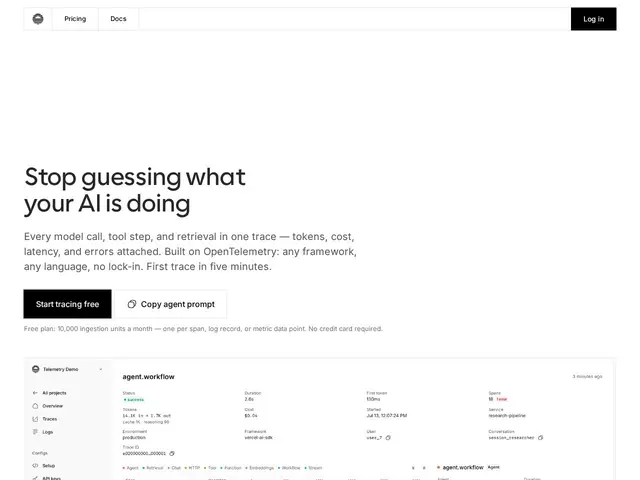
| 3 | Developers and engineers building AI applications needing production observability | — | |
| 4 | Teams wanting self-hosted uptime monitoring with fewer false alarms | — | |
| 5 | Développeurs et équipes CI/CD voulant diagnostiquer des incidents localement sans envoyer leurs logs dans le cloud | — | |
| 6 | Équipes DevOps et self-hosters gérant quelques serveurs/containers qui veulent un tableau de bord de disponibilité | — | |
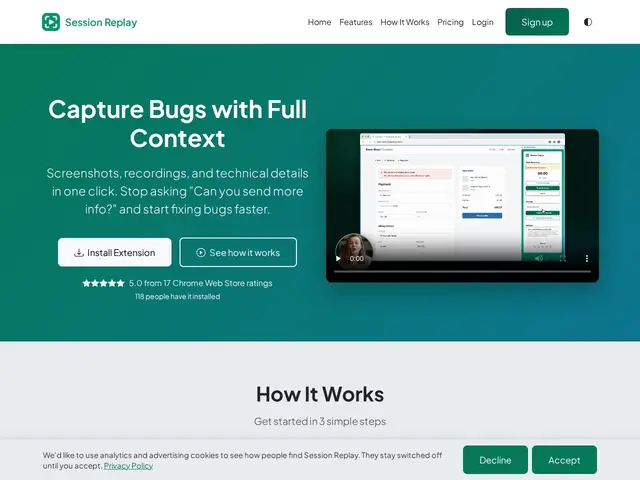
| 7 | Équipes QA, développeurs et support technique qui reçoivent des rapports de bugs imprécis de la part de non-techniciens | — | |
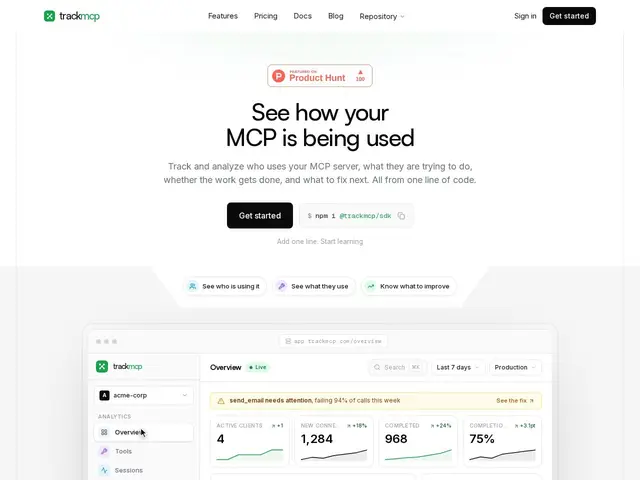
| 8 | Développeurs et mainteneurs de serveurs MCP voulant des analyses d'usage et de fiabilité | — | |
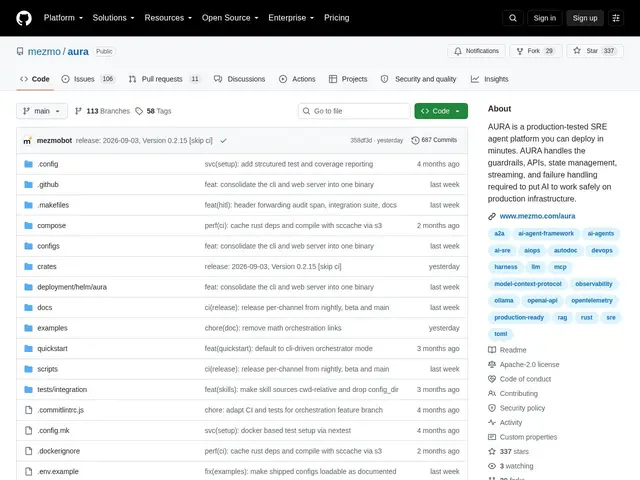
| 9 | Équipes SRE et ops voulant expérimenter la réponse aux incidents assistée par IA avec des garde-fous | — | |
| 10 | Équipes construisant des applications LLM/agents ayant besoin de tracer coûts et performance des appels modèles | — | |
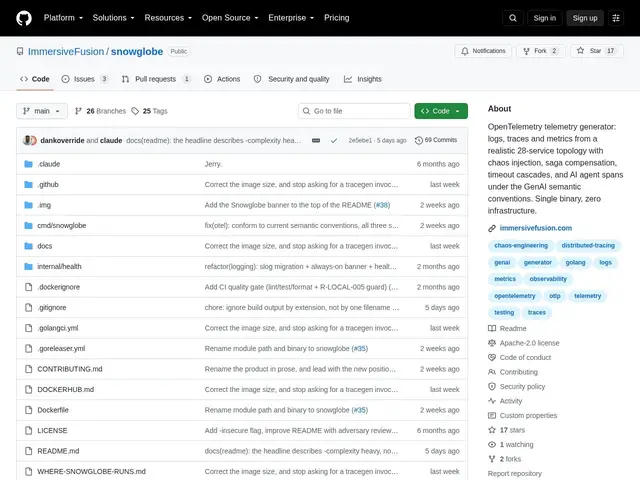
| 11 | Équipes développant ou évaluant des outils d'observabilité/APM ayant besoin de données de télémétrie réalistes sans vraie infra | — | |
| 12 | Ingénieurs IA et développeurs utilisant Claude Code ou Codex qui veulent auditer le raisonnement de l'agent en temps réel. | — |
Open-source security and uptime monitoring that scans for missing security headers, expiring SSL certs, exposed secrets, and downtime.
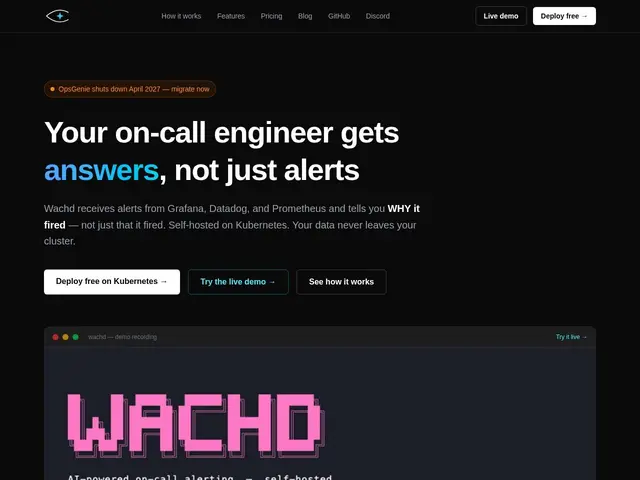
Self-hosted, AI-powered root cause analysis for on-call alerts from Grafana, Datadog and Prometheus.
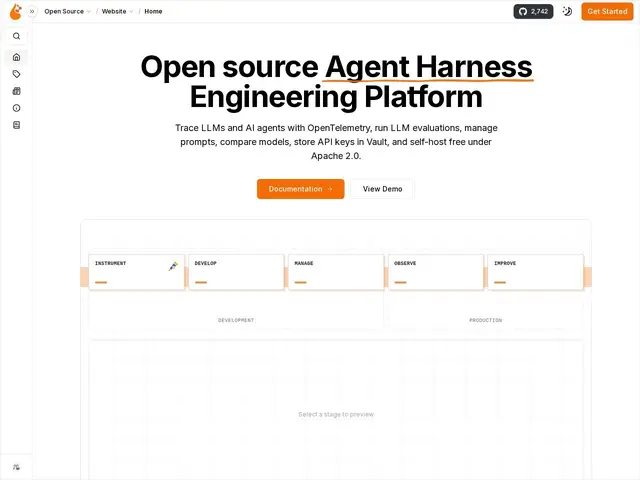
Open-source, self-hosted observability platform for LLM applications, built on OpenTelemetry.
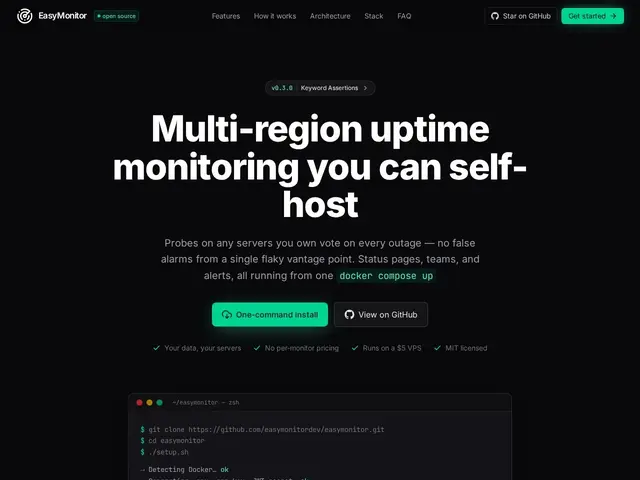
Self-hosted uptime monitoring with multi-region quorum voting to cut false alarms.
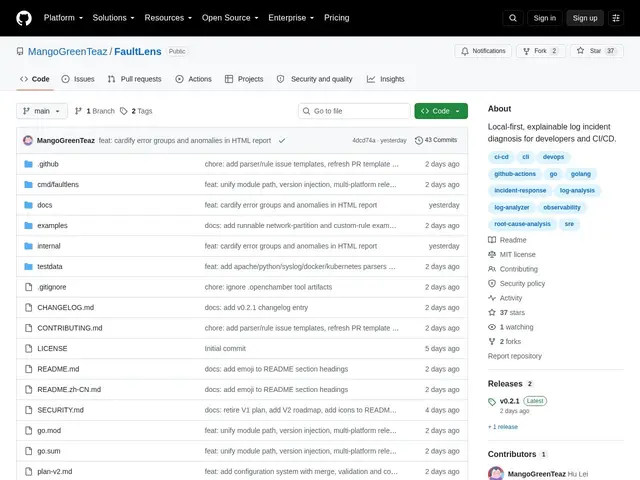
A local-first, offline log analysis tool written in Go that turns raw application logs into structured incident diagnoses with evidence-based root-cause hypotheses.
A lightweight, self-hosted service health dashboard written in Go that auto-discovers Docker containers and monitors uptime via heartbeats and active HTTP/TCP/ICMP checks.
Chrome extension that captures a screenshot, video, console logs, and network details of a bug in one click, no manual writeup needed
One-line analytics integration for MCP servers, showing which AI clients connect, tool adoption, and silent failures
Open-source platform for letting AI agents safely investigate and respond to production incidents, with built-in guardrails
Observability platform purpose-built for tracing and cost-tracking LLM applications
Fake but realistic telemetry generator to test your observability stack without real infrastructure
A local proxy that lets Claude Code or Codex display their reasoning on a dashboard, so you can see what the model is actually deciding — and rejecting — while it works.