EasyMonitor
Self-hosted uptime monitoring with multi-region quorum voting to cut false alarms.
🔗 Visit EasyMonitor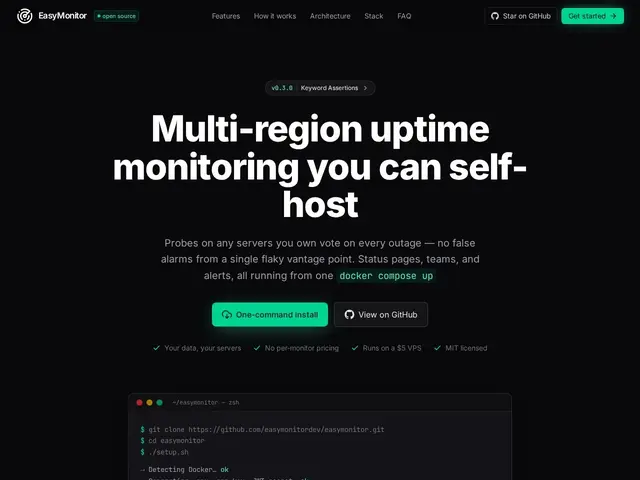
Description
EasyMonitor watches your websites and servers from several locations at once and only sounds the alarm when a majority of those locations agree something is actually down — like asking three different people if the lights are off before waking everyone up, instead of trusting one person who might just have a bad view.
That quorum-voting design across self-hosted probes is meant to solve the classic uptime-monitor annoyance of false alarms from a single flaky network path. It's open source (MIT), stores metrics in TimescaleDB with compression for efficient long-term retention, and includes custom-domain status pages with automatic HTTPS, role-based team access, and alerts via email, Slack, Discord, Pushover and webhooks — deployable on a $5/month VPS with unlimited monitors.
💬 Our review
The short version: EasyMonitor's actual selling point is reducing false-positive alerts through multi-region quorum voting — worth choosing specifically for that reason, not just because it's "another free Uptime Kuma alternative."
This is a genuinely crowded niche: Uptime Kuma, OpenStatus, Checkmate and Upptime are all free, open-source, self-hosted options already well established, some with thousands of GitHub stars and years of community testing. EasyMonitor's differentiator — several probes voting on whether an outage is real — directly targets a real, common pain point (a monitor flagging "down" because of ITS network, not yours), but the project doesn't yet have public GitHub star data confirming community traction the way its competitors do. If quorum-based false-alarm reduction genuinely matters for your setup, it's worth a pilot; otherwise, the more established Uptime Kuma has a much larger community and battle-tested reliability.
💰 Pricing
📊 Global score
🤖 AI-enriched data
MIT licensed, self-hosted, no per-monitor pricing
Pros
Multi-region quorum voting cuts false alarms
Free, open source, self-hosted
Runs on minimal hardware ($5 VPS)
TimescaleDB compression for long-term storage
Cons
Crowded niche with established competitors
No public star count/community data yet
Requires self-hosting knowledge