Incident management platform built entirely around Slack, with an AI layer that helps draft fixes, and status pages that keep customers informed automatically during an outage.
incident.io
When something breaks in production, the last thing you want is alerts scattered across five different tools while nobody's sure whose turn it is to respond. Zenduty centralizes that: it collects alerts from your monitoring stack, figures out who's on call, notifies them (by phone, SMS, Slack, or app), and manages the whole incident from first alert to postmortem, so the response process doesn't rely on someone remembering a spreadsheet schedule. Zenduty integrates with 150+ monitoring and communication tools, offers automated on-call scheduling and escalation policies, real-time incident response via Slack/Teams, and mobile apps for iOS/Android. Its AI layer (ZenAI) assists with scheduling and generates automated postmortems. Pricing starts at $6/user/month (Starter, up to 5 users) and $16/user/month (Growth, up to 50 users), with a 14-day free trial and no credit card required. The company reports 1,000+ business customers and a 4.6/5 G2 rating; some product lines are marketed under the Xurrent IMR brand.
| # | Tool | Best for | Price |
|---|---|---|---|
| 1 | Mid-market and enterprise engineering teams (100+ engineers) | — | |
| 2 | Développeurs | — | |
| 3 | Développeurs | — | |
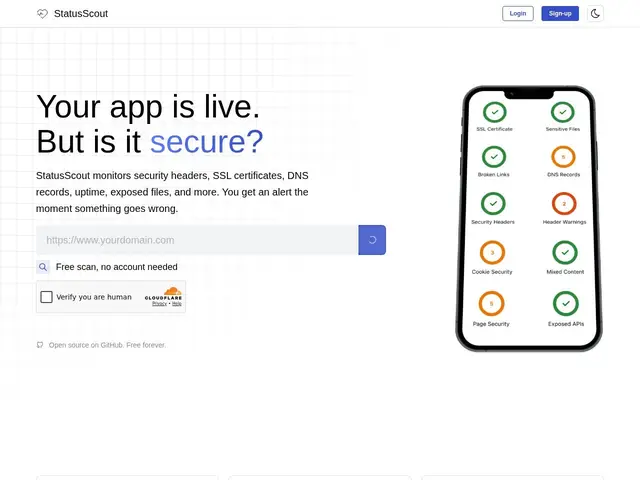
| 4 | Developers, freelancers, and agencies monitoring uptime and security posture for client sites | — | |
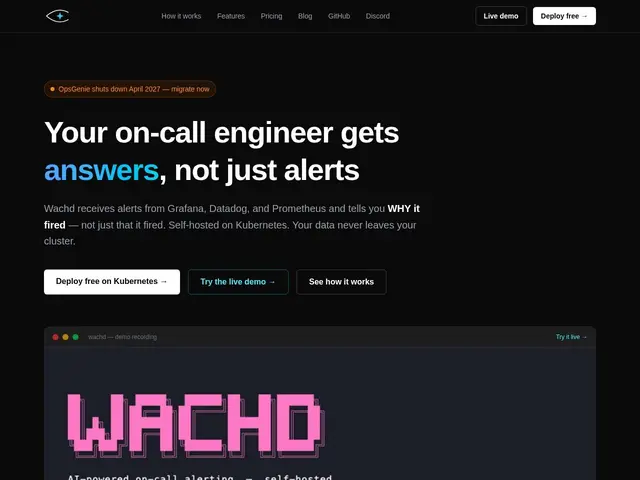
| 5 | DevOps/SRE teams, especially in regulated/data-residency-constrained environments | — | |
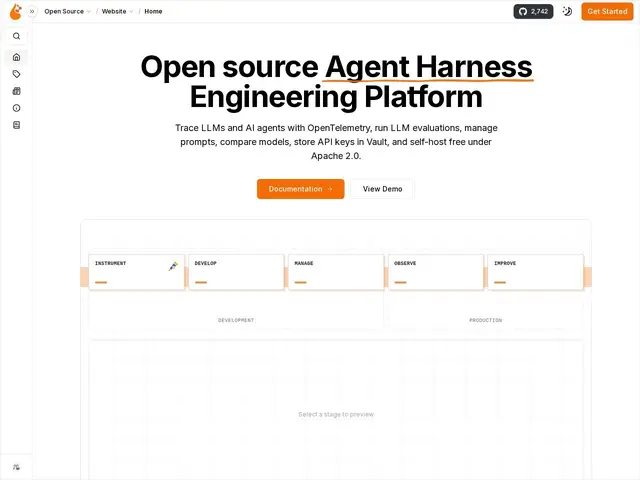
| 6 | Developers and engineers building AI applications needing production observability | — | |
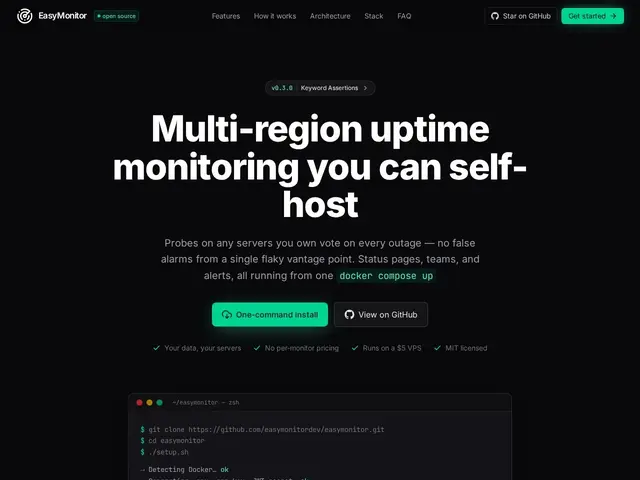
| 7 | Teams wanting self-hosted uptime monitoring with fewer false alarms | — | |
| 8 | Développeurs et équipes techniques voulant surveiller le web en continu sans dépendre d'un seul moteur de recherche | — | |
| 9 | Développeurs et équipes CI/CD voulant diagnostiquer des incidents localement sans envoyer leurs logs dans le cloud | — | |
| 10 | Équipes DevOps et self-hosters gérant quelques serveurs/containers qui veulent un tableau de bord de disponibilité | — | |
| 11 | Équipes QA, développeurs et support technique qui reçoivent des rapports de bugs imprécis de la part de non-techniciens | — | |
| 12 | Développeurs et mainteneurs de serveurs MCP voulant des analyses d'usage et de fiabilité | — |
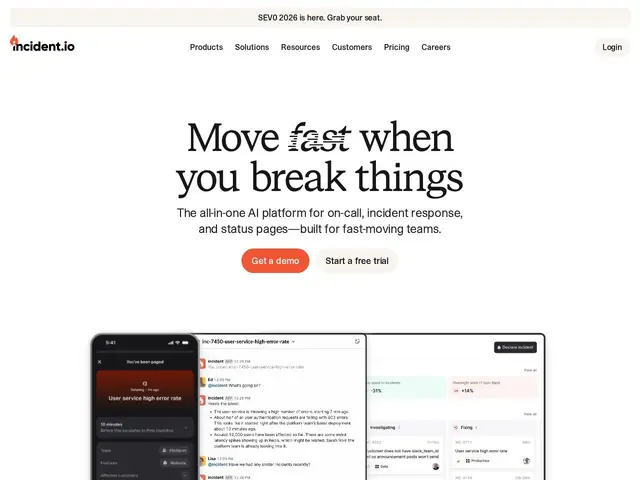
Incident management platform built entirely around Slack, with an AI layer that helps draft fixes, and status pages that keep customers informed automatically during an outage.
Open-source security and uptime monitoring that scans for missing security headers, expiring SSL certs, exposed secrets, and downtime.
Self-hosted, AI-powered root cause analysis for on-call alerts from Grafana, Datadog and Prometheus.
Open-source, self-hosted observability platform for LLM applications, built on OpenTelemetry.
Self-hosted uptime monitoring with multi-region quorum voting to cut false alarms.
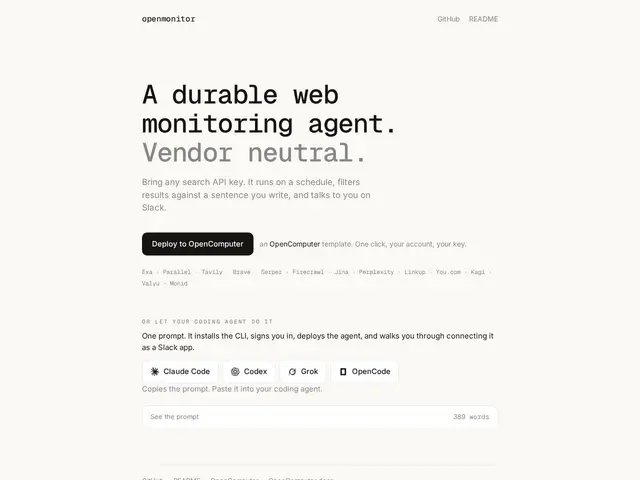
An open-source cloud agent that keeps re-running a web search on a schedule across 13+ search providers, and pings Slack or a webhook only when something new matches your criteria.
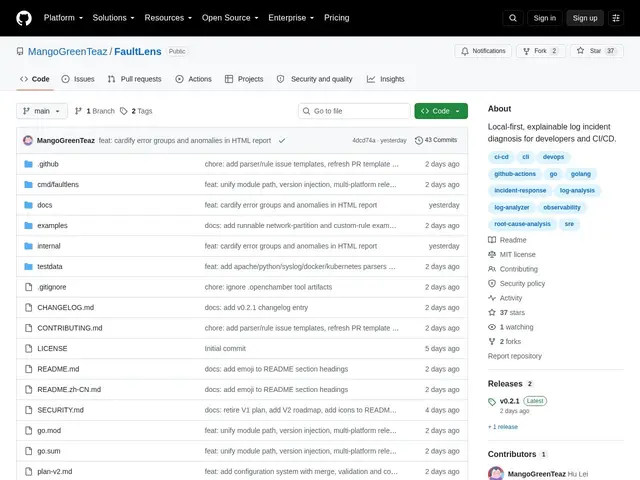
A local-first, offline log analysis tool written in Go that turns raw application logs into structured incident diagnoses with evidence-based root-cause hypotheses.
A lightweight, self-hosted service health dashboard written in Go that auto-discovers Docker containers and monitors uptime via heartbeats and active HTTP/TCP/ICMP checks.
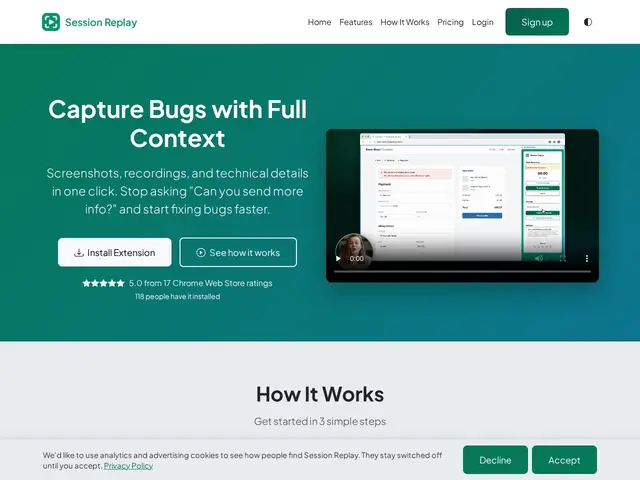
Chrome extension that captures a screenshot, video, console logs, and network details of a bug in one click, no manual writeup needed
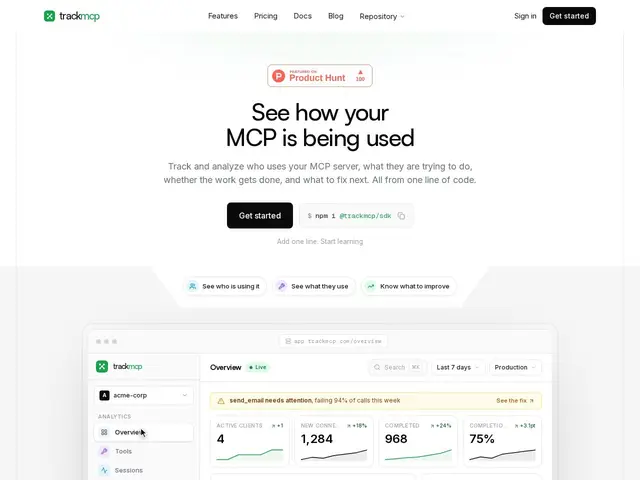
One-line analytics integration for MCP servers, showing which AI clients connect, tool adoption, and silent failures