Manage databases, supports PostgreSQL, MySQL, SQLite and more. A web/hosted version of DBeaver. ([Source Code](https://github.com/dbeaver/cloudbeaver)) `Apache-2.0` `Docker`
dbeaver.com
Poking around a database to check or fix some data usually means either firing up a heavyweight desktop app or writing raw SQL by hand. WhoDB is a much lighter alternative — a small, self-hosted tool you can spin up in seconds with Docker that gives you a spreadsheet-style view of your tables, with optional AI chat if you'd rather ask a question in plain English than write the query yourself. WhoDB provides spreadsheet-style data browsing with filtering, sorting and inline editing, interactive schema visualization showing table relationships, a multi-cell query scratchpad with autocomplete, and data import/export. Optional AI integration (Ollama, OpenAI, Anthropic, Gemini) enables natural language queries without being required. It's available as a Docker container, desktop app (macOS/Windows/Snap), or terminal CLI, with MCP server support for AI tool integration, and supports 12+ database types spanning SQL (PostgreSQL, MySQL, SQLite, CockroachDB) and NoSQL/search engines (MongoDB, Redis, Elasticsearch, ClickHouse).
| # | Tool | Best for | Price |
|---|---|---|---|
| 1 | Développeurs | — | |
| 2 | Développeurs | — | |
| 3 | Développeurs | — | |
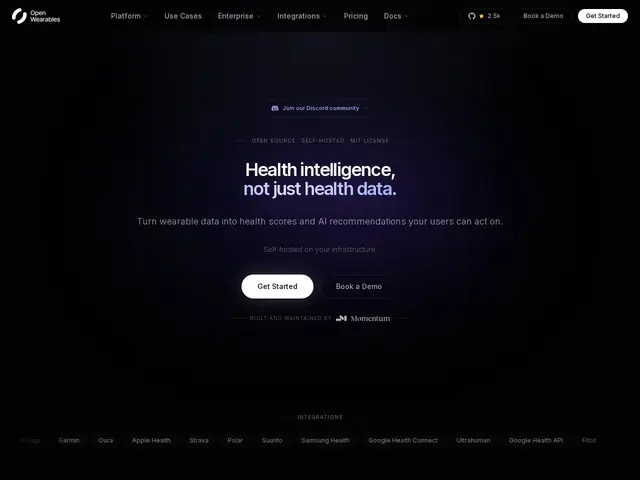
| 4 | Health product teams and SaaS companies building on wearable data | — | |
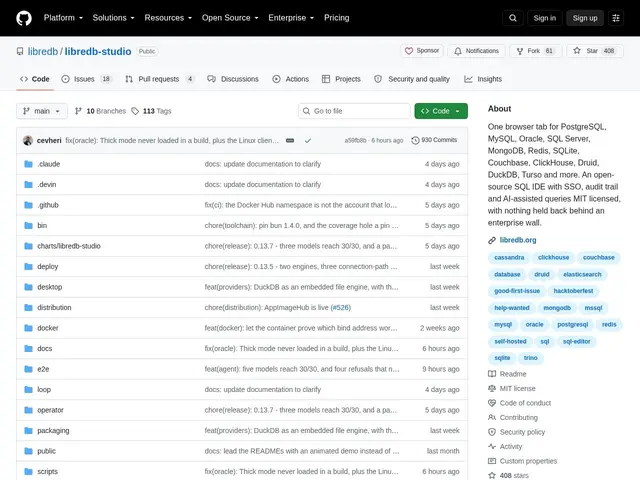
| 5 | DBA, développeurs, analystes data cherchant un accès partagé et gouverné aux bases | — | |
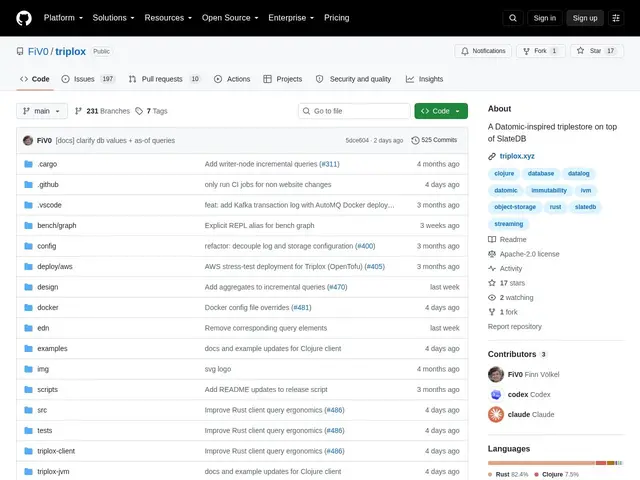
| 6 | Développeurs voulant le modèle de données Datomic en open source sur object storage | — | |
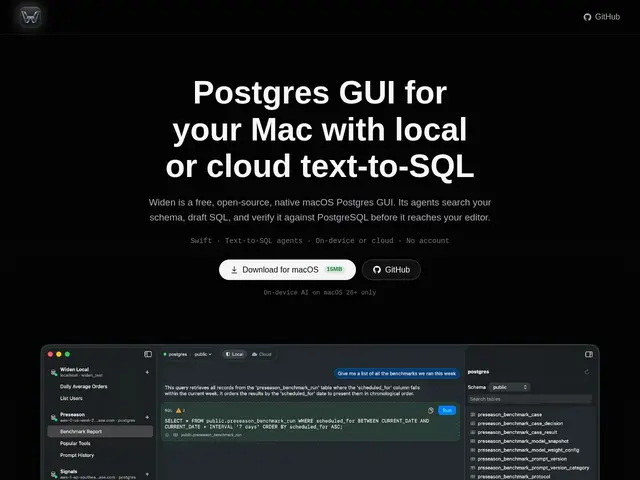
| 7 | Développeurs macOS gérant leurs propres bases PostgreSQL | — | |
| 8 | Développeurs et DBA PostgreSQL cherchant une alternative moderne et légère | — | |
| 9 | Développeurs et DBA gérant plusieurs moteurs de bases de données | — | |
| 10 | DBA et développeurs gérant des bases PostgreSQL/MySQL/MariaDB/ClickHouse existantes | — | |
| 11 | Développeurs Python qui préfèrent des requêtes proches du SQL avec typage statique plutôt qu'un ORM à fort niveau d'abstraction | — | |
| 12 | Développeurs et ingénieurs data/DevOps travaillant avec PostgreSQL, MySQL ou MariaDB au quotidien | — |
Open-source, self-hosted API that unifies data from Apple Health, Garmin, Whoop, and Oura into AI-powered health insights.
Free, self-hosted browser SQL IDE covering 16 database engines, with ER diagrams, an AI query agent, and RBAC/audit trails built in.
Open-source database inspired by Datomic, running on S3-backed storage with incremental Datalog queries and clients in multiple languages.
Native macOS Postgres GUI that turns plain-English questions into verified SQL, with on-device AI and no account required.
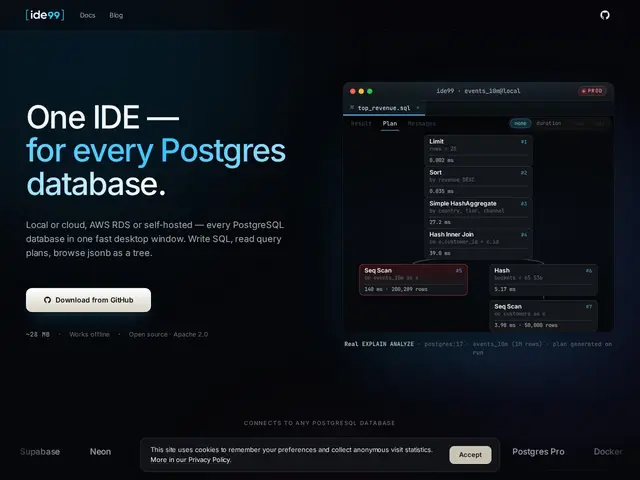
Free, local-first PostgreSQL IDE with a query EXPLAIN visualizer, JSONB browser, and live database health monitoring.
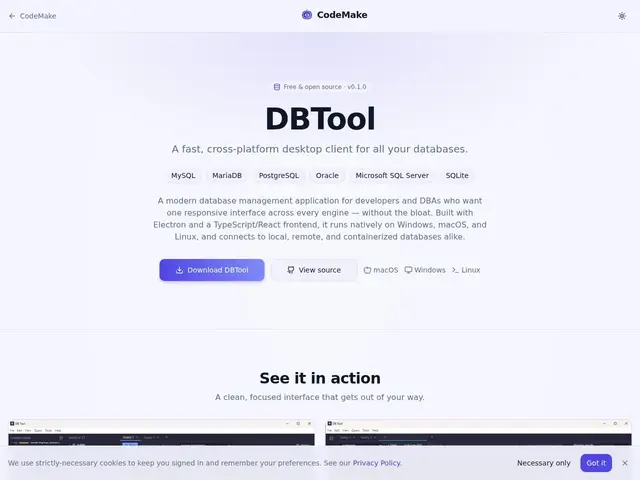
Free cross-platform database client covering MySQL, PostgreSQL, Oracle, SQL Server, MariaDB and SQLite in one lightweight app, no telemetry.
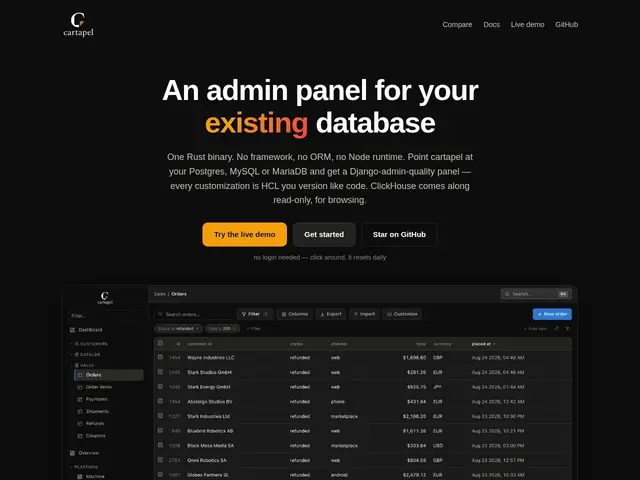
Open-source tool that generates a Django-admin-style control panel for an existing database in about a minute, config-as-code via HCL.
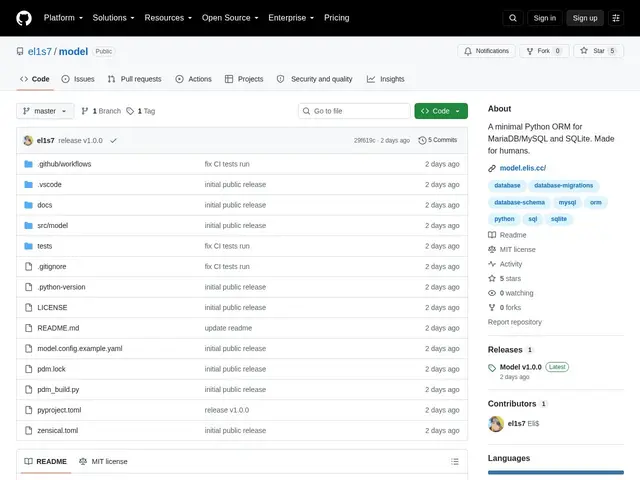
A minimal Python ORM for MySQL, MariaDB and SQLite that favors writing explicit SQL-like queries with full static type checking over the query-building magic of larger ORMs.
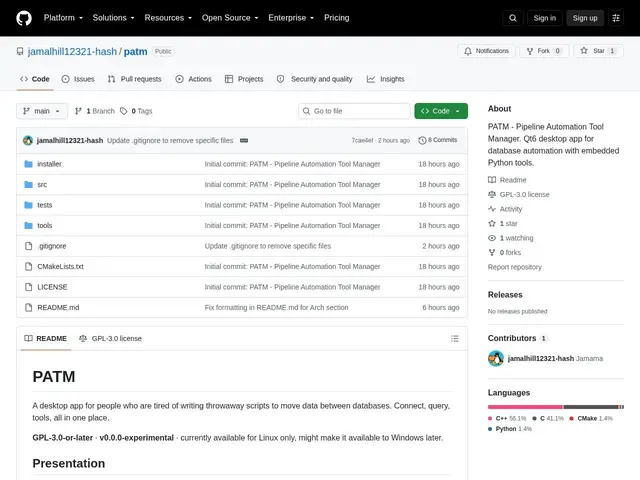
A free desktop app for browsing and moving data between PostgreSQL, MySQL and MariaDB databases without writing a one-off script every time you need to copy a table.