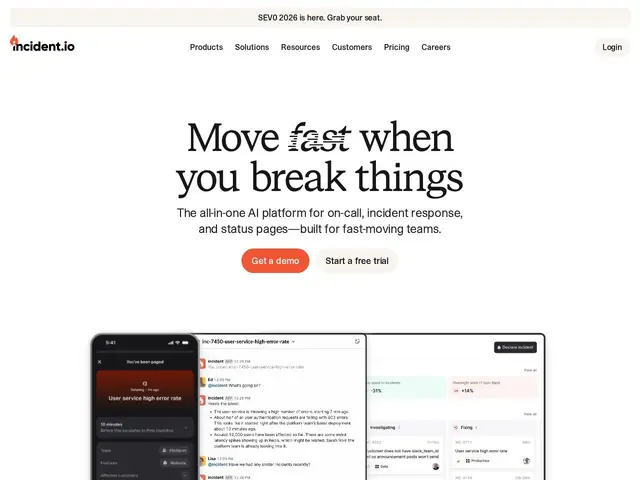
Incident management platform built entirely around Slack, with an AI layer that helps draft fixes, and status pages that keep customers informed automatically during an outage.
incident.io
When something breaks in production, an engineering team needs to figure out who's on call, coordinate everyone in one place, work out what actually went wrong, and then write up what happened afterward — all under pressure, often at 3am. Rootly builds that whole workflow into Slack (or Teams) directly, with an AI layer that starts investigating the moment an alert fires and drafts the retrospective report once things are fixed, so the team spends less time on process and more on actually solving the problem. Rootly covers AI SRE assistance that analyzes code changes, telemetry and past incidents to surface likely root causes, on-call scheduling with a claimed 99.99% reliability, deep Slack/Teams-based incident coordination, automated retrospective generation from smart templates, customer-facing status pages, and 50+ integrations (Jira, Zoom, Terraform). It's positioned as a modern alternative to legacy tools like PagerDuty, with startup-friendly discounts (up to 50% off for smaller, younger companies) alongside enterprise pricing for larger organizations.
| # | Tool | Best for | Price |
|---|---|---|---|
| 1 | Mid-market and enterprise engineering teams (100+ engineers) | — | |
| 2 | Développeurs | — | |
| 3 | Développeurs | — | |
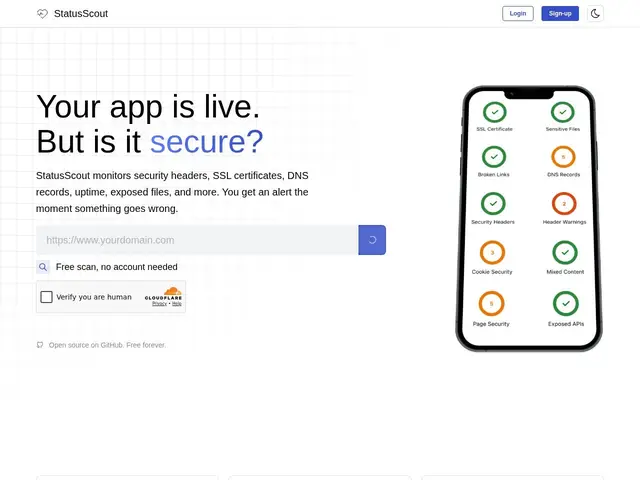
| 4 | Developers, freelancers, and agencies monitoring uptime and security posture for client sites | — | |
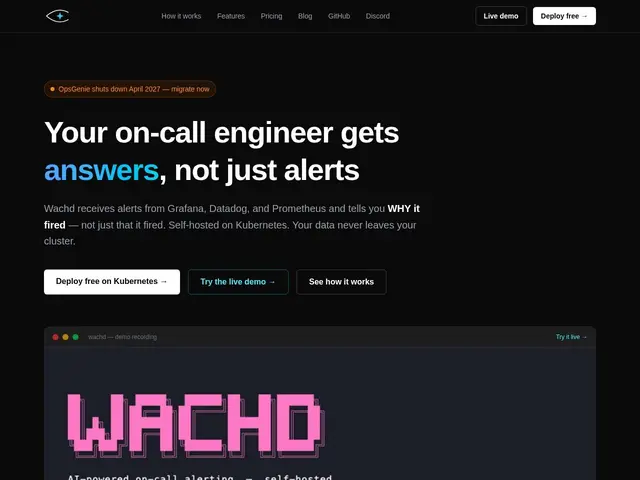
| 5 | DevOps/SRE teams, especially in regulated/data-residency-constrained environments | — | |
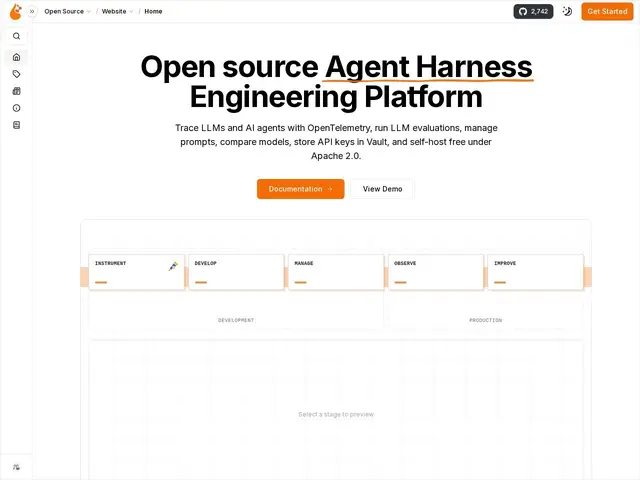
| 6 | Developers and engineers building AI applications needing production observability | — | |
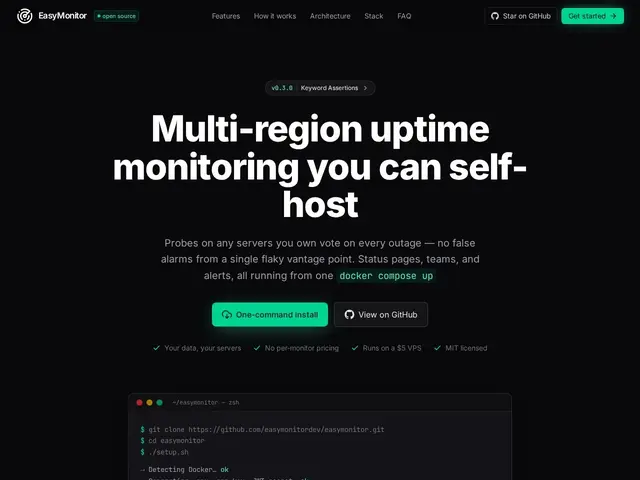
| 7 | Teams wanting self-hosted uptime monitoring with fewer false alarms | — | |
| 8 | Développeurs et équipes techniques voulant surveiller le web en continu sans dépendre d'un seul moteur de recherche | — | |
| 9 | Développeurs et équipes CI/CD voulant diagnostiquer des incidents localement sans envoyer leurs logs dans le cloud | — | |
| 10 | Équipes DevOps et self-hosters gérant quelques serveurs/containers qui veulent un tableau de bord de disponibilité | — | |
| 11 | Équipes QA, développeurs et support technique qui reçoivent des rapports de bugs imprécis de la part de non-techniciens | — | |
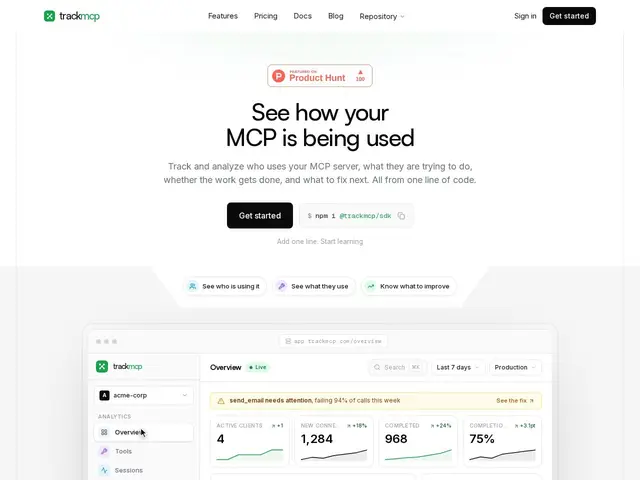
| 12 | Développeurs et mainteneurs de serveurs MCP voulant des analyses d'usage et de fiabilité | — |
Incident management platform built entirely around Slack, with an AI layer that helps draft fixes, and status pages that keep customers informed automatically during an outage.
Open-source security and uptime monitoring that scans for missing security headers, expiring SSL certs, exposed secrets, and downtime.
Self-hosted, AI-powered root cause analysis for on-call alerts from Grafana, Datadog and Prometheus.
Open-source, self-hosted observability platform for LLM applications, built on OpenTelemetry.
Self-hosted uptime monitoring with multi-region quorum voting to cut false alarms.
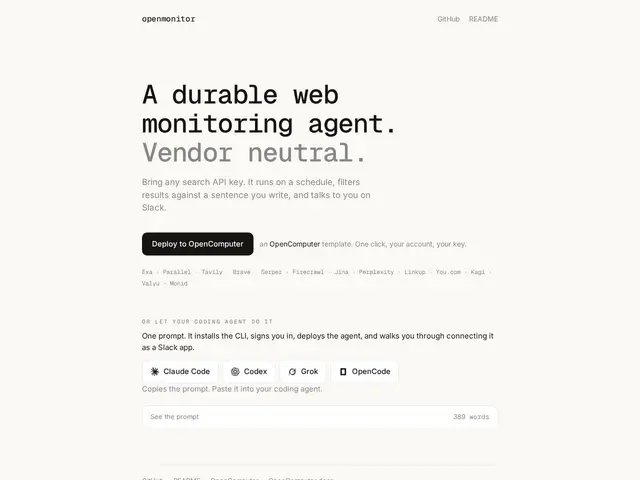
An open-source cloud agent that keeps re-running a web search on a schedule across 13+ search providers, and pings Slack or a webhook only when something new matches your criteria.
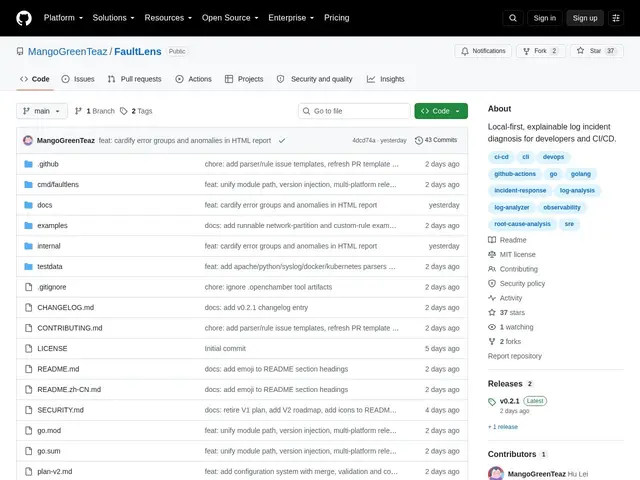
A local-first, offline log analysis tool written in Go that turns raw application logs into structured incident diagnoses with evidence-based root-cause hypotheses.
A lightweight, self-hosted service health dashboard written in Go that auto-discovers Docker containers and monitors uptime via heartbeats and active HTTP/TCP/ICMP checks.
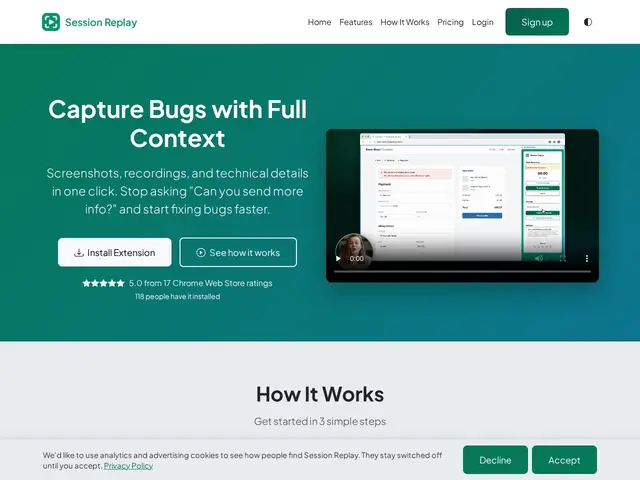
Chrome extension that captures a screenshot, video, console logs, and network details of a bug in one click, no manual writeup needed
One-line analytics integration for MCP servers, showing which AI clients connect, tool adoption, and silent failures