Modern, self-hosted monitoring tool with a clean UI and rich notification support. ([Source Code](https://github.com/louislam/uptime-kuma)) `MIT` `NodeJS`
uptime.kuma.pet
The classic uptime-monitoring problem isn't detecting downtime — it's detecting it reliably. A monitor running from one location can flag your site as "down" just because of a routing hiccup between that one probe and your server, triggering a false alert. Larm checks from four continents before confirming an incident, and pairs that with full request traces (DNS, TCP, TLS, and time-to-first-byte breakdowns) so when something is actually down, you get a concrete starting point for debugging instead of just a red dot. Beyond plain HTTP checks, it monitors TCP, DNS, and heartbeat/cron jobs, and produces branded public status pages with 90 days of history. It plugs into 14+ alerting integrations including incident.io and Grafana IRM, and tracks response-time percentiles (p50/p95/p99) over time rather than just a pass/fail state.
| # | Tool | Best for | Price |
|---|---|---|---|
| 1 | Développeurs | — | |
| 2 | Développeurs | — | |
| 3 | Developers, freelancers, and agencies monitoring uptime and security posture for client sites | — | |
| 4 | DevOps/SRE teams, especially in regulated/data-residency-constrained environments | — | |
| 5 | Developers and engineers building AI applications needing production observability | — | |
| 6 | Teams wanting self-hosted uptime monitoring with fewer false alarms | — | |
| 7 | Développeurs et équipes techniques voulant surveiller le web en continu sans dépendre d'un seul moteur de recherche | — | |
| 8 | Développeurs et équipes CI/CD voulant diagnostiquer des incidents localement sans envoyer leurs logs dans le cloud | — | |
| 9 | Équipes DevOps et self-hosters gérant quelques serveurs/containers qui veulent un tableau de bord de disponibilité | — | |
| 10 | Équipes QA, développeurs et support technique qui reçoivent des rapports de bugs imprécis de la part de non-techniciens | — | |
| 11 | Développeurs et mainteneurs de serveurs MCP voulant des analyses d'usage et de fiabilité | — | |
| 12 | Équipes SRE et ops voulant expérimenter la réponse aux incidents assistée par IA avec des garde-fous | — |
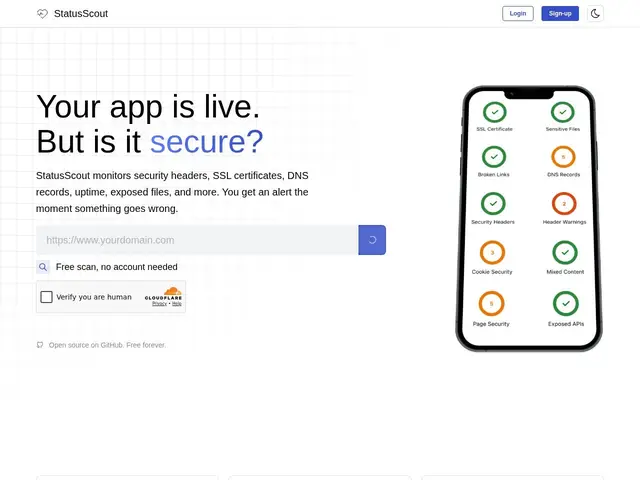
Open-source security and uptime monitoring that scans for missing security headers, expiring SSL certs, exposed secrets, and downtime.
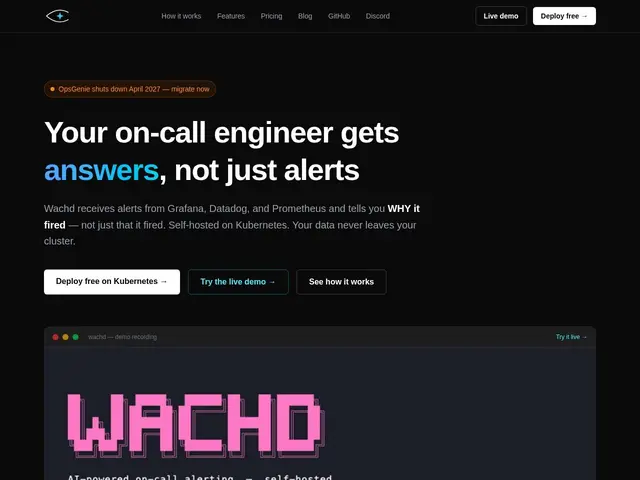
Self-hosted, AI-powered root cause analysis for on-call alerts from Grafana, Datadog and Prometheus.
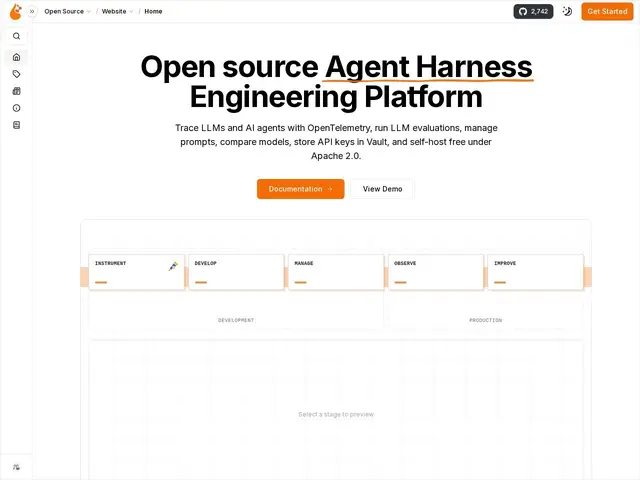
Open-source, self-hosted observability platform for LLM applications, built on OpenTelemetry.
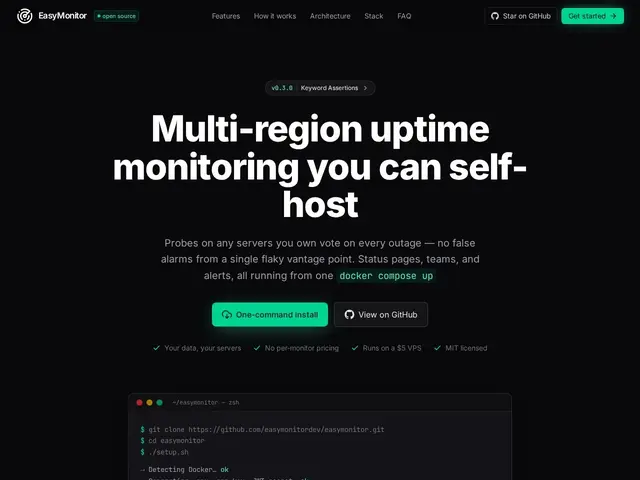
Self-hosted uptime monitoring with multi-region quorum voting to cut false alarms.
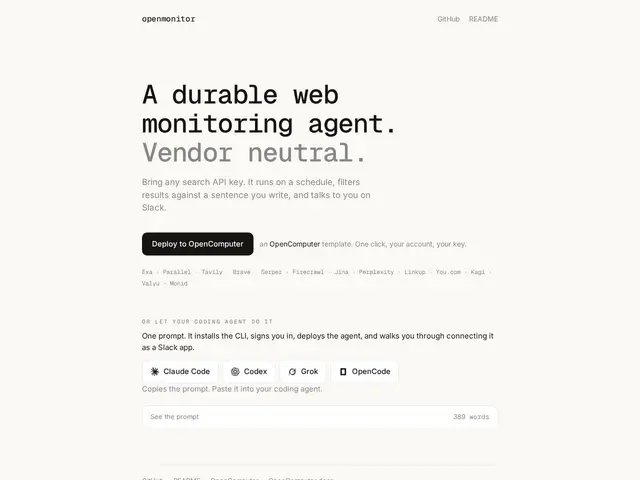
An open-source cloud agent that keeps re-running a web search on a schedule across 13+ search providers, and pings Slack or a webhook only when something new matches your criteria.
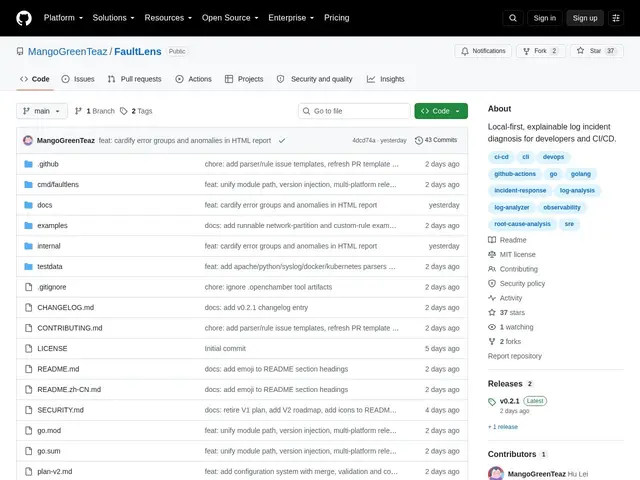
A local-first, offline log analysis tool written in Go that turns raw application logs into structured incident diagnoses with evidence-based root-cause hypotheses.
A lightweight, self-hosted service health dashboard written in Go that auto-discovers Docker containers and monitors uptime via heartbeats and active HTTP/TCP/ICMP checks.
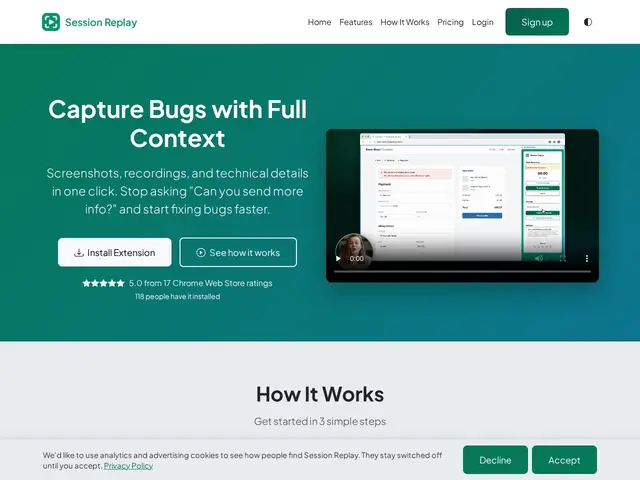
Chrome extension that captures a screenshot, video, console logs, and network details of a bug in one click, no manual writeup needed
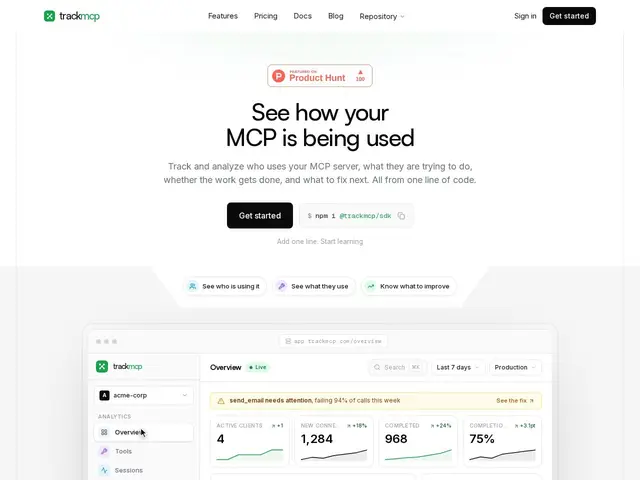
One-line analytics integration for MCP servers, showing which AI clients connect, tool adoption, and silent failures
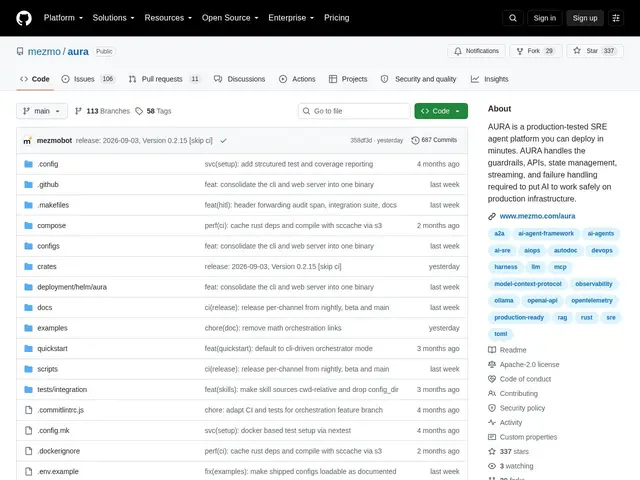
Open-source platform for letting AI agents safely investigate and respond to production incidents, with built-in guardrails