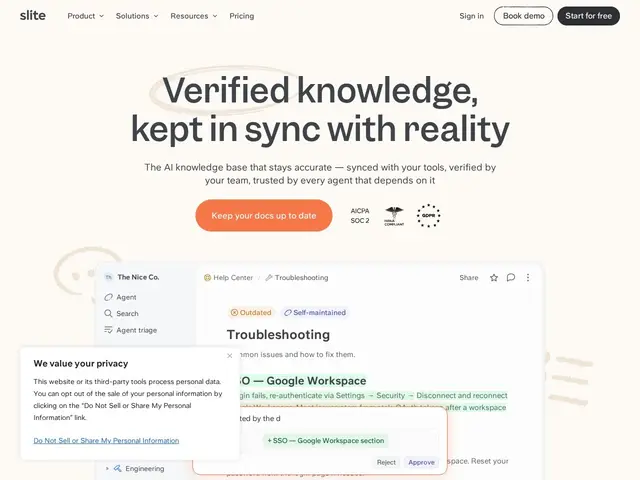
A team wiki that tries to notice when it's wrong — an AI agent watches your connected tools (Slack, Jira, GitHub and more) for changes and drafts an update to the relevant doc before it goes stale, instead of waiting for someone to remember to fix it.
Best alternatives to FeedFast in 2026
If you've ever shipped a small SaaS product, you know the annoying part isn't building it — it's the busywork around it. Telling users what changed, hearing what they want next, and making sure your site is actually online. Most people end up duct-taping together a changelog page, a feedback form, and a status page from three different services. FeedFast bets that a solo founder doesn't need three subscriptions to do that — just one. FeedFast publishes a public changelog as a real feed (so people can follow it without handing over an email address), runs a no-login feedback board where users upvote ideas with one click, and pings your site on a schedule to catch downtime — with a way to mark planned maintenance so it doesn't trigger a false incident. Everything drops into your own product via a single embeddable script: a changelog widget, a feedback button, an uptime bar. It also ships an MCP server, so an AI coding agent can read the feedback board or publish a changelog entry directly instead of you copy-pasting between tools.
Quick comparison of FeedFast alternatives
| # | Tool | Best for | Price |
|---|---|---|---|
| 1 | Équipes qui migrent d'un wiki devenu obsolète (Notion, Confluence) parce que la documentation dérive de la réalité sans mise à jour manuelle | — | |
| 2 | Petites entreprises | Développeurs | — | |
| 3 | Développeurs | — | |
| 4 | Developers, freelancers, and agencies monitoring uptime and security posture for client sites | — | |
| 5 | DevOps/SRE teams, especially in regulated/data-residency-constrained environments | — | |
| 6 | Developers and engineers building AI applications needing production observability | — | |
| 7 | Teams wanting self-hosted uptime monitoring with fewer false alarms | — | |
| 8 | Développeurs et équipes techniques voulant surveiller le web en continu sans dépendre d'un seul moteur de recherche | — | |
| 9 | Développeurs et équipes CI/CD voulant diagnostiquer des incidents localement sans envoyer leurs logs dans le cloud | — | |
| 10 | Équipes DevOps et self-hosters gérant quelques serveurs/containers qui veulent un tableau de bord de disponibilité | — | |
| 11 | Équipes QA, développeurs et support technique qui reçoivent des rapports de bugs imprécis de la part de non-techniciens | — | |
| 12 | Développeurs et mainteneurs de serveurs MCP voulant des analyses d'usage et de fiabilité | — |
- ✓ Agent IA qui détecte et corrige la dérive de documentation
- ✓ Recherche cross-outils sur de nombreuses intégrations
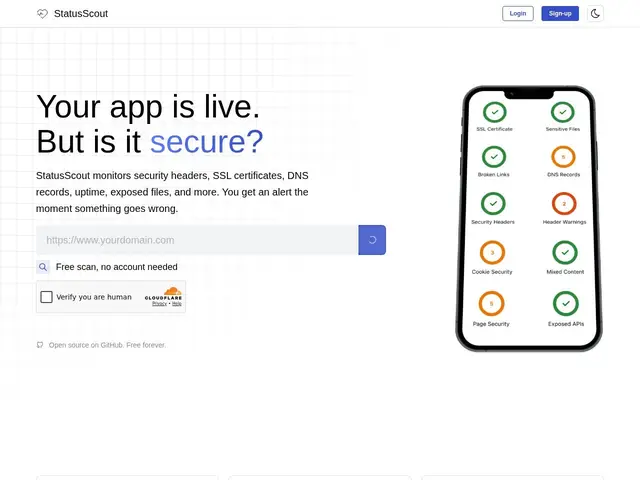
Open-source security and uptime monitoring that scans for missing security headers, expiring SSL certs, exposed secrets, and downtime.
- ✓ Combines uptime, SSL expiration, security header, and exposed-secret scanning in one tool
- ✓ Open-source and free forever when self-hosted
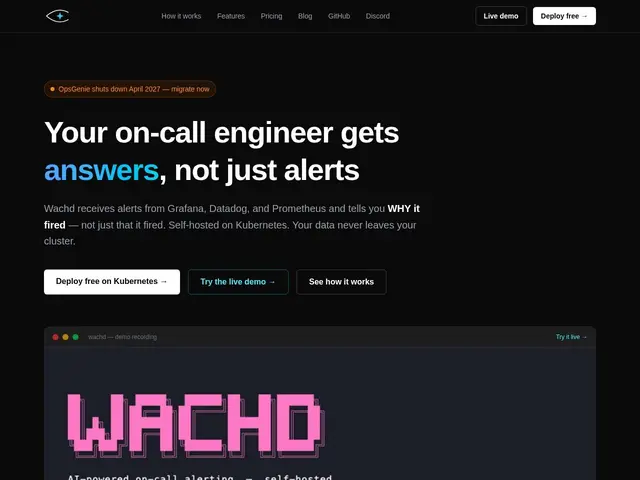
Self-hosted, AI-powered root cause analysis for on-call alerts from Grafana, Datadog and Prometheus.
- ✓ Self-hosted, works fully air-gapped with local Ollama models
- ✓ Correlates commits, logs and metrics automatically for root cause hints
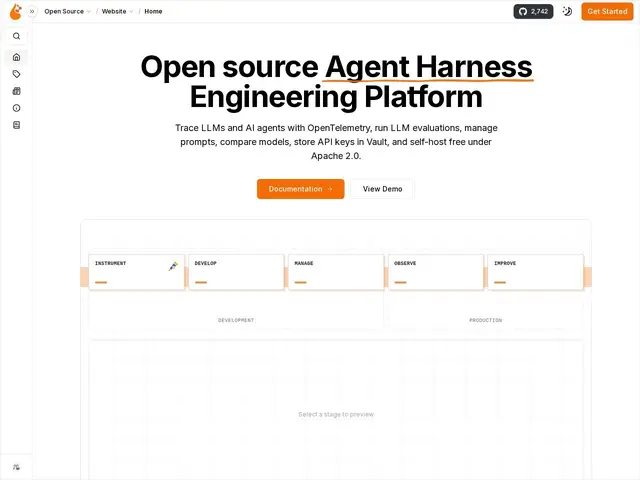
Open-source, self-hosted observability platform for LLM applications, built on OpenTelemetry.
- ✓ Free and open source (Apache 2.0)
- ✓ OpenTelemetry-native — integrates with existing OTel pipelines
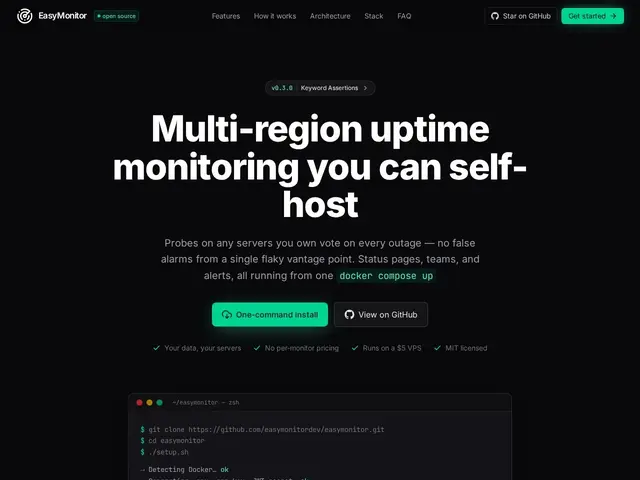
Self-hosted uptime monitoring with multi-region quorum voting to cut false alarms.
- ✓ Multi-region quorum voting reduces false-positive alerts
- ✓ Open source (MIT), self-hosted, runs on a $5 VPS
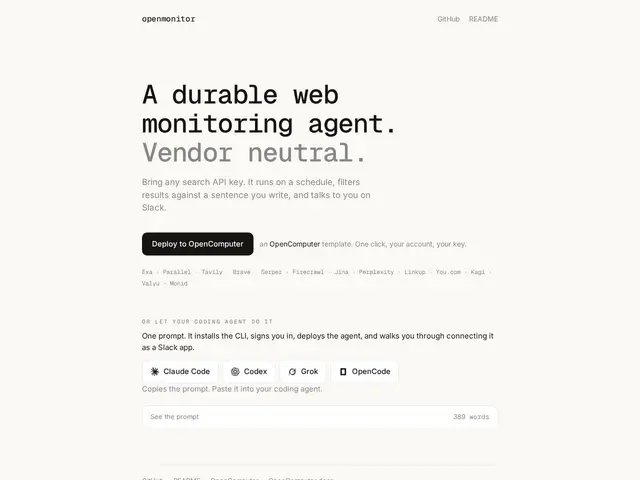
An open-source cloud agent that keeps re-running a web search on a schedule across 13+ search providers, and pings Slack or a webhook only when something new matches your criteria.
- ✓ 13+ fournisseurs de recherche interchangeables sans changer d'outil
- ✓ Filtrage en langage naturel
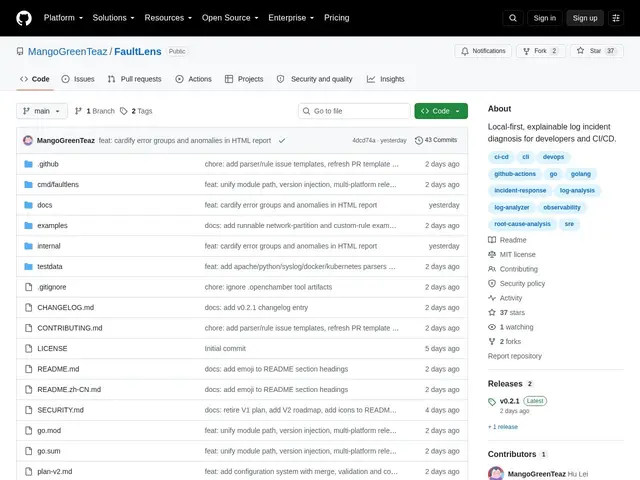
A local-first, offline log analysis tool written in Go that turns raw application logs into structured incident diagnoses with evidence-based root-cause hypotheses.
- ✓ Completely offline and self-contained, no cloud dependency or telemetry
- ✓ Explainable anomaly detection (statistical baselines, not black-box ML)
A lightweight, self-hosted service health dashboard written in Go that auto-discovers Docker containers and monitors uptime via heartbeats and active HTTP/TCP/ICMP checks.
- ✓ Minimal dependencies: single binary, SQLite, no CGO
- ✓ Multiple discovery methods: Docker auto-discovery, push API, active polling
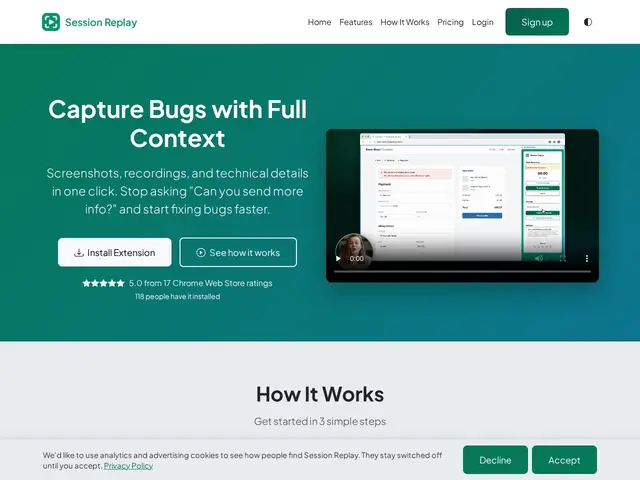
Chrome extension that captures a screenshot, video, console logs, and network details of a bug in one click, no manual writeup needed
- ✓ Capture automatique complète en un clic : screenshot, vidéo, logs console, infos réseau
- ✓ Lien partageable sans inscription requise pour la personne qui rapporte le bug
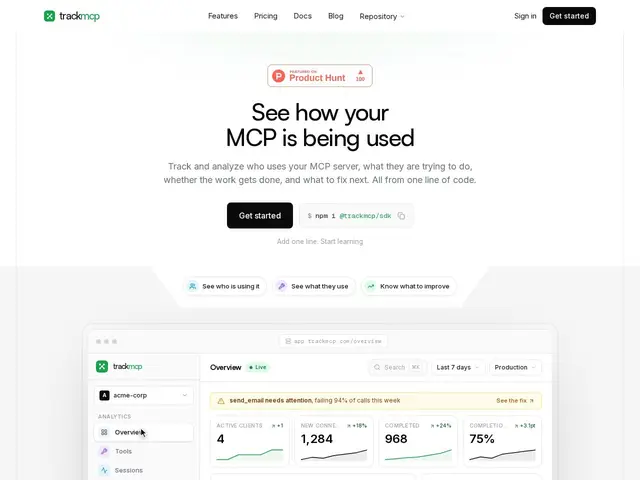
One-line analytics integration for MCP servers, showing which AI clients connect, tool adoption, and silent failures
- ✓ Intégration en une ligne de code, overhead d'implémentation minimal
- ✓ Rapports hebdomadaires en langage clair avec recommandations concrètes plutôt que des tableaux bruts
FAQ about FeedFast alternatives
- What is the best alternative to FeedFast in 2026?
- Based on our selection, Slite is the best alternative to FeedFast in 2026. A team wiki that tries to notice when it's wrong — an AI agent watches your connected tools (Slack, Jira, GitHub and more) for changes and drafts an update to the relevant doc before it goes stale, instead of waiting for someone to remember to fix it.. See our full ranking above to compare all options.
- Is FeedFast free?
- FeedFast is a paid tool. Several alternatives in our selection offer free or freemium versions.
- How many alternatives to FeedFast are there?
- mySelectas has listed 12 alternatives to FeedFast in the Monitoring & Observability category. Our selection is updated regularly to include the best options available.