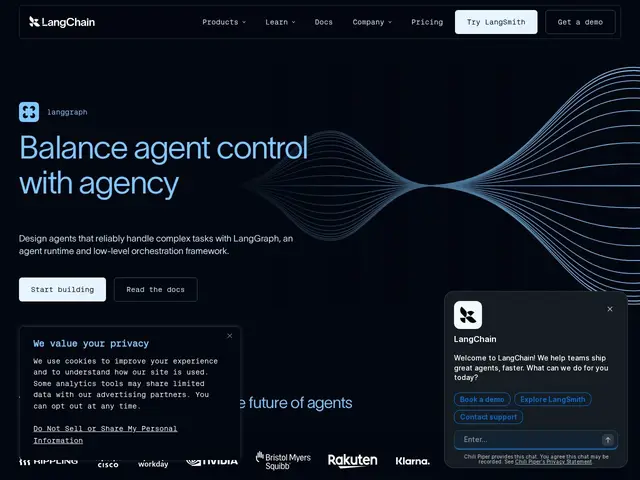
A code library from the LangChain team for building AI agents that can pause, remember where they were, and pick back up later — even after a server restart — instead of losing all progress if something goes wrong mid-task.
langchain.com
When an AI agent needs to call five tools where three of them don't depend on each other, most agent frameworks still run them one after another, burning tokens and time re-explaining context at every step. Dagic gives agents a typed workflow language instead: the agent describes what depends on what, and independent branches run in parallel automatically. It sits deliberately between two extremes — plain sequential tool calling (safe but slow) and letting the agent write and execute arbitrary code (fast but risky) — by having a host register the available operations up front, so the agent composes them into a typed, statically-checked directed acyclic graph rather than generating free-form code. It's built on Python's asyncio (Python 3.10+ required) with a minimalist syntax focused purely on expressing data dependencies. In the project's own benchmarks against sequential LangGraph agents on math-problem tasks, it reports roughly 7x fewer tokens, 3x faster execution, and 3.6x lower cost. It's MIT-licensed, free, with 12 GitHub stars and 33 commits at time of review.
| # | Tool | Best for | Price |
|---|---|---|---|
| 1 | Développeurs construisant des agents IA en production nécessitant un contrôle fin de l'état et de la fiabilité | — | |
| 2 | Développeurs Swift/iOS/macOS construisant des agents IA avec logique multi-étapes et état persistant | — | |
| 3 | Python developers | Automation teams | — | |
| 4 | Utilisateurs non techniques, équipes commerciales/marketing/RH cherchant à automatiser des workflows répétitifs | — | |
| 5 | Équipes développant des agents IA en production (copilotes, startups SaaS, remplacement de systèmes RAG legacy) | — | |
| 6 | Équipes d'ingénierie et entreprises unifiant l'IA à travers plusieurs outils (Slack, GitHub, Linear, Teams) | — | |
| 7 | Developers and enterprise teams with sensitive data (legal, healthcare, compliance) | — | |
| 8 | Developers building AI agent integrations from existing OpenAPI specs | — | |
| 9 | Enterprise teams needing secure, self-hosted workplace AI search | — | |
| 10 | Small and mid-sized law firms priced out of enterprise legal AI | — | |
| 11 | Développeurs construisant des systèmes multi-agents IA ayant besoin d'un point de coordination public léger | — | |
| 12 | Développeurs voulant intégrer la génération d'images Midjourney dans une app, un SaaS ou un pipeline de contenu | — |
A code library from the LangChain team for building AI agents that can pause, remember where they were, and pick back up later — even after a server restart — instead of losing all progress if something goes wrong mid-task.
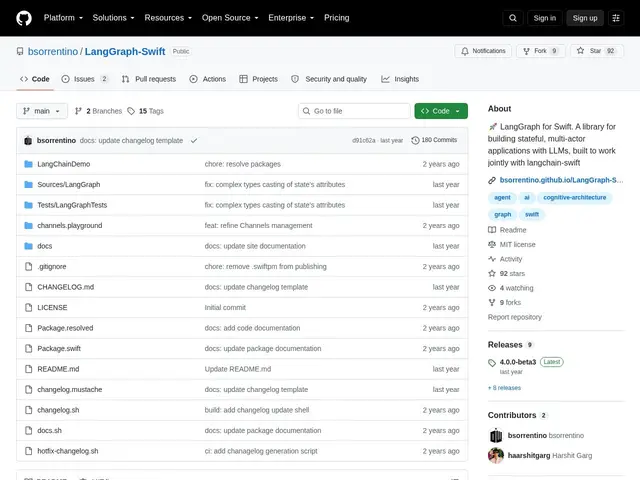
A free, open-source Swift library that brings LangGraph's stateful, multi-step AI agent pattern natively to iOS and macOS development, without needing a separate Python backend.
Python framework for role-based multi-agent teams: Crews plus event-driven Flows, from MIT open source to enterprise suite.
Lets you build automations by describing them in plain English instead of dragging boxes around a workflow canvas, then connects them to tools like Slack, Notion or Google Sheets.
Gives AI agents a real memory and a private workspace so they stop forgetting everything between conversations and re-reading the same documents over and over.
Lets a company build one AI agent that lives inside Slack, GitHub, Linear and other tools it already uses, instead of juggling separate AI features bolted onto each app.
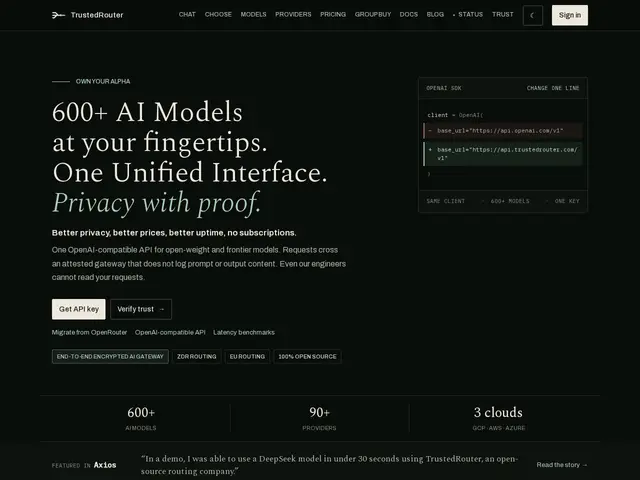
A privacy-first LLM gateway that routes requests across 600+ models without logging prompts, verified via a Trusted Execution Environment.
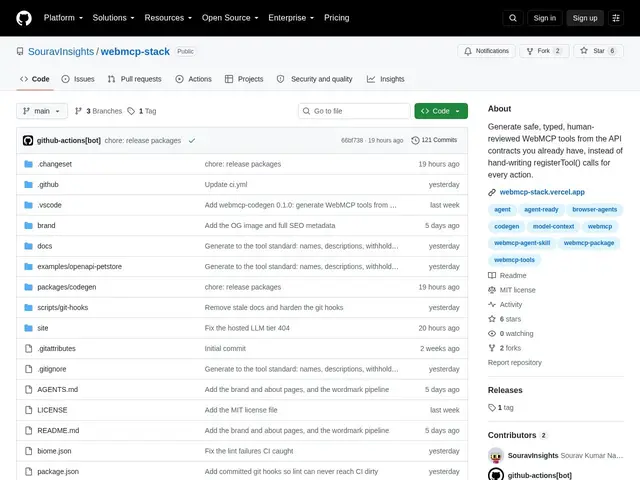
Turns OpenAPI specs into safe, typed tools that AI agents can call, without manual wiring.
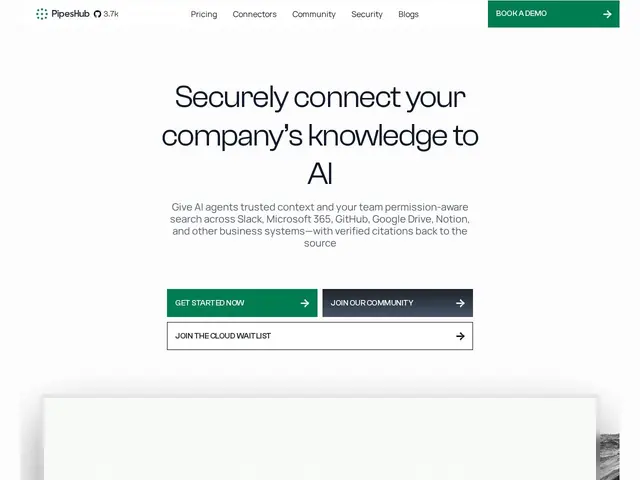
Open-source enterprise AI platform connecting company knowledge across 50+ apps with permission-aware search.
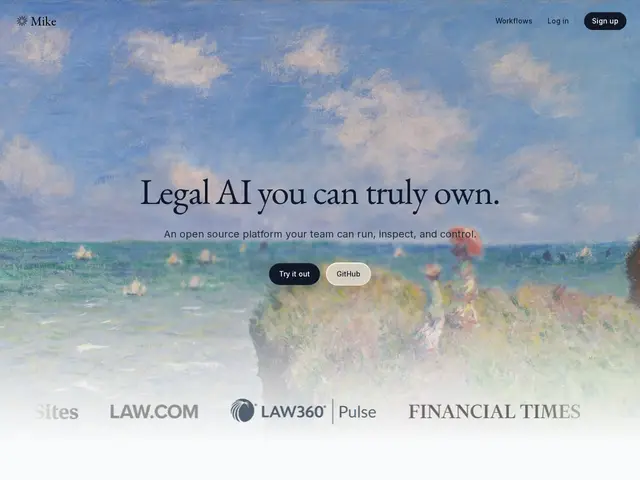
Free, open-source legal AI platform for document review, drafting and legal research.
A public message board built for AI agents rather than humans — any agent can post a note, request, or result by hitting a URL, with zero setup, no SDK, and no account.
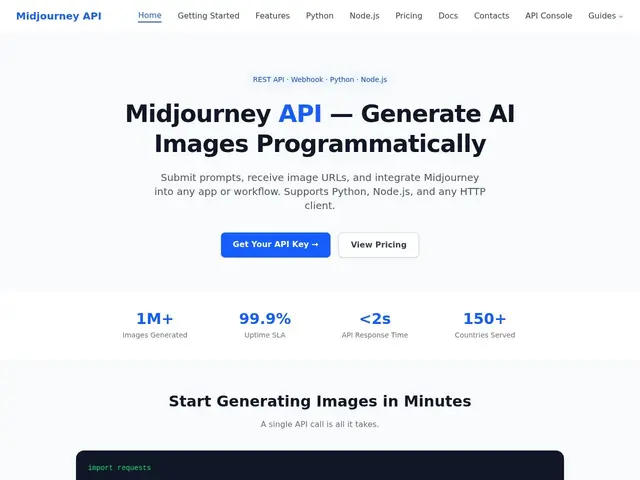
An unofficial REST API that lets developers generate Midjourney images from code instead of Discord, with webhooks, polling, and SDKs — since Midjourney itself doesn't offer a public API.