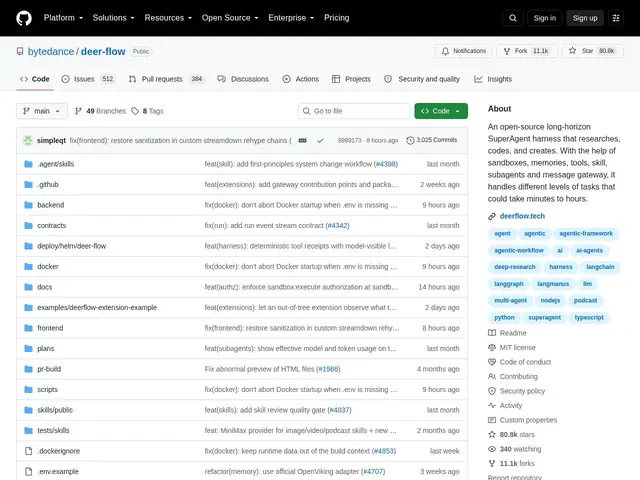
An open-source framework from ByteDance for building AI agents that can spend minutes or hours working through a task — researching, writing code, and spinning up helper agents — rather than answering in one quick reply.
github.com
A simple AI agent script that crashes halfway through a long task usually just loses all its progress and has to start over. LangGraph is built to prevent exactly that: it treats an agent's process as a graph of steps with saved state at each point, so if something fails, it can resume from where it left off rather than restarting from scratch — similar to how a video game autosaves your progress instead of forcing you to replay the whole level after a crash. LangGraph is LangChain's low-level orchestration library for building stateful, production AI agents as directed graphs. Its core selling points are durable execution (automatic resumption after failures), built-in human-in-the-loop controls, short-term and long-term memory primitives, native token-by-token streaming, and support for single-agent, multi-agent, and hierarchical agent architectures. It's deliberately lower-level than a no-code agent builder, giving developers fine-grained control over exactly how an agent's state and flow are managed. With 40,000+ GitHub stars, integration with LangSmith for debugging/observability, and production use at companies like Klarna, Replit, and Elastic, it's one of the most established choices for developers who've outgrown simpler agent frameworks.
| # | Tool | Best for | Price |
|---|---|---|---|
| 1 | Développeurs et équipes techniques construisant des agents IA autonomes longue durée (recherche, code, tâches multi-étapes) | — | |
| 2 | Python developers | Automation teams | — | |
| 3 | Utilisateurs non techniques, équipes commerciales/marketing/RH cherchant à automatiser des workflows répétitifs | — | |
| 4 | Équipes développant des agents IA en production (copilotes, startups SaaS, remplacement de systèmes RAG legacy) | — | |
| 5 | Équipes d'ingénierie et entreprises unifiant l'IA à travers plusieurs outils (Slack, GitHub, Linear, Teams) | — | |
| 6 | Developers and enterprise teams with sensitive data (legal, healthcare, compliance) | — | |
| 7 | Developers building AI agent integrations from existing OpenAPI specs | — | |
| 8 | Enterprise teams needing secure, self-hosted workplace AI search | — | |
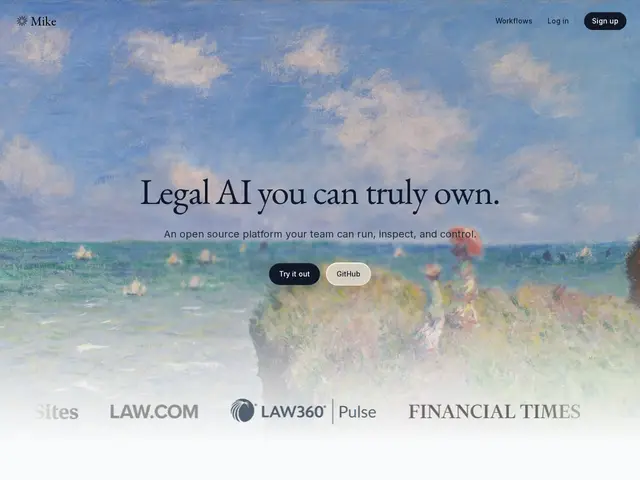
| 9 | Small and mid-sized law firms priced out of enterprise legal AI | — | |
| 10 | Développeurs construisant des systèmes multi-agents IA ayant besoin d'un point de coordination public léger | — | |
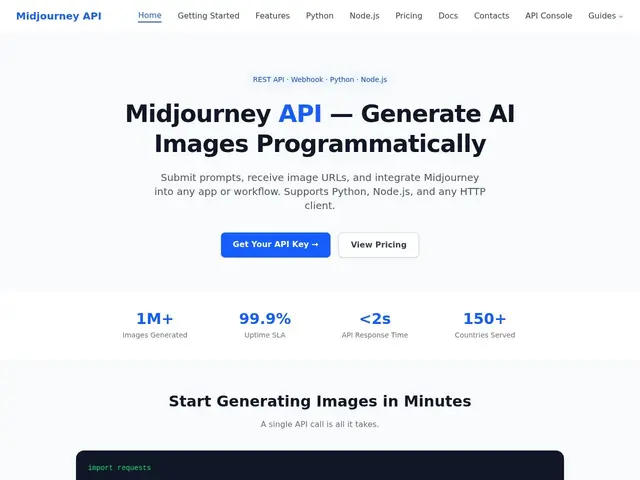
| 11 | Développeurs voulant intégrer la génération d'images Midjourney dans une app, un SaaS ou un pipeline de contenu | — | |
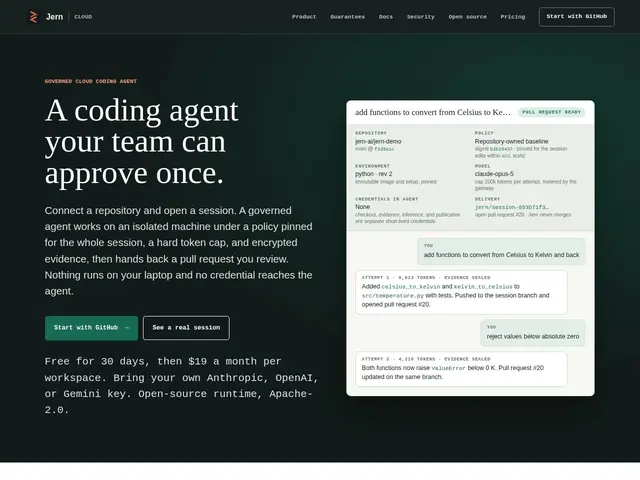
| 12 | Équipes dev voulant du codage assisté par IA gouverné et auditable | — |
An open-source framework from ByteDance for building AI agents that can spend minutes or hours working through a task — researching, writing code, and spinning up helper agents — rather than answering in one quick reply.
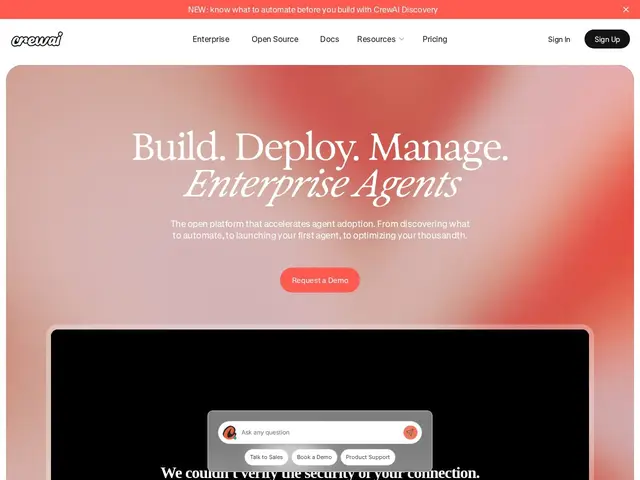
Python framework for role-based multi-agent teams: Crews plus event-driven Flows, from MIT open source to enterprise suite.
Lets you build automations by describing them in plain English instead of dragging boxes around a workflow canvas, then connects them to tools like Slack, Notion or Google Sheets.
Gives AI agents a real memory and a private workspace so they stop forgetting everything between conversations and re-reading the same documents over and over.
Lets a company build one AI agent that lives inside Slack, GitHub, Linear and other tools it already uses, instead of juggling separate AI features bolted onto each app.
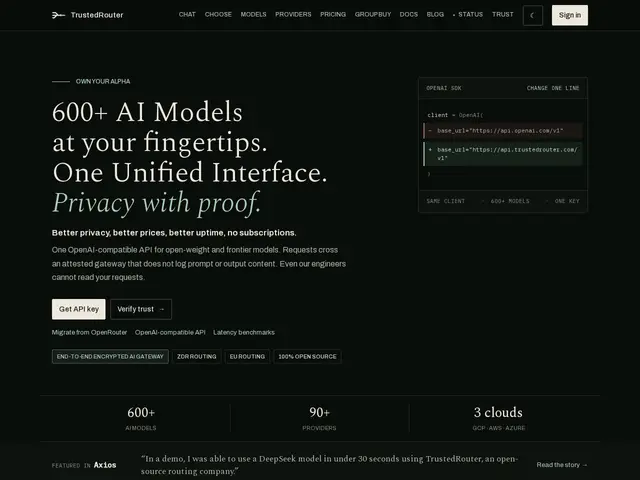
A privacy-first LLM gateway that routes requests across 600+ models without logging prompts, verified via a Trusted Execution Environment.
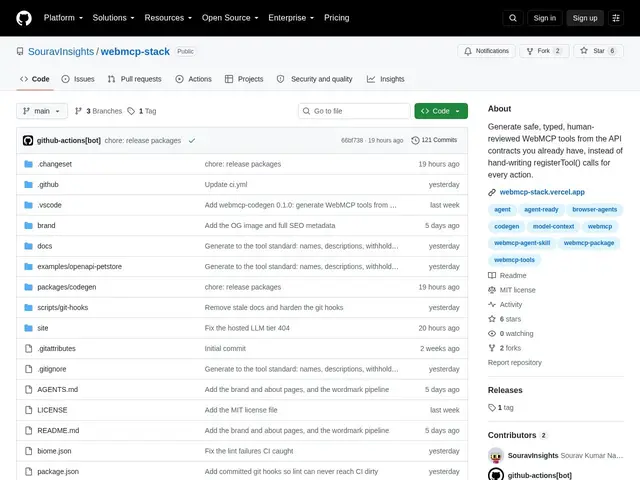
Turns OpenAPI specs into safe, typed tools that AI agents can call, without manual wiring.
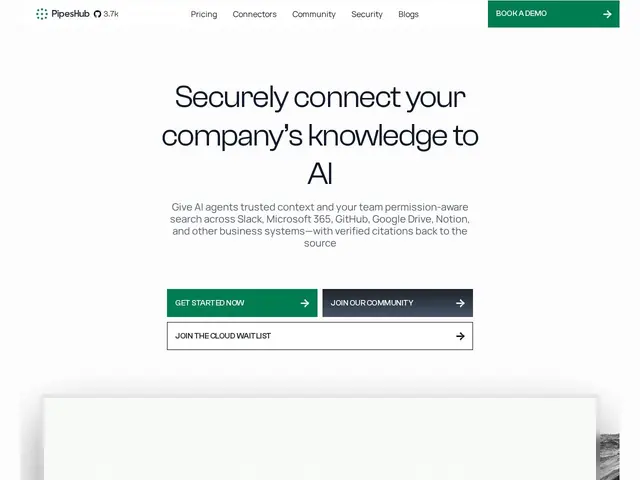
Open-source enterprise AI platform connecting company knowledge across 50+ apps with permission-aware search.
Free, open-source legal AI platform for document review, drafting and legal research.
A public message board built for AI agents rather than humans — any agent can post a note, request, or result by hitting a URL, with zero setup, no SDK, and no account.
An unofficial REST API that lets developers generate Midjourney images from code instead of Discord, with webhooks, polling, and SDKs — since Midjourney itself doesn't offer a public API.
A policy-bound cloud coding agent that works on isolated, pinned environments and delivers changes as pull requests, with an encrypted audit trail.