Feature flag and release management platform letting teams turn features on or off in production instantly, without redeploying code.
launchdarkly.com
17 tools found
Feature flag and release management platform letting teams turn features on or off in production instantly, without redeploying code.
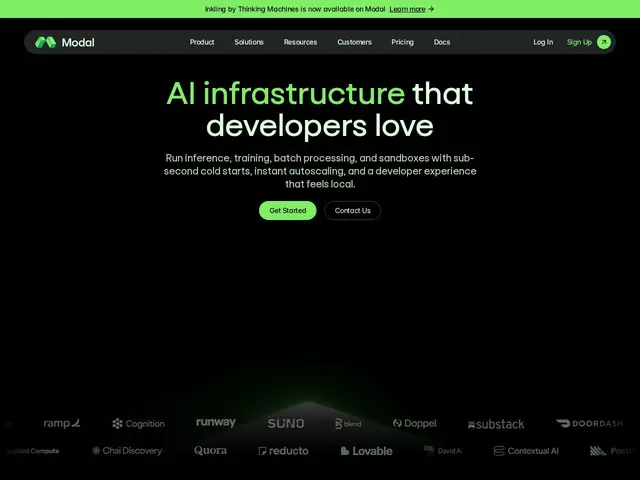
Serverless cloud platform that runs Python code, including AI model training and inference, on GPUs with sub-second startup and pay-per-second billing.
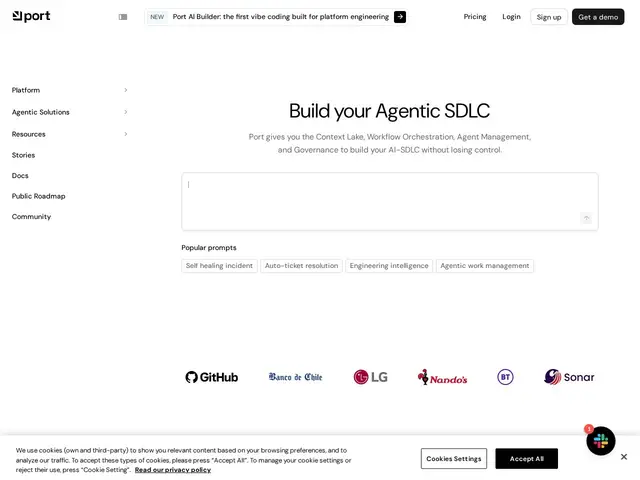
Internal developer portal that gives engineering teams a self-service software catalog, golden-path automation, and scorecards, positioned as faster to stand up than Backstage.
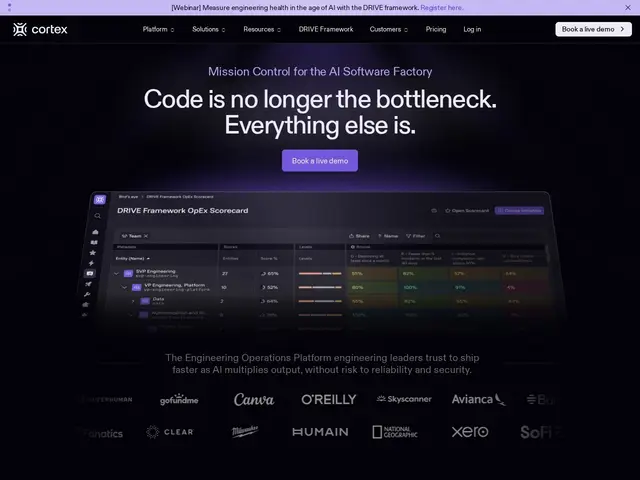
Internal developer platform that auto-maps a company's services into a catalog and uses scorecards to track production readiness, compliance and AI-adoption impact.
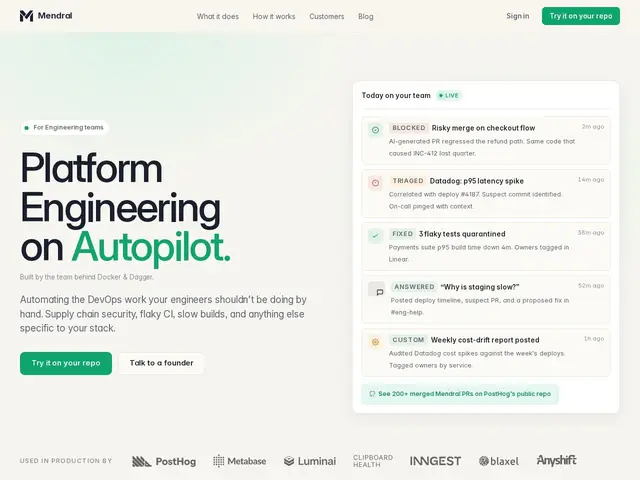
AI DevOps agent that watches your CI/CD pipeline, investigates failures, reviews code and triages incidents around the clock.
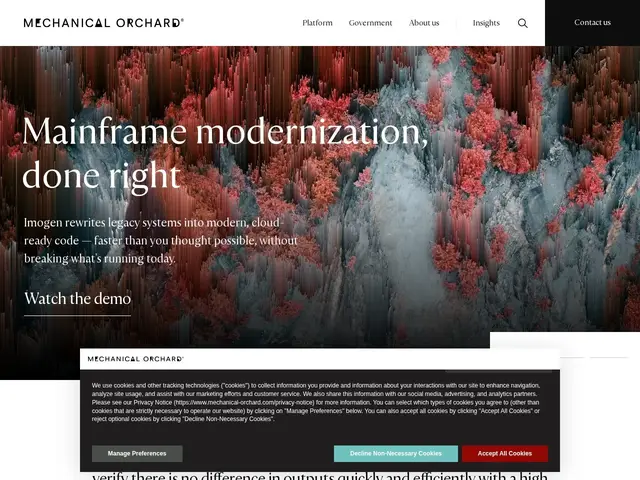
AI platform (Imogen) that rewrites legacy mainframe systems — COBOL, CICS, DB2 — into modern cloud code by replicating exact behavior, not just translating syntax.
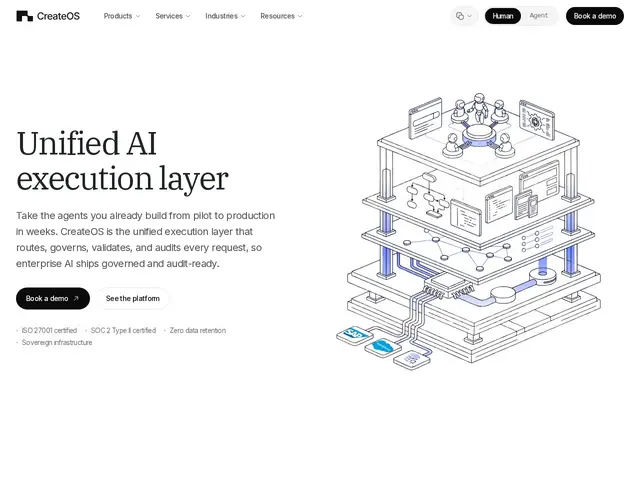
Most companies can get an AI agent working in a demo; CreateOS is built for the much harder next step — running it safely in production with governance, kill-switches and audit trails a security team will actually approve.
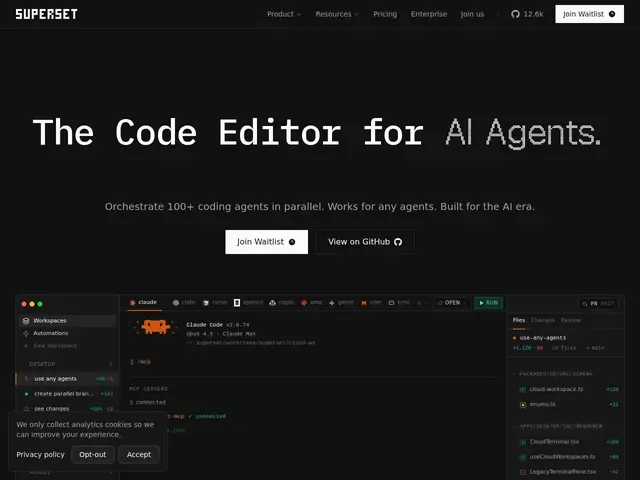
A desktop app for running 10+ AI coding agents (Claude Code, Codex, and others) at the same time, each in its own isolated workspace, with a dashboard to review, terminal into, and merge their work — not to be confused with the open-source Apache Superset
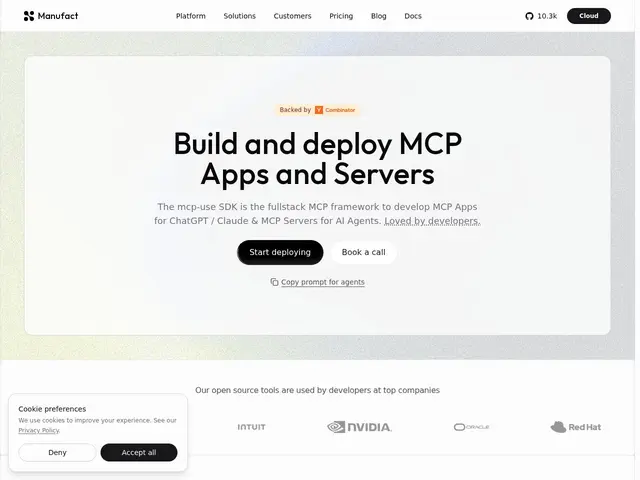
A cloud hosting platform built specifically for MCP servers — the plumbing that lets AI assistants like Claude or ChatGPT call your tools and data — so a developer can deploy, monitor, and scale an MCP integration without building the hosting infrastructu
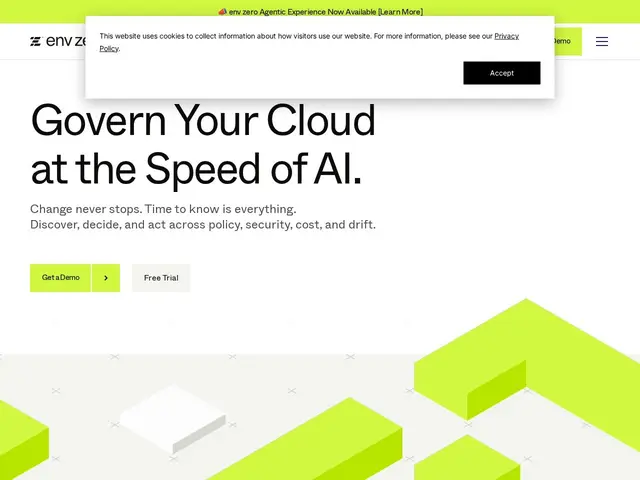
A management layer for infrastructure-as-code tools like Terraform, OpenTofu, Pulumi, and CloudFormation — it runs your existing IaC through a governed pipeline with approvals, drift detection, and compliance policies instead of engineers running `terrafo
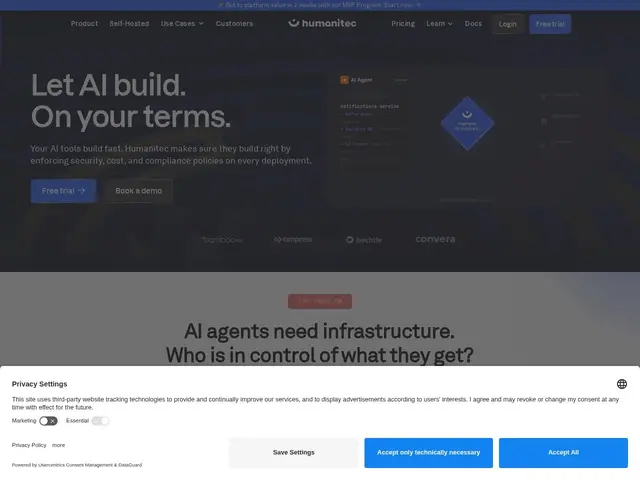
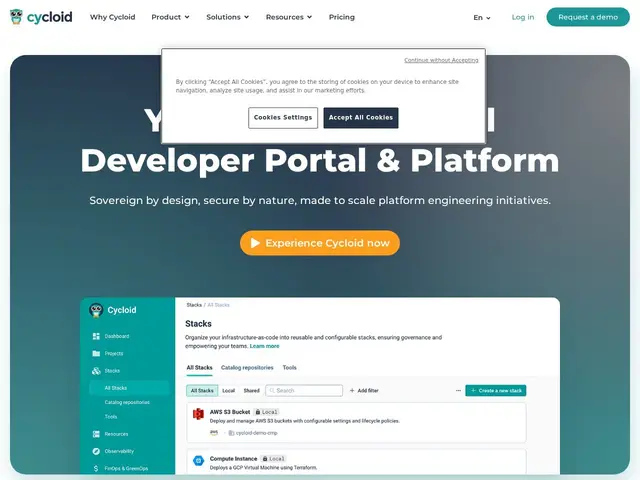
A platform orchestration layer that lets developers request cloud resources themselves without waiting on a ticket queue, while ops keeps the guardrails — security, cost, and compliance rules — enforced automatically underneath.
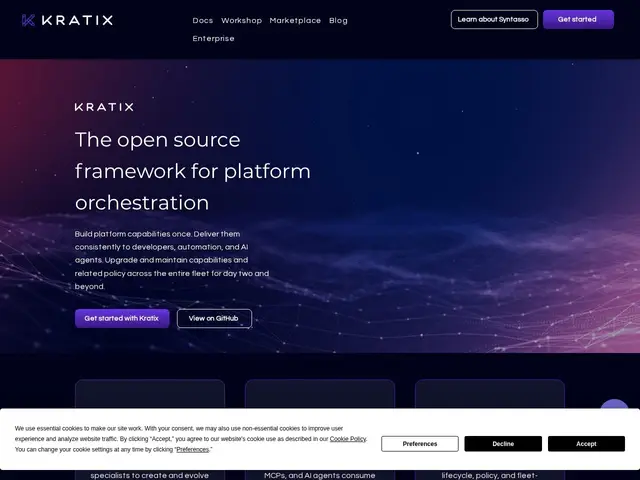
An open-source toolkit that lets a platform team build a self-service capability once — say, "spin up a database" — and hand it out to developers, automation scripts, and now AI agents through a consistent API, CLI, or portal.
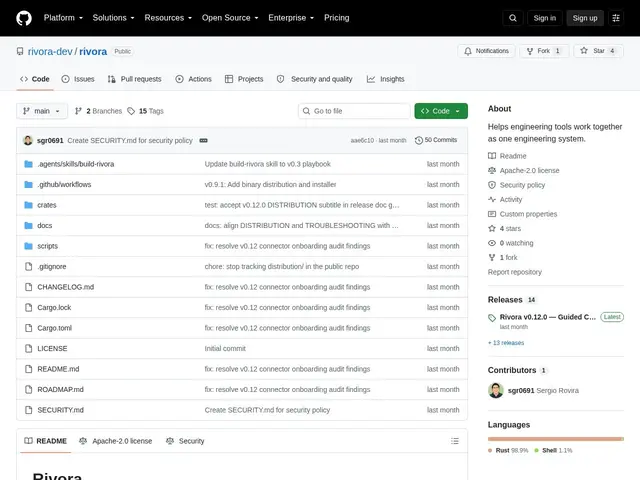
An open-source 'engineering memory' tool that pulls together GitHub, CI logs, Kubernetes, and Sentry into one place, so a team investigating an incident isn't stuck re-piecing together the same story from five different dashboards every time.
Gives platform teams a self-service portal where developers can spin up infrastructure themselves through simple forms, instead of filing a ticket and waiting on the ops team.
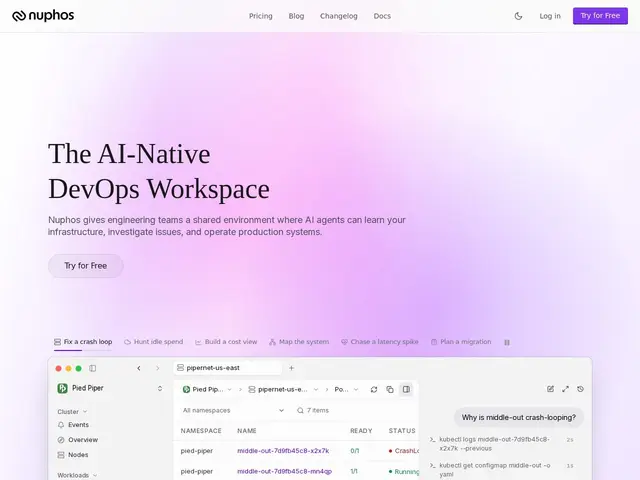
Lets an AI agent investigate and fix your cloud infrastructure — reading logs, opening dashboards, proposing changes — without giving up the approval step a human normally provides.
A DevOps platform that lets software vendors deploy and manage their app inside enterprise customers' own cloud accounts, from one central control plane.
Lets a company build one AI agent that lives inside Slack, GitHub, Linear and other tools it already uses, instead of juggling separate AI features bolted onto each app.