Automated dependency updates
🌐 web
github.com
When you install a browser extension, you at least get a permissions prompt telling you what it can touch. Most "skills" or plugins you add to an AI agent — a Claude Code skill, an MCP server, a LangChain tool — come with no such warning: they can read your files, call APIs, or exfiltrate data, and there's no built-in way to know which ones are safe before you run them. SkillFortify is a security scanner built to close that gap: point it at your installed AI tools and it tells you, before you trust them, whether they're doing something dangerous. SkillFortify auto-discovers installed AI skills system-wide across 22 frameworks (Claude Code, MCP, LangChain, CrewAI, AutoGen, and others) and runs them through formal threat modeling (its own "DY-Skill" model, adapted from the Dolev-Yao protocol-verification tradition) plus static analysis, capability-based access control checks, and dependency-graph analysis. It produces interactive HTML dashboards, lockfiles for reproducible tool configurations, and AI Software Bill of Materials (ASBOM) documents for compliance. Its own benchmark, SkillFortifyBench (540 skills, 270 malicious / 270 benign), reports 100% precision but 92.59% recall — meaning it rarely flags a safe skill as dangerous, but can still miss some real threats, and its accuracy against genuinely novel (not benchmark) attacks is unvalidated.
| # | Tool | Best for | Price |
|---|---|---|---|
| 1 | Développeurs | — | |
| 2 | Développeurs | — | |
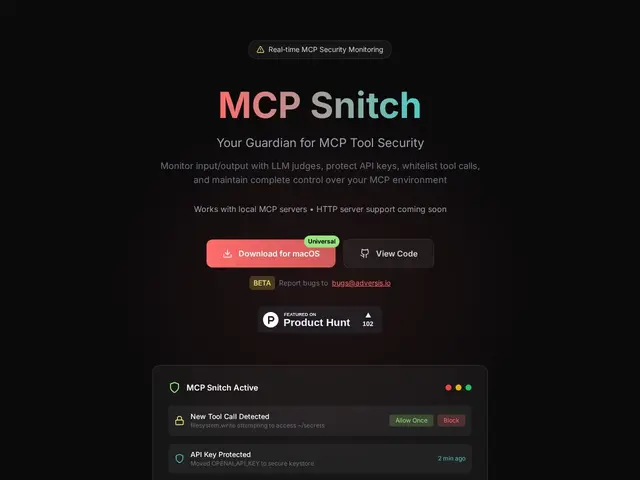
| 3 | Développeurs et équipes utilisant Claude Desktop ou Cursor avec des serveurs MCP tiers, soucieux de la sécurité des appels d'outils IA | — | |
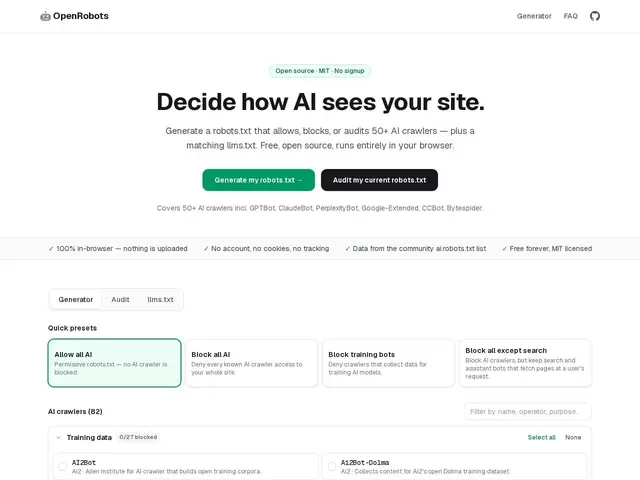
| 4 | Site owners and developers managing AI crawler access | — | |
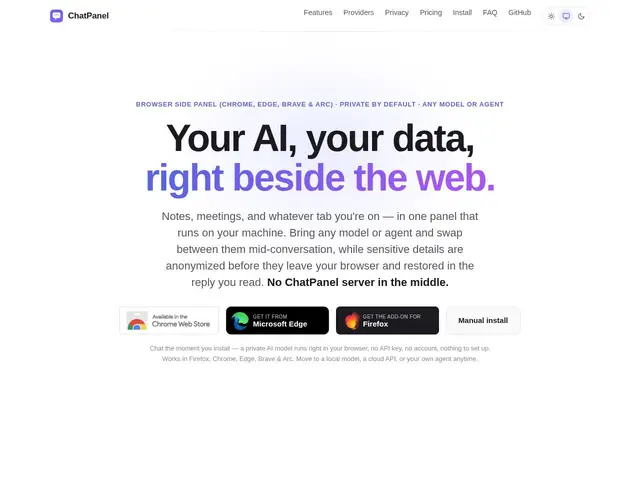
| 5 | Privacy-conscious users wanting model-agnostic AI access from their browser | — | |
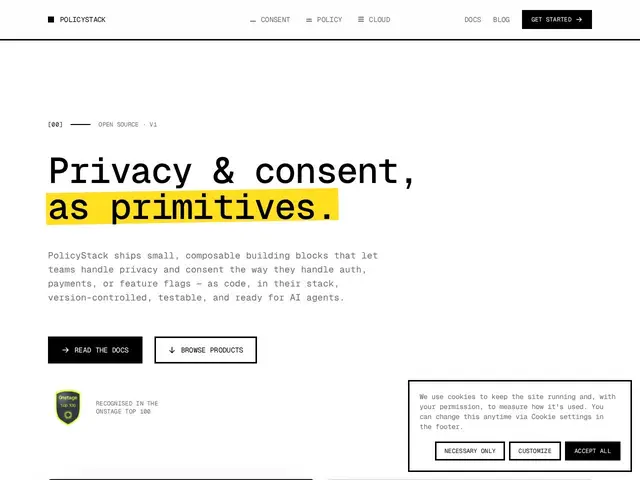
| 6 | Developers wanting privacy/consent management integrated into their codebase | — | |
| 7 | IT/DevOps teams replacing corporate VPNs with Zero Trust access | — | |
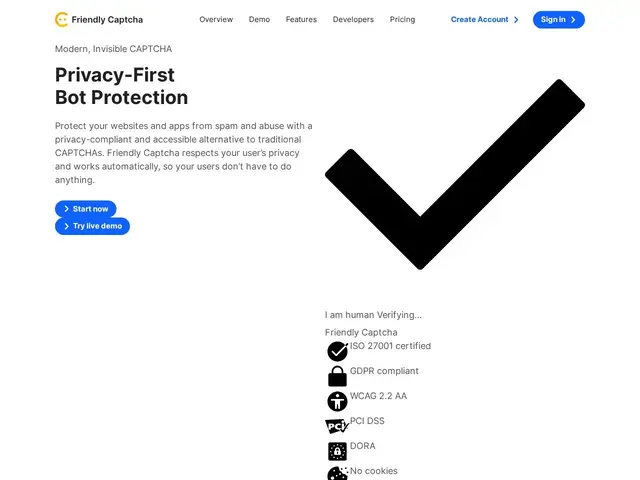
| 8 | Businesses needing GDPR-compliant, frictionless bot protection | — | |
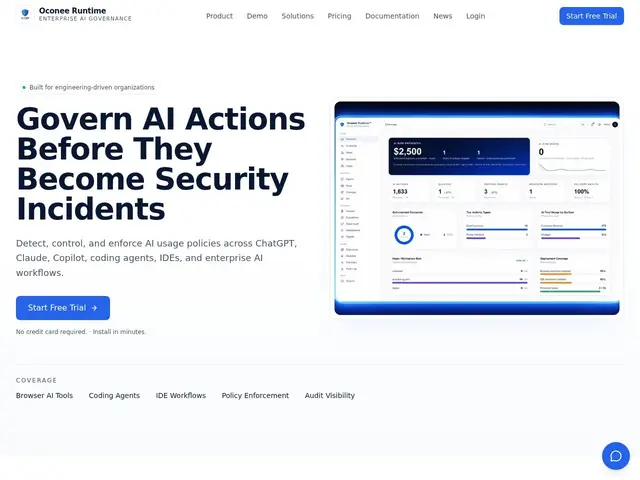
| 9 | Organisations d'ingénierie, équipes sécurité/conformité adoptant des agents de code IA | — | |
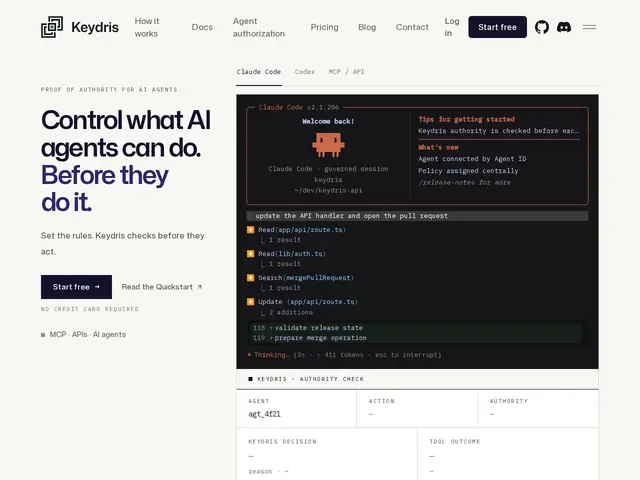
| 10 | Équipes MCP/API et sécurité déployant des agents IA | — | |
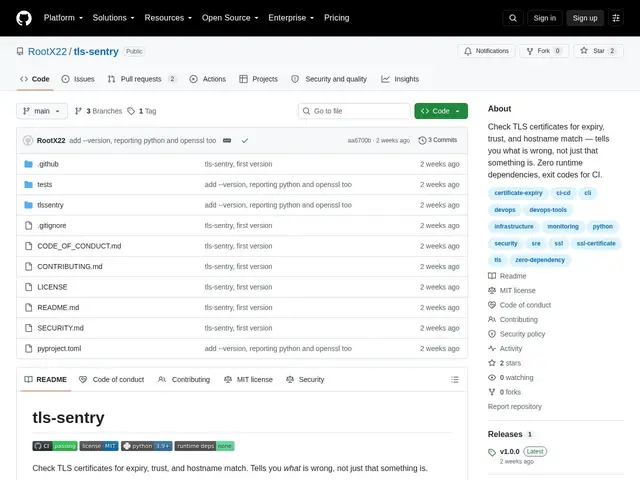
| 11 | Équipes DevOps/SRE et administrateurs système voulant un moniteur d'expiration de certificat sans dépendance pour cron/CI | — | |
| 12 | Équipes construisant des applications LLM soumises à des exigences de conformité (RGPD, AI Act) et de protection des données | — |
macOS app that intercepts and audits MCP server traffic between Claude Desktop or Cursor and connected tools for security oversight.
Free, in-browser generator for robots.txt and llms.txt files that control which AI crawlers can access your site.
Privacy-first browser side panel AI assistant that works with any model or agent and anonymizes sensitive data before it leaves your browser.
Open-source, developer-first privacy and cookie-consent infrastructure with headless consent flows and version-controlled policies.
Open-source WireGuard-based mesh VPN that replaces traditional VPNs with Zero Trust, identity-based device access.
Invisible, privacy-first bot protection using proof-of-work instead of visual puzzles.
Enterprise policy-enforcement layer that watches what coding agents do — prompts, commands, file changes — and blocks or alerts on sensitive data exposure.
Authorization layer that checks every AI agent action against a policy before it runs, with per-action revocation and a full audit trail.
A free Python command-line tool that checks a website's HTTPS certificate and tells you exactly what's wrong with it — expired, untrusted, wrong hostname — instead of a generic connection error.
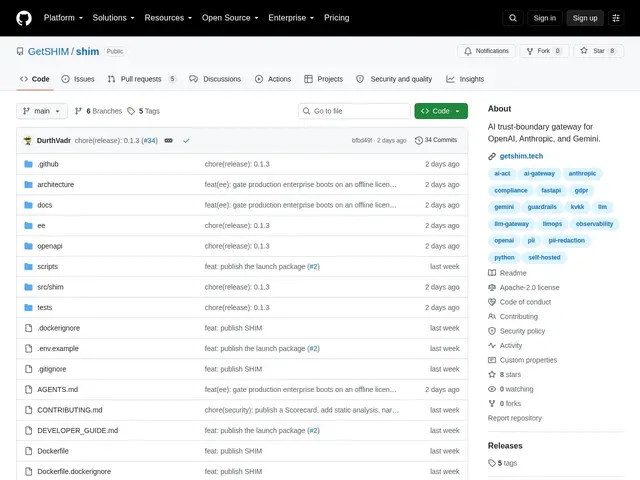
An open-source trust-boundary gateway that sits in front of OpenAI, Anthropic and Gemini API traffic to redact PII, enforce rate limits, and track usage without touching your app code.