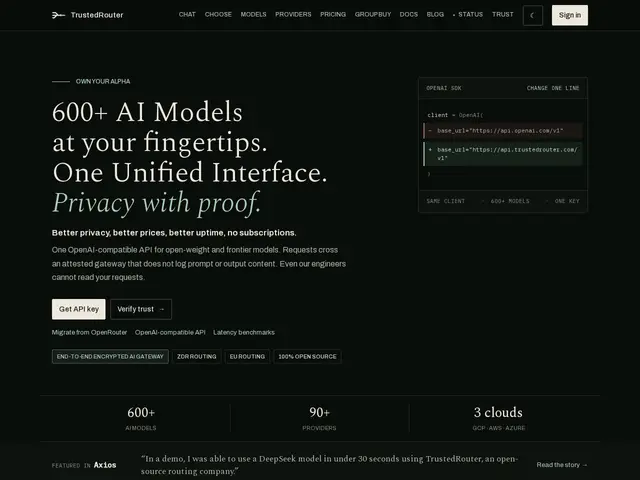
Provides various free AI models including DeepSeek R1, V3, Llama, and Moonshot AI. These models excel in natural language processing and are suitable for diverse development needs. Note that while these models are free to use, they are subject to rate limits. Additionally, OpenRouter offers paid models for more advanced requirements, for instance Claude, OpenAI, Grok, Gemini, and Nova.
Best alternatives to New API in 2026
Managing access to multiple AI providers across a team or product usually means juggling separate API keys, separate billing, and separate rate limits for each one. New API solves that by sitting in front of all of them as a single, self-hosted gateway: your application talks to one OpenAI/Claude/Gemini-compatible endpoint, and New API handles routing, tracking and billing behind the scenes. New API is an open-source (AGPLv3) self-hosted hub that converts requests between OpenAI, Claude and Gemini API formats, supports 10+ underlying LLM providers, and adds organization-level authentication, permission management, and per-user usage analytics and cost accounting. It includes intelligent routing with automatic retry on failure, Docker-based deployment, a multi-language admin UI, and built-in billing integration (Stripe, EPay) for teams that need to charge internal or external users for AI access. It's a very actively developed project with over 46,000 GitHub stars.
Quick comparison of New API alternatives
| # | Tool | Best for | Price |
|---|---|---|---|
| 1 | Développeurs | — | |
| 2 | Développeurs et équipes voulant un assistant de code IA auto-hébergé avec mémoire persistante | — | |
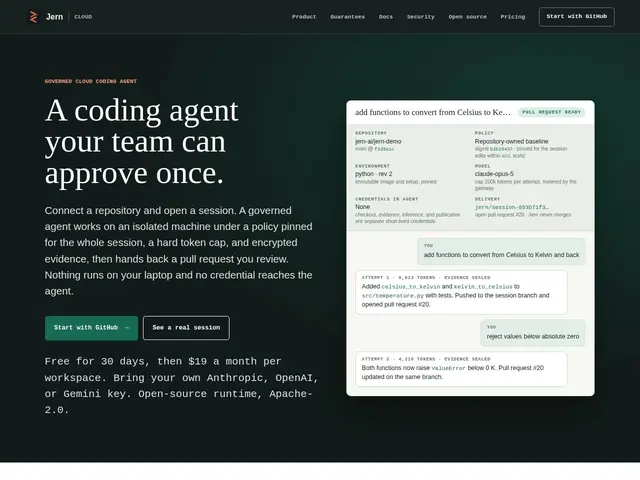
| 3 | Équipes IT et sécurité d'entreprises déployant des agents IA internes construits par leurs employés | — | |
| 4 | Développeurs construisant des agents IA en production nécessitant un contrôle fin de l'état et de la fiabilité | — | |
| 5 | Équipes produit et développeurs construisant des chatbots, agents IA ou pipelines RAG sans vouloir tout coder à la main | — | |
| 6 | Développeurs et équipes construisant des systèmes IA ancrés dans leurs propres documents (RAG), de la startup à la grande entreprise | — | |
| 7 | Développeurs et équipes techniques construisant des agents IA autonomes longue durée (recherche, code, tâches multi-étapes) | — | |
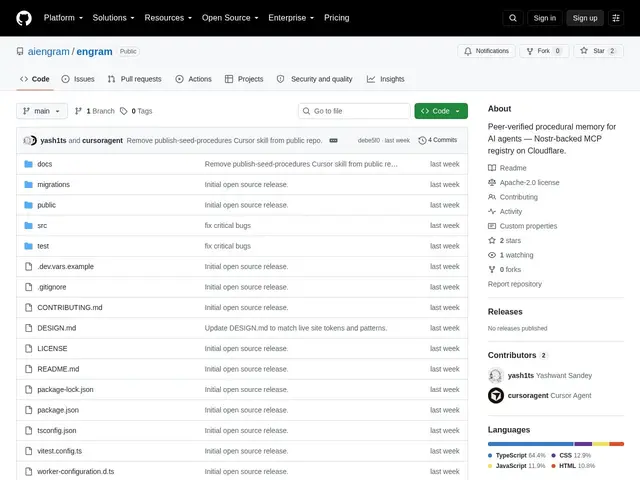
| 8 | Développeurs et équipes qui font tourner des agents de code IA (Claude Code, Cursor, Codex...) de façon semi-autonome sur une vraie codebase | — | |
| 9 | Organisations en secteurs réglementés (santé, droit, finance, gouvernement) qui ne peuvent pas envoyer leurs données à un cloud tiers | — | |
| 10 | Développeurs et ingénieurs DevOps qui veulent des agents IA légers et composables intégrés à des pipelines existants (cron, git hooks, scripts) | — | |
| 11 | Chercheurs, travailleurs du savoir et développeurs qui veulent visualiser et contrôler précisément le contexte envoyé à un LLM sur des conversations longues | — | |
| 12 | Créateurs de contenu, entrepreneurs et petites équipes qui vivent dans Telegram et veulent un assistant IA avec mémoire long terme et souveraineté des données | — |
A self-hosted AI coding assistant that remembers past sessions and can act across your terminal, IDE and other tools with a large context window.
- ✓ Self-hostable — code and context stay under your own control
- ✓ Persistent memory across sessions (CLI, chat, SDK)
Lets IT and security teams see, approve and monitor every internal AI agent employees build, instead of agents spreading unchecked across the company.
- ✓ Addresses a real, emerging gap: ungoverned internal AI agent sprawl
- ✓ Scoped credentials per agent plus mandatory IT approval before deployment
A code library from the LangChain team for building AI agents that can pause, remember where they were, and pick back up later — even after a server restart — instead of losing all progress if something goes wrong mid-task.
- ✓ Durable execution — resumes from a checkpoint instead of restarting after failure
- ✓ Native human-in-the-loop and short/long-term memory primitives
An open-source platform for building AI chatbots and automated workflows by connecting blocks on a canvas, instead of writing code from scratch.
- ✓ Visual builder for AI workflows (RAG, agents, conditional logic) is genuinely productive
- ✓ Open-source and self-hostable — no forced cloud lock-in
An open-source toolkit for building AI systems that answer questions using your own documents — feeding an AI model your company's PDFs, wikis, or support tickets so it answers from real content instead of guessing.
- ✓ Modular, composable pipelines — swap vector DBs or LLM providers without a rebuild
- ✓ Broad connector support across major vector databases and LLM providers
An open-source framework from ByteDance for building AI agents that can spend minutes or hours working through a task — researching, writing code, and spinning up helper agents — rather than answering in one quick reply.
- ✓ Large scale and maturity — 80k+ GitHub stars, backed by ByteDance
- ✓ Sandboxed execution (local/Docker/Kubernetes) treated as a real security concern
A guardrail system that limits which tools an AI coding agent can use at each stage of a task — read-only while planning, edit access only while implementing — so it can't take an action outside its current job.
- ✓ Deterministic enforcement outside the LLM — can't be prompted around
- ✓ Per-phase tool restrictions reduce blast radius of agent mistakes
A free, open-source, self-hosted AI agent platform built for organizations that can't send data to a third-party cloud — think law firms, clinics or banks — with role-based access, memory, and support for every major AI model.
- ✓ Fully self-hosted end to end — no data ever leaves your infrastructure
- ✓ Role-based access with PostgreSQL Row Level Security, native multi-user support
A free, open-source command-line tool that lets you define small, single-purpose AI agents as simple config files and run them like Unix programs — triggered from the terminal, a cron job, a git hook, or piped straight into another command.
- ✓ 12MB binary, no daemon or GUI — drops straight into existing pipelines
- ✓ Agents defined in version-controllable TOML, easy to code-review
A free, open-source infinite canvas that turns your conversations with AI models into an editable graph — so you can see, prune, and reuse exactly which parts of the conversation the AI is actually reading, instead of a single ever-growing chat thread.
- ✓ Context is visible and editable as a graph, instead of an opaque chat thread
- ✓ Free and open source (MIT), self-hostable or usable via the web demo
A self-hosted AI assistant that lives inside Telegram on your own server, with memory, emotional awareness, and dozens of built-in skills — useful if you want an AI that remembers your life and work without handing your data to a big tech company.
- ✓ 4-layer memory with full-text + vector search — remembers context long-term, unlike typical chatbots
- ✓ 50+ pre-installed skills via MCP, directly inside Telegram (voice and files included)
FAQ about New API alternatives
- What is the best alternative to New API in 2026?
- Based on our selection, OpenRouter is the best alternative to New API in 2026. Provides various free AI models including DeepSeek R1, V3, Llama, and Moonshot AI. These models excel in natural language processing and are suitable for diverse development needs. Note that while these models are free to use, they are subject to rate limits. Additionally, OpenRouter offers paid models for more advanced requirements, for instance Claude, OpenAI, Grok, Gemini, and Nova.. See our full ranking above to compare all options.
- Is New API free?
- New API is a paid tool. Several alternatives in our selection offer free or freemium versions.
- How many alternatives to New API are there?
- mySelectas has listed 12 alternatives to New API in the AI & Machine Learning category. Our selection is updated regularly to include the best options available.