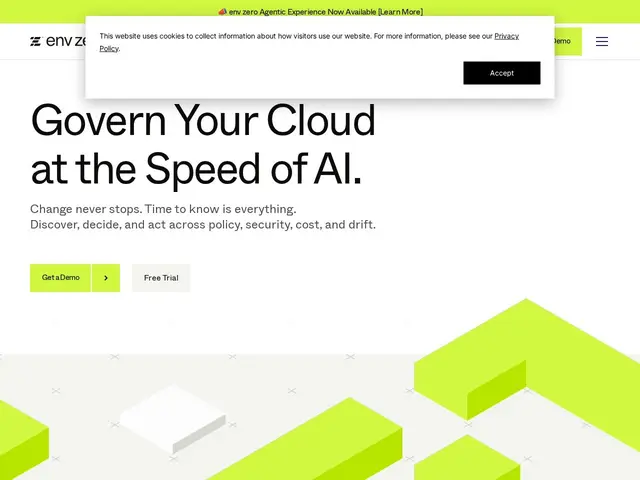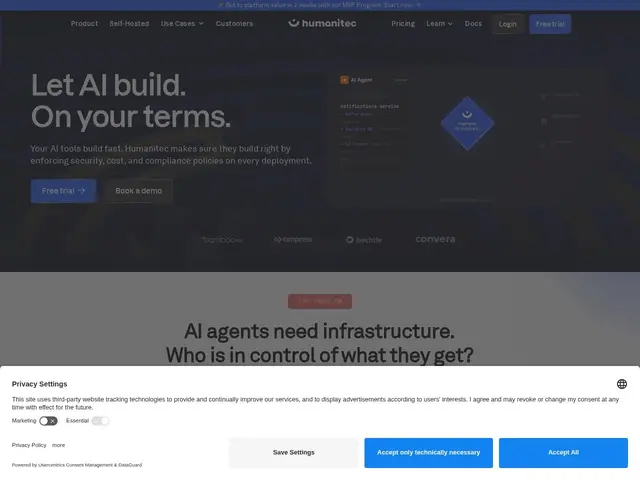
A platform orchestration layer that lets developers request cloud resources themselves without waiting on a ticket queue, while ops keeps the guardrails — security, cost, and compliance rules — enforced automatically underneath.
humanitec.com
Platform teams end up building the same kind of thing over and over: a way for developers to request infrastructure (a database, an environment, a queue) without filing a ticket. Kratix is an open-source framework for building exactly that, once, in a reusable way — instead of every team hand-rolling its own internal developer portal glue code. Under the hood, Kratix defines "Promises" — packaged capabilities that a platform team authors and developers consume via API, CLI, a portal, or now MCP (Model Context Protocol), which lets AI agents request infrastructure the same way a human developer would. The core is free and Apache 2.0 licensed; Syntasso (the company behind it) sells an Enterprise tier for governance and support, and an "Agentic" tier specifically for AI-native operations. It's aimed at platform teams that want the flexibility of building their own internal platform without starting from zero.
| # | Tool | Best for | Price |
|---|---|---|---|
| 1 | Équipes de platform engineering et DevOps automatisant le provisioning cloud gouverné | — | |
| 2 | Équipes de plateforme, DevOps et infrastructure gouvernant leur IaC à l'échelle | — | |
| 3 | Développeurs | — | |
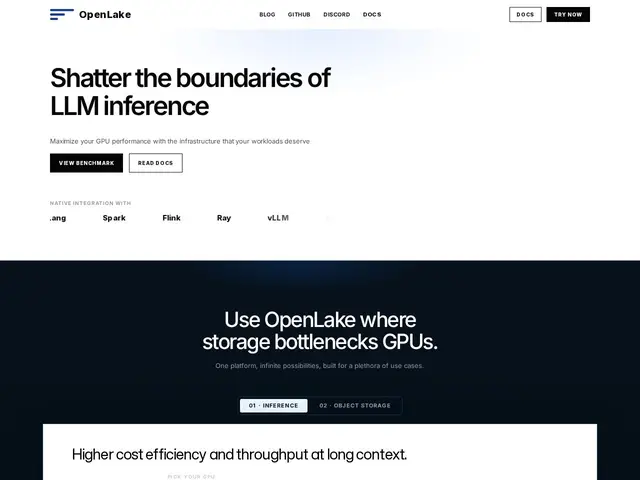
| 4 | Organizations running large-scale LLM inference and GPU training | — | |
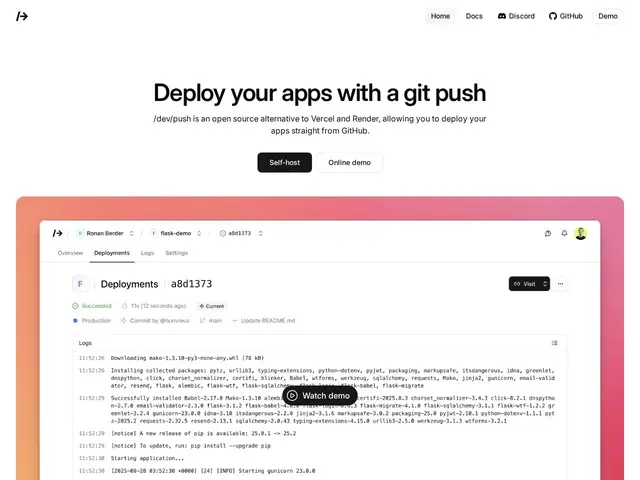
| 5 | Developers and teams wanting self-hosted, Vercel-style app deployment | — | |
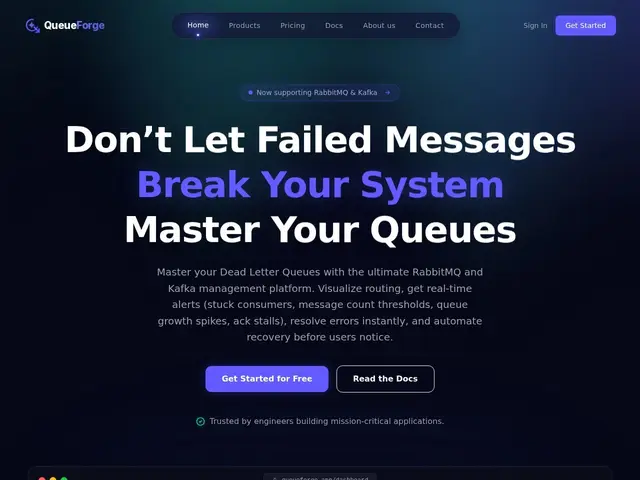
| 6 | Ingénieurs backend/DevOps gérant RabbitMQ ou Kafka en production | — | |
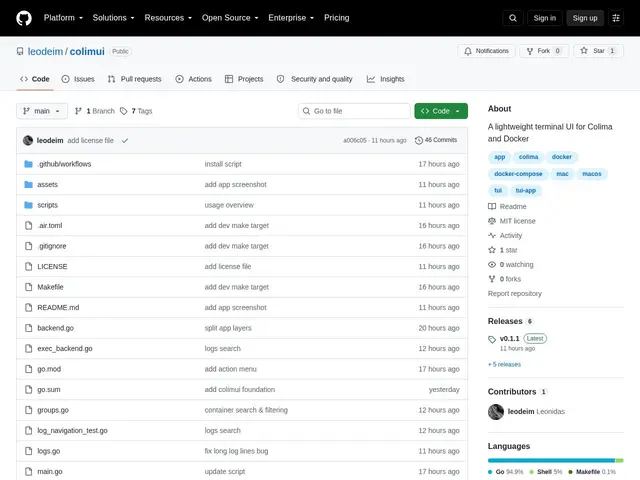
| 7 | Développeurs utilisant Colima et Docker qui préfèrent une interface terminal | — | |
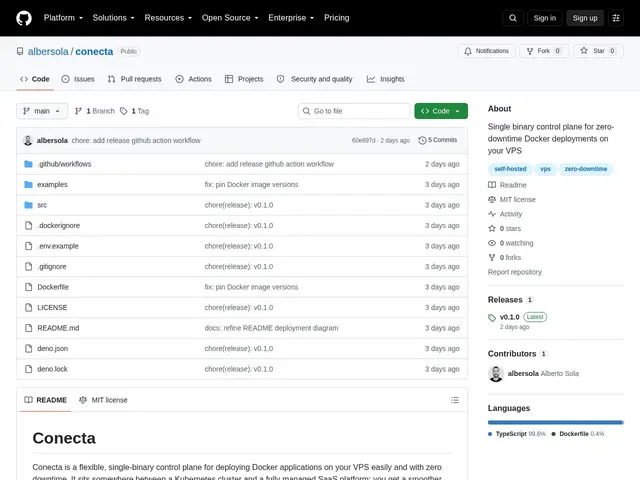
| 8 | Développeurs self-hostant des apps Docker sur VPS et voulant du déploiement zéro-downtime sans Kubernetes | — | |
| 9 | Petites équipes dev déployant des outils internes, scripts et dashboards | — | |
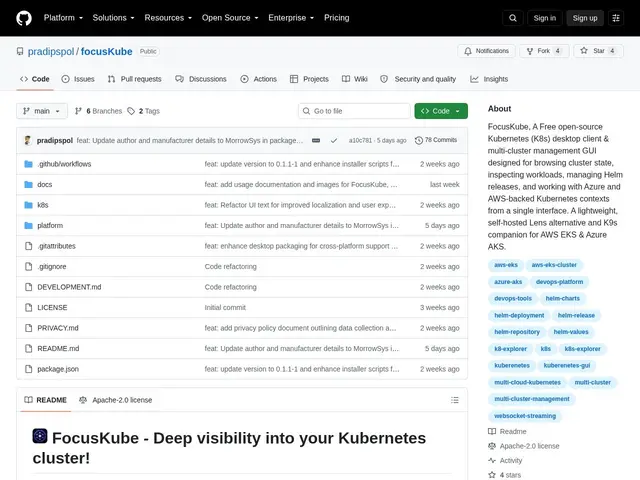
| 10 | Équipes DevOps et opérateurs Kubernetes gérant plusieurs clusters, soucieux de confidentialité | — | |
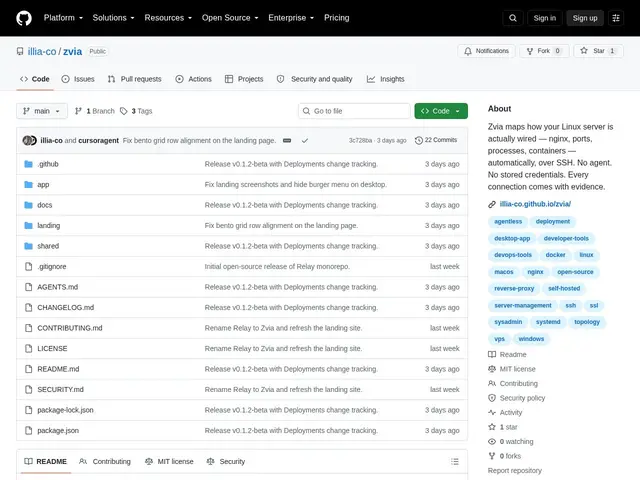
| 11 | Administrateurs serveur et ingénieurs DevOps reprenant un serveur inconnu sans agent de monitoring | — | |
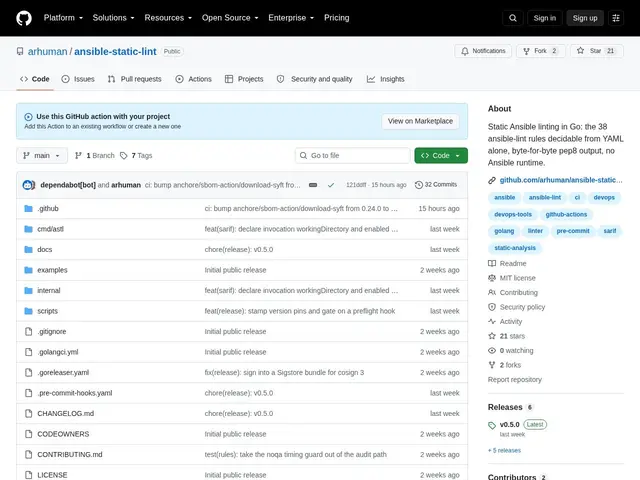
| 12 | Ingénieurs DevOps utilisant Ansible qui veulent un lint instantané en pre-commit ou en CI | — |
A platform orchestration layer that lets developers request cloud resources themselves without waiting on a ticket queue, while ops keeps the guardrails — security, cost, and compliance rules — enforced automatically underneath.
A management layer for infrastructure-as-code tools like Terraform, OpenTofu, Pulumi, and CloudFormation — it runs your existing IaC through a governed pipeline with approvals, drift detection, and compliance policies instead of engineers running `terrafo
High-performance storage engine that removes I/O bottlenecks slowing down LLM inference and GPU training.
Free, open-source, self-hostable deployment platform that deploys apps from GitHub with zero-downtime releases.
A self-hosted dashboard that watches your RabbitMQ or Kafka dead-letter queues, alerts you when messages start piling up there, and lets you replay or fix them without writing a one-off script.
A terminal UI for managing Docker containers and Colima profiles — start, stop, view logs, and check resource usage without leaving the terminal or opening a GUI app.
A single-container tool that does zero-downtime blue-green deployments on a plain VPS, using its own internal DNS and health checks instead of requiring Kubernetes.
Self-hosted platform for deploying internal tools and scripts into shareable team apps with one command, HTTPS and SSO included.
A free, open-source desktop app that shows what's actually happening inside your Kubernetes clusters — pods, logs, topology — without sending any data to the cloud.
A free desktop app that connects to a Linux server over SSH and automatically draws a map of how it's really wired — nginx, ports, containers, services — without installing anything on the server.
A standalone Go rewrite of ansible-lint that checks Ansible playbooks in milliseconds with no Python or Ansible runtime installed.