Identifiant chercheur unique
orcid.org
153 tools found
Identifiant chercheur unique
 Orchard
MCP server that connects AI assistants to Apple apps.
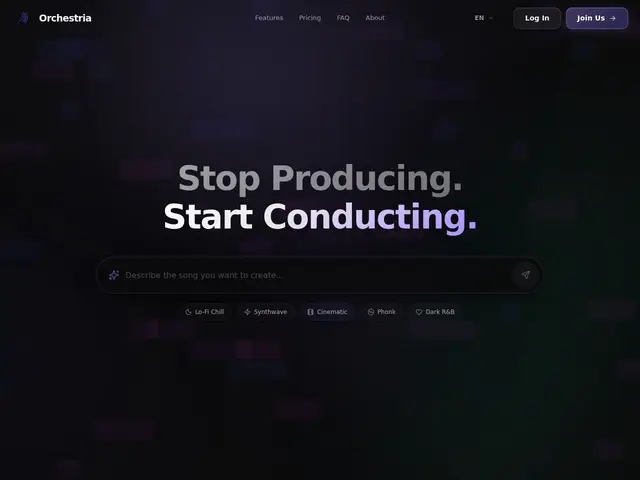
You describe a song in a sentence — "upbeat lo-fi with a jazzy piano hook" — and within about 30 seconds Orchestria hands back a full mix, but unlike most AI music generators, it also splits that mix into separate, editable tracks for drums, bass, vocals,
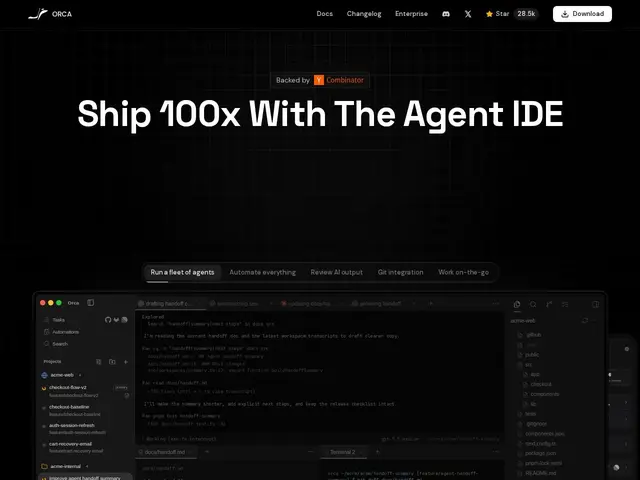
A free tool that lets you run several AI coding assistants on the same problem at once, each working in its own isolated copy of your code, so you can compare their different solutions and pick (or merge) the best one.
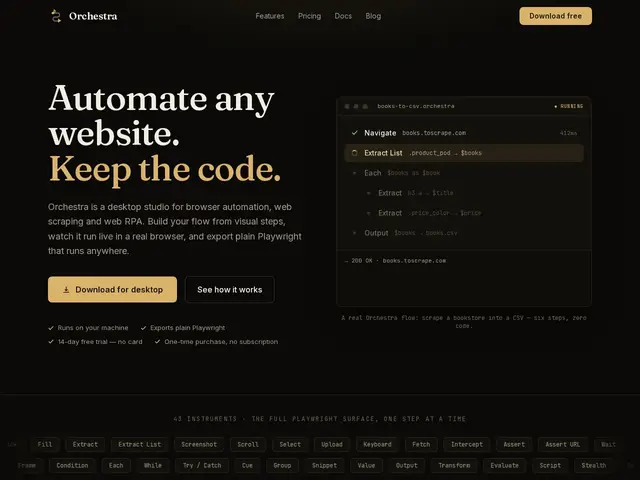
A desktop app where you build a web automation — clicking buttons, filling forms, scraping data — by pointing and clicking, and it hands you real, ready-to-use Playwright code at the end instead of locking your work inside a subscription.
A free, open-source app that lets you run several AI coding agents — Claude Code, Copilot, Cursor — side by side in their own isolated copies of your project, so you can compare their results.
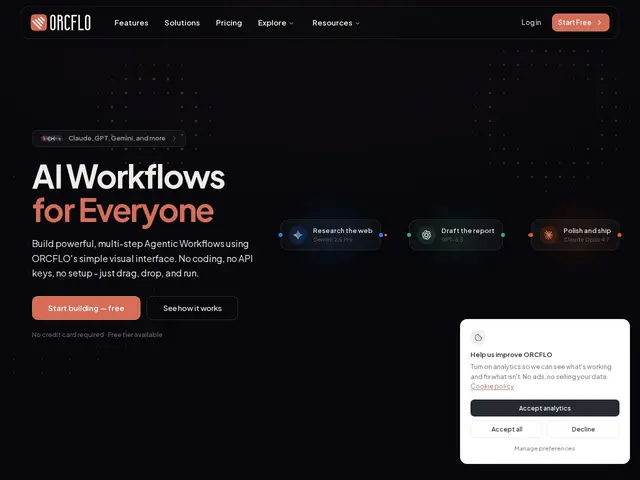
A drag-and-drop canvas for chaining together AI steps — summarize this, then check that, then post there — into a workflow that runs itself on a schedule or trigger, without you writing code or juggling API keys for each AI model.
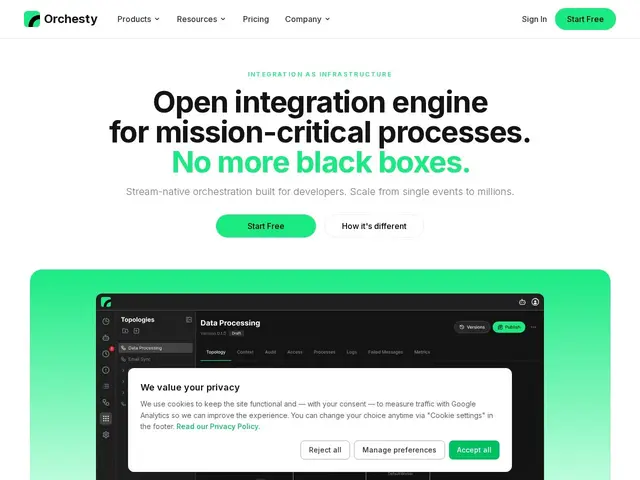
Open-source streaming-first integration platform for building scalable asynchronous workflows and orchestrating APIs with AI agent support.
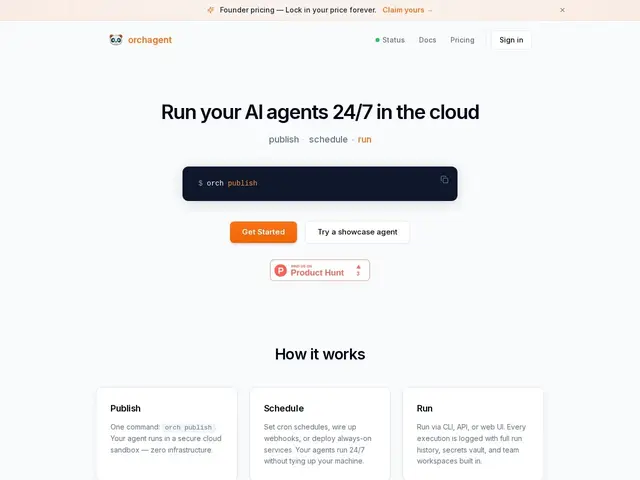
A cloud platform for running AI agents 24/7 — schedule them, keep them always-on, or trigger them on demand — without managing your own servers.
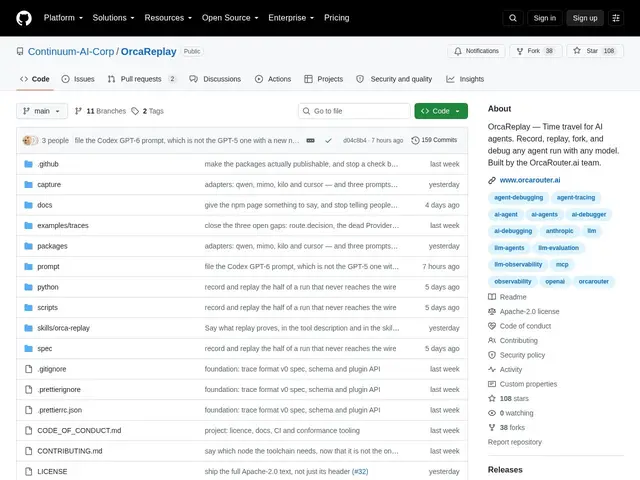
A time-travel debugging tool for AI coding agents that records, replays offline, and forks agent runs to compare different LLMs on the exact same task.
Tutoriels PyTorch
Magazine motocycliste
Fast and efficient columnar storage format for Hadoop-based workloads.
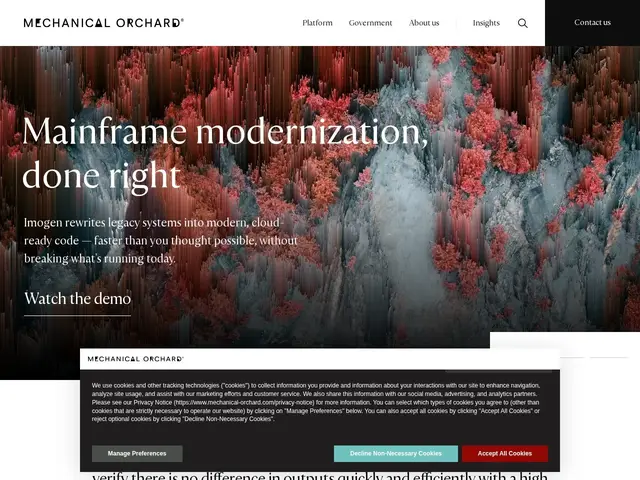
AI platform (Imogen) that rewrites legacy mainframe systems — COBOL, CICS, DB2 — into modern cloud code by replicating exact behavior, not just translating syntax.
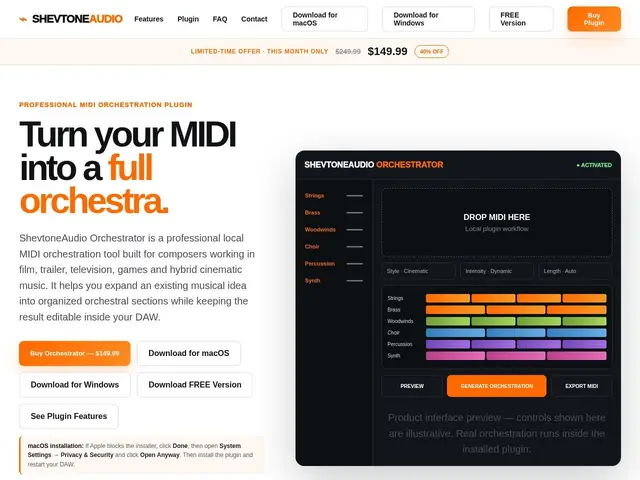
Plugin that turns a simple MIDI melody into a full orchestral arrangement across strings, brass, woodwinds, choir, and percussion.
Cloud gaming Nvidia
Actualité moto US
CRM leader mondial
Conseil municipal de Worcester
ML Facebook