Doormouse
Reverse proxy that wakes sleeping homelab servers via Wake-on-LAN and suspends them when idle.
🔗 Visit Doormouse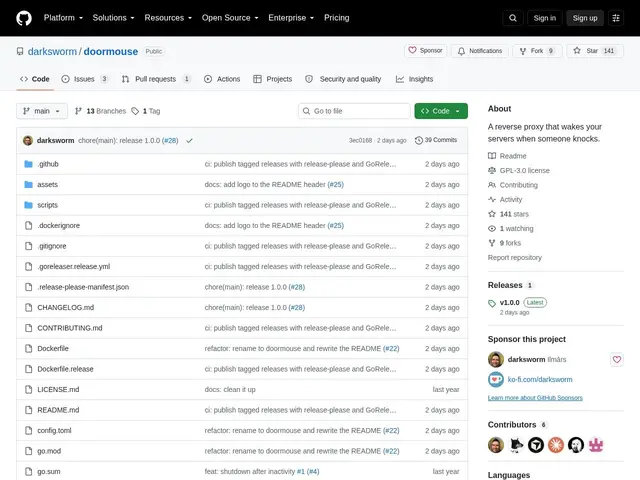
Description
Got a NAS, a GPU box, or a game server sitting at home that's only used a few hours a day but burns power around the clock? Doormouse sits in front of it and puts it to sleep when nobody's asking for it, then wakes it back up the instant someone does, using an old networking trick called Wake-on-LAN.
Doormouse is a Go-based reverse proxy that forwards HTTP and raw TCP traffic to backend machines, health-checks them, and automatically suspends idle servers after a configurable timeout via SSH or HTTP-based shutdown commands. When a new request arrives for a sleeping host, it sends a Wake-on-LAN magic packet, waits for the machine to become healthy, then forwards the connection, all transparently to the client. Open source under GPL-3.0, actively developed.
💬 Our review
The short version: if you're running a homelab and tired of choosing between always-on and wasting power, or manually turning things on, Doormouse automates exactly that trade-off for free.
It's a fairly niche category — most people solve this with ad-hoc scripts or Traefik/Caddy plugins for Wake-on-LAN, which work but require more DIY wiring. Doormouse packages the whole flow, including health checks, WoL, idle shutdown, and graceful connection draining, into one dedicated Go binary, which is the main value-add over rolling your own. Being open source and free, there's no cost trade-off to weigh — the only real question is whether your homelab setup is big enough to make the power savings worth the setup time. For anyone running a NAS or GPU box that idles most of the day, it likely is.
💰 Pricing
📊 Global score
🤖 AI-enriched data
Open source (licence GPL-3.0), aucune version payante
Pros
Automatise tout le cycle veille/réveil
Gère le trafic HTTP et TCP brut
Vérifie l'état de santé avant de router le trafic
Extinction propre des connexions en cours
Gratuit et open source
Cons
Nécessite un matériel compatible Wake-on-LAN
Ajoute un intermédiaire réseau devant vos services
Cas d'usage de niche — rentable seulement pour du matériel à usage occasionnel