A Rust web framework where a component can read straight from your database and update in the browser without you writing a separate API — backed by the team behind Tokio.
github.com
3465 tools found
A Rust web framework where a component can read straight from your database and update in the browser without you writing a separate API — backed by the team behind Tokio.
A proxy that sits between your app and the LLM API, blocking prompt-injection attacks and stripping leaked secrets before they reach the model — with an audit trail for every request.
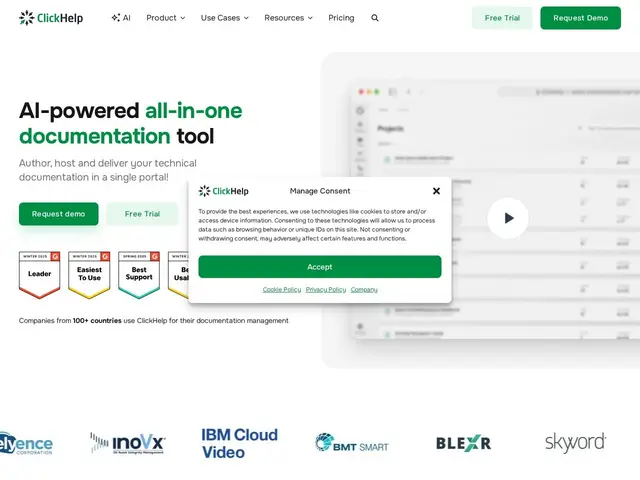
A cloud tool for technical writers to author, host, and publish user manuals and API docs as a proper website — no need to juggle separate authoring software, a web host, and a PDF exporter.
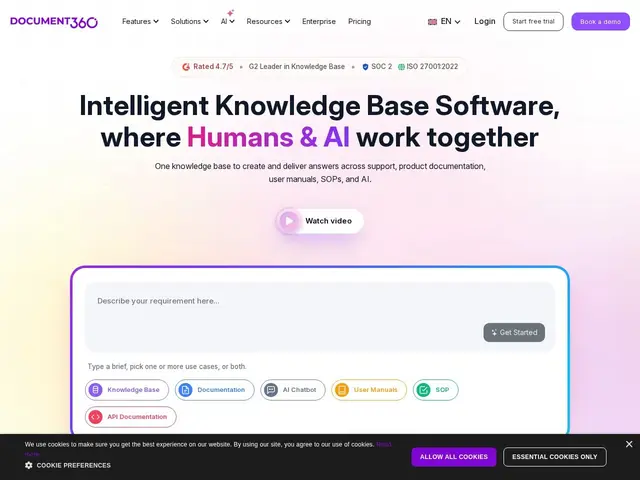
A dedicated home for your product documentation and help center, with an AI layer that lets customers — or even ChatGPT and Claude — ask questions and get answers pulled straight from your docs.
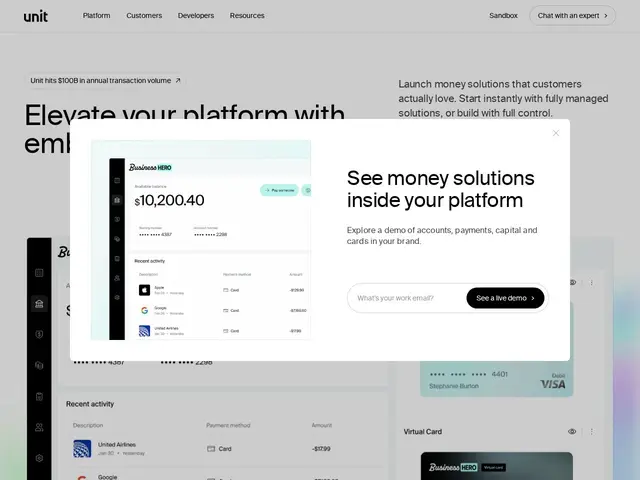
Banking, cards, and lending features you can build directly into your app, offered as either a fast "managed" package or a fully custom API, for companies that want financial features without becoming a bank.
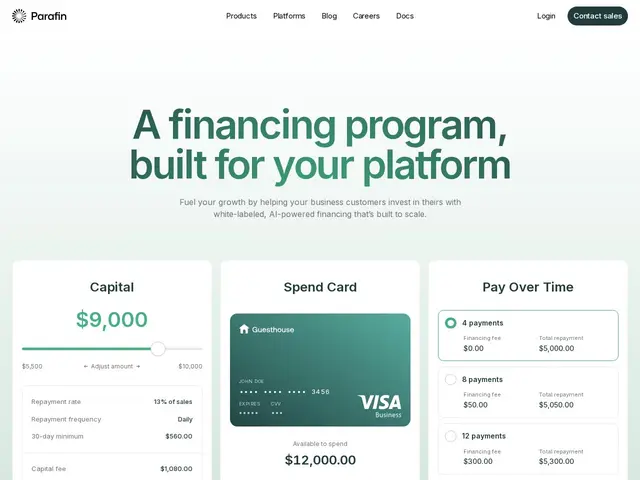
White-labeled financing that big platforms like DoorDash and Amazon quietly offer their merchants — working capital, payment cards, and installment payments — so the merchant never has to leave the platform to get funded.
An API and set of ready-made UI components that let a software platform add invoicing and bill-paying features for its business customers, without building that finance functionality from scratch.
A single API for sending and tracking money across every payment rail — bank wires, ACH, real-time transfers, and stablecoins — instead of building separate integrations for each one.
An API for issuing your own branded payment cards — physical or virtual — so a company can launch a card product without becoming a bank or building card-network infrastructure itself.
A way for software platforms to offer their business customers loans and lines of credit — without becoming a lender themselves — because Kanmon handles the underwriting, funding, and compliance behind an API.
Rented supercomputer power and tooling for teams training their own AI models with reinforcement learning, instead of just calling someone else's finished model through an API.
A free, local-first memory layer that shares your context and preferences across multiple AI coding assistants like Cursor, Claude Code, and Codex, so you stop repeating yourself.
An API for making computers talk and listen in a natural-sounding voice — text-to-speech, transcription, voice cloning, and live translation — built by a team that split off from a well-known French AI lab.
An open-source toolkit for building your own AI coding agents — one API that talks to OpenAI, Anthropic, Google and others, plus a ready-made terminal coding agent, so you're not locked into a single provider.
A free, open-source dashboard for running several AI agents like a small company — giving each one a role, a task list, and a way for a human to check in on what they're actually doing.
A developer platform where an AI agent writes and maintains the browser automation code for you — useful for connecting to services that don't offer an API, like scraping data or automating an old back-office system.
A free scanner that catches a mistake almost every web team makes eventually: accidentally leaving a real API key or database password visible in a website's code where anyone can copy it.
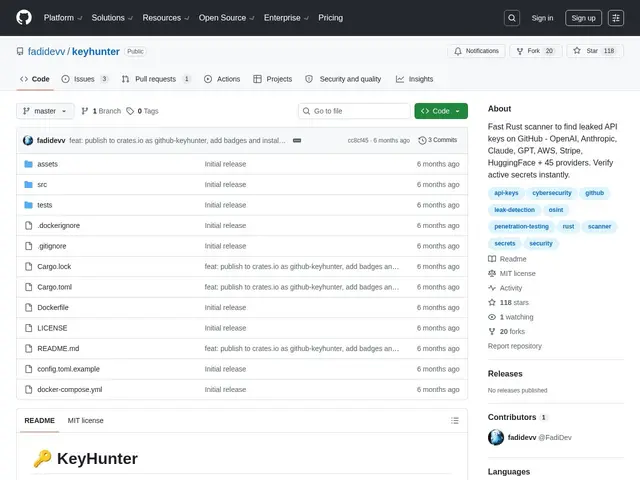
A fast, free command-line tool that searches GitHub for leaked API keys and then actually tests each one to confirm whether it still works — instead of just flagging text that looks like a key.
A free tool that goes through a GitHub repository looking for accidentally-committed passwords, API keys, and sensitive files — the digital equivalent of checking your pockets before publishing.
A free plugin from OpenAI that lets you call on Codex to review your code or hand off a background task without ever leaving Claude Code.