SimpleX Chat
A free messaging app, like WhatsApp or Signal, but designed so it doesn't even know who you are — there's no phone number, username or account ID tied to your identity, just private connections you make with people directly.
🔗 Visit SimpleX Chat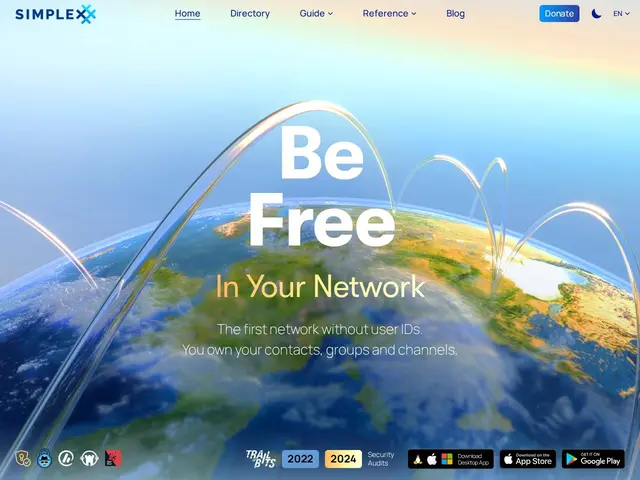
Description
Even privacy-focused messengers like Signal still need some identifier — usually your phone number — to connect you with contacts, which means the app (and anyone who compromises it) can at least see who's talking to whom, even if they can't read the messages. SimpleX Chat removes that identifier entirely: instead of a persistent account, every conversation gets its own private, disposable connection, so there's no central identity to track.
SimpleX Chat is a free, open-source (AGPL-3.0, ~19,000 GitHub stars, launched 2019) messaging platform built in Haskell with native iOS (Swift) and Android (Kotlin) clients, plus desktop and CLI/terminal versions. It uses double-ratchet end-to-end encryption with post-quantum resistance, a decentralized relay network where messages are stored only temporarily, local database encryption with a passphrase, an invitation-link-only contact model to prevent spam, and (from version 6.0) private message routing by default for stronger metadata protection than most competitors, including Signal, Matrix and Session, according to the project's own claims.
💬 Our review
The short version: if you want the strongest available metadata privacy in a messaging app — not just encrypted message content, but no way to even tell who's talking to whom — SimpleX Chat's no-identifier architecture is a genuinely different approach than anything else in this category.
Signal remains the gold standard for most people because of its polish, ubiquity and years of security auditing, but its dependence on phone numbers is a real metadata leak that SimpleX specifically eliminates. The tradeoff is exactly what you'd expect from a less mainstream, more radical privacy design: fewer of your contacts will already be on it, the invitation-link-only model adds friction to adding new contacts, and a smaller user base means less real-world battle-testing than Signal's massive deployment. For genuinely high-stakes privacy needs (journalists, activists, anyone specifically worried about metadata surveillance), it's worth the friction; for everyday messaging with friends and family, Signal's larger network effect probably serves you better in practice.
💰 Pricing
📊 Global score
🤖 AI-enriched data
Entièrement gratuit et open source (licence AGPL-3.0).
Pros
Gratuit, open source, mature (depuis 2019, 19 000+ étoiles)
Aucun identifiant utilisateur persistant — protection de métadonnées supérieure à Signal
Chiffrement de bout en bout avec résistance post-quantique
Disponible sur iOS, Android, desktop et terminal/CLI
Cons
Réseau d'utilisateurs bien plus petit que Signal, moins de contacts déjà présents
Modèle de contact uniquement par lien d'invitation, plus de friction pour ajouter des gens
Moins de recul en audit de sécurité indépendant que Signal
Interface moins polie pour un usage grand public quotidien