InstantDB
A real-time database with built-in auth, storage and permissions — like a modern, open-source Firebase where data lives on the client and syncs instantly across users and devices.
🔗 Visit InstantDB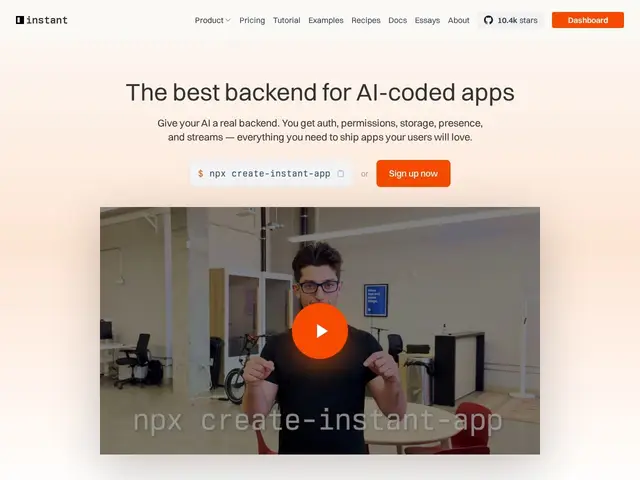
Description
Building an app used to mean wiring up a database, a login system, file storage and real-time updates as separate pieces that all have to talk to each other. InstantDB bundles those into one 'backend in a box': you describe your data, and it handles storing it, syncing it live across everyone using the app, and keeping it available even when someone goes offline.
InstantDB is a client-first real-time database — data lives on the device (IndexedDB on web, AsyncStorage on React Native) with automatic reconciliation, queried through a relational query language (InstaQL) that is typed end-to-end in TypeScript. It ships with authentication (magic-code email plus Google, Apple, GitHub and LinkedIn OAuth), a permissions system inspired by Google's Zanzibar, file storage, presence/multiplayer and integrated Stripe payments. The core is open source (Apache 2.0), and it is frequently pitched as a modern Firebase alternative — particularly well suited to AI-assisted app building where a single tool covers the whole backend.
💬 Our review
The short version: InstantDB collapses the database, auth, permissions, storage and real-time sync into one coherent tool, so a solo developer or small team can ship a multiplayer app without stitching four services together.
What stands out is that it is genuinely local-first and relational at the same time — you get instant optimistic reads and offline support, but you can still express real relationships and permissions rather than the flat documents that made early Firebase painful to model. Being open source (Apache 2.0) is a real advantage over Firebase's proprietary lock-in, and the free tier (unlimited API calls, 1GB storage) is generous enough to launch on. The honest caveats: it is a younger product than Firebase or Supabase, so the ecosystem, third-party integrations and large-scale battle-testing are thinner; the client-first model is a great fit for interactive apps but less so for heavy server-side or analytical workloads; and once your logic is written against InstaQL and its permission model, migrating away is non-trivial. At 30 dollars a month the Pro tier undercuts many managed backends, but compare against Supabase and Convex on the specific features you will actually lean on.
💰 Pricing
📊 Global score
🤖 AI-enriched data
Free: unlimited API + 1GB storage. Pro 30/mo (10GB, then 0.125/GB). Startup 600/mo (250GB). Enterprise custom with SLAs.
Pros
One tool covers database, auth, permissions, storage and real-time sync
Local-first AND relational — instant/offline reads with real relationships
Open source (Apache 2.0), unlike Firebase's proprietary lock-in
Generous free tier (unlimited API calls, 1GB storage) to launch on
Cons
Younger than Firebase/Supabase — thinner ecosystem and large-scale track record
Client-first model suits interactive apps, less so heavy server-side/analytics
Migrating away is non-trivial once logic is tied to InstaQL + its permission model