Structr
Open-source, AI-enabled low-code platform for building data-intensive applications on graph database technology.
🔗 Visit Structr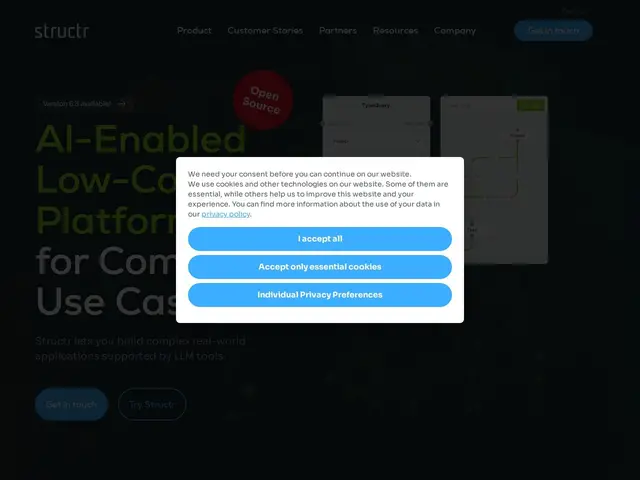
Description
Building a custom internal app usually means choosing between writing everything from scratch (slow, expensive) or a drag-and-drop no-code tool that falls apart once your data gets complicated. Structr sits in between: it lets both developers and non-technical staff build real applications visually, but under the hood it uses a graph database — a way of storing data that's naturally good at handling complex, interconnected relationships (like "this customer belongs to this account, which has these contracts, which reference these documents") without the tangled joins a normal database would need.
Structr is a production-ready, open-source platform (currently v6.3.0) built by a Frankfurt-based team, bundling a schema editor, visual flow engine, page builder, CMS, file management, and security controls into one integrated stack, with native AI/LLM integration for building intelligent applications. It has real enterprise deployments (DHL, Lufthansa, Deutsche Bahn) and primary development has moved to GitLab, with the GitHub repo kept as a mirror.
💬 Our review
The short version: Structr is a serious, battle-tested low-code platform for genuinely complex, data-heavy applications, but its unclear public pricing and moderate learning curve mean it's a better fit for technical teams evaluating a real project than for someone browsing for a quick app builder.
Against mainstream low-code tools like Retool or Bubble, Structr's differentiator is the graph database core, which pays off specifically when your data model is relationship-heavy — most other low-code platforms use a standard relational database and struggle with the same complexity. That's a narrower but real use case. The lack of clear self-serve pricing on the public site (commercial licensing is arranged through Structr GmbH) makes it harder to evaluate quickly than competitors with transparent plans, and being open-source doesn't mean effortless: expect a moderate learning curve even with the visual tooling. Worth a serious look if you have DHL/Lufthansa-scale data complexity; overkill for a simple internal form or dashboard.
💰 Pricing
📊 Global score
🤖 AI-enriched data
Free sandbox; enterprise pricing on request
Pros
Graph database core
Integrated app-building stack
Proven enterprise use
Native AI integration
Cons
Unclear public pricing
Moderate learning curve
Smaller community