PaperTrack
Sends your pitch deck or proposal with page-by-page tracking, so you know exactly what recipients read and for how long.
🔗 Visit PaperTrack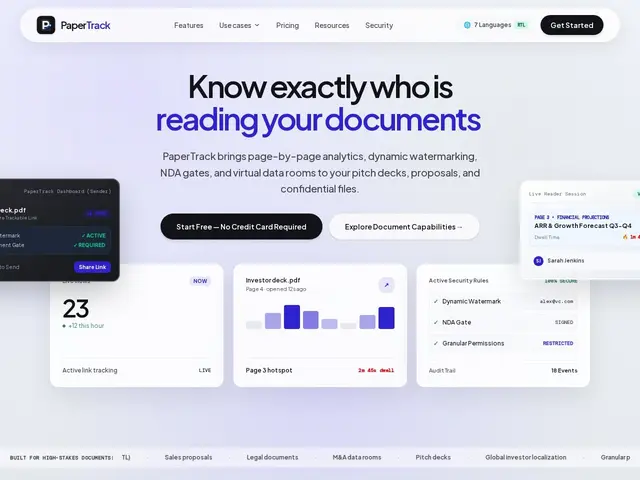
Description
Sending a pitch deck as a PDF attachment means you have no idea if anyone actually opened it, let alone which slide made them stop reading. PaperTrack replaces the attachment with a tracked link, so you get that feedback instead of silence.
PaperTrack is a document-sharing platform built for high-stakes documents like pitch decks, sales proposals, and M&A materials. It gives senders page-by-page reading analytics with live view alerts, engagement heatmaps, and audit trails, plus dynamic watermarking tied to each recipient, NDA signature gates, virtual data rooms with granular permissions, and password-protected, expiring links. It's aimed at founders, sales leaders, legal teams, and investors who need to know how a document is actually being read, not just whether it was sent.
💬 Our review
The short version: if you send pitch decks or proposals and want to know whether the recipient actually read past the executive summary, PaperTrack's page-level analytics and live alerts turn a black-box email attachment into real feedback.
It sits in the same category as DocSend, the long-standing default for VC and sales document tracking, and the comparison largely comes down to price and specific features: PaperTrack's free tier (1 seat, 50 documents, 1GB) is more generous than DocSend's typical free offering, and its NDA-gate and data-room features add legal-document use cases DocSend doesn't emphasize as strongly. Against Papermark, an open-source DocSend alternative, PaperTrack trades self-hosting flexibility for a more complete out-of-the-box feature set (watermarking, NDA gates, data rooms). For a founder or small sales team, the free tier alone likely covers real usage; the paid tiers become worth it once you need multiple seats or dedicated data rooms.
💰 Pricing
📊 Global score
🤖 AI-enriched data
Small gratuit à vie (1 siège, 50 docs, 1GB) ; Medium 15$/mois (annuel) ; Large 39$/mois (annuel, 5 sièges) ; Enterprise sur devis
Pros
plan gratuit à vie plus généreux que DocSend (50 documents, 1GB)
analytics page par page avec alertes de lecture en direct
verrous NDA et salles de données virtuelles intégrés
filigrane dynamique par destinataire
Cons
moins connu et éprouvé que DocSend sur le marché
pas open-source ni auto-hébergeable, contrairement à Papermark
fonctionnalités de collaboration réservées aux plans payants