mcp-proxy
Open-source Go tool that exposes existing REST APIs as MCP (Model Context Protocol) tools for AI assistants like Claude, using only a YAML config file, no code changes to the API.
🔗 Visit mcp-proxy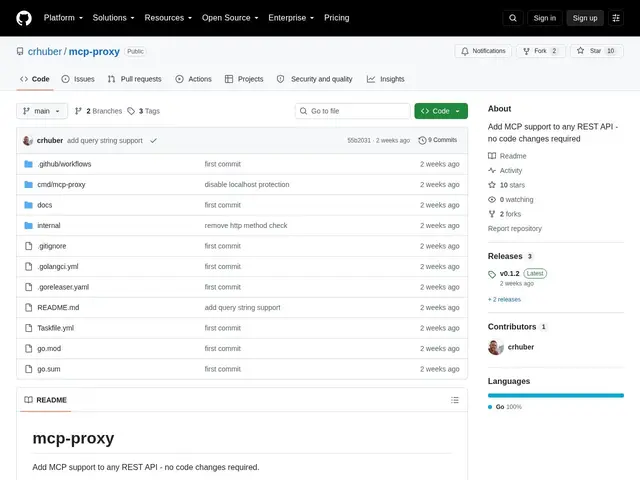
Description
Connecting an internal REST API to an AI assistant like Claude usually means writing a whole adapter service: translating each endpoint into a tool definition, handling auth, formatting responses the model can use. mcp-proxy skips that build step entirely by reading a YAML file that describes your existing endpoints and turning them into MCP tools on the fly.
It supports multiple authentication methods (bearer token, custom header, query parameter, or none), substitutes parameters into paths and query strings, and can trim or select specific fields from JSON responses using JQ-style expressions so the model doesn't get flooded with irrelevant data. Being a small Go binary, it's designed to run as a sidecar next to the API it's proxying, including in Kubernetes deployments, with configurable timeouts and graceful shutdown.
💬 Our review
The short version: mcp-proxy is a handy, no-code way to bolt MCP support onto an existing REST API without writing an adapter service, genuinely useful if you just need something working quickly, but it's a very early, single-maintainer project with no stated license, so check with your legal/compliance process before relying on it beyond a prototype.
Most MCP server tooling requires writing at least a thin wrapper in code; mcp-proxy's YAML-only approach is closer in spirit to API gateway config than to a full MCP SDK, trading flexibility for speed of setup. With only 10 stars and 9 commits, it hasn't been tested across many real-world API shapes yet, and the missing LICENSE file is a real gap, don't assume permissive open-source rights without checking with the maintainer directly.
💰 Pricing
📊 Global score
🤖 AI-enriched data
Open-source, gratuit, licence non précisée
Pros
aucune modification du code de l'API existante nécessaire
configuration simple en YAML, pas de SDK à apprendre
plusieurs méthodes d'authentification supportées
déploiement sidecar compatible Kubernetes
binaire Go léger et performant
Cons
aucune licence explicite dans le dépôt, statut juridique flou
projet très early-stage (10 étoiles, 9 commits)
documentation limitée, pas de site dédié
nécessite une compréhension du protocole MCP en amont