GitFig
Free Figma plugin that syncs design tokens two-way between Figma and GitHub, with branches, pull requests, and rollback.
🔗 Visit GitFig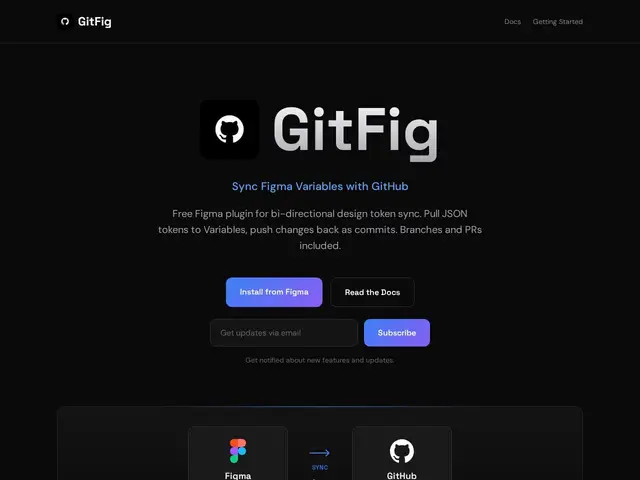
Description
Designers change a color in Figma, developers hardcode a different value in the codebase, and within a few sprints the two have quietly drifted apart — nobody notices until a button looks wrong in production. GitFig exists to close that particular gap between design files and code.
GitFig is a free Figma plugin that keeps design tokens — colors, spacing, typography, and other style variables — synchronized in both directions with a GitHub repository. It checks for changes roughly every 3 seconds, supports common token formats (W3C, Style Dictionary, Tokens Studio), and lets teams work through real Git branches and pull requests rather than a one-off export, so a token change goes through the same review process as a code change. It authenticates via GitHub's Device Flow (no long-lived tokens to manage), keeps a version history with rollback if something breaks, and flags conflicts when both sides change the same token. It's aimed at design systems teams and frontend developers who already treat their component library like a codebase and want Figma variables to actually match what ships, rather than a design system that only lives in Figma and slowly goes stale.
💬 Our review
The short version: GitFig is a narrow, well-executed tool for one specific pain point — keeping Figma design tokens and your GitHub-hosted design system in sync — and it's free, which makes the decision to try it low-risk.
It sits in the same space as Tokens Studio (the more established, broader token-management plugin) and Figma's own Dev Mode variable export, but its specific angle is genuine bidirectional Git workflow — branches, pull requests, conflict warnings — rather than a one-way export or manual copy-paste. The tradeoff is scope: GitFig only handles tokens, not full component code generation or layout logic, so it won't replace tools like Anima or Locofy if what you actually need is Figma-to-React component export. It's best understood as infrastructure plumbing for teams that already have token discipline, not a general design-to-code tool. If your design system is genuinely token-driven and lives in GitHub, it's a sensible free addition; if your 'design system' is a Figma file with inconsistent naming, fix that first — GitFig won't do it for you.
💰 Pricing
📊 Global score
🤖 AI-enriched data
Plugin Figma entièrement gratuit
Pros
Sync bidirectionnelle réelle via branches et pull requests Git
Détection de changement toutes les 3 secondes
Authentification sécurisée par Device Flow GitHub
Historique avec rollback
Cons
Ne gère que les tokens, pas le code des composants
Utile seulement si le design system est déjà structuré en tokens
Pas d'export de composants complets (contrairement à Anima ou Locofy)