Bor
Bor is open-source software that lets organizations define, distribute, and enforce desktop configuration policies across Linux fleets in real time from a central server.
🔗 Visit Bor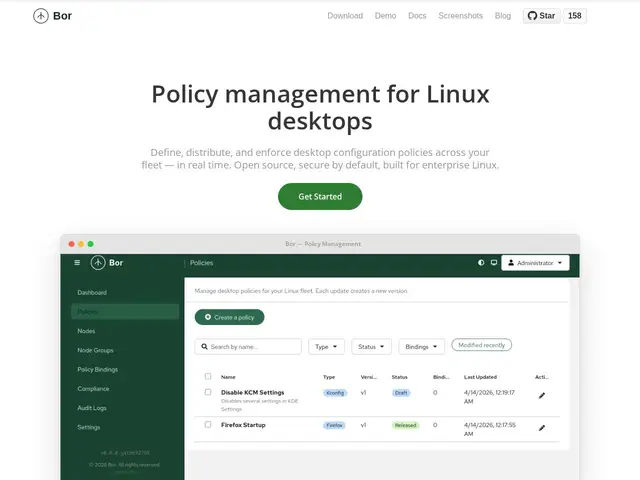
Description
Managing settings across a fleet of company Linux laptops — which browser extensions are allowed, what the default search engine is, which security settings are locked down — is normally either done by hand on every machine or requires expensive enterprise device-management software built mainly for Windows and Mac. Bor is built specifically for Linux fleets: IT teams define a policy once on a central server, and it gets pushed out and enforced in real time on every enrolled machine, similar in spirit to what Group Policy does for Windows or Jamf does for Mac, but for Linux desktops.
Technically, Bor runs as a single server binary backed by PostgreSQL, with lightweight agents on each managed machine communicating over gRPC with delta sync, so only changed policy data gets transmitted rather than the full configuration every time. Communication is secured with mutual TLS and an auto-generated certificate authority. It supports policy types for Firefox, Chrome, KDE/KConfig, dconf, and polkit, integrates with LDAP/Active Directory using Kerberos and WebAuthn for authentication, offers zero-touch enrollment for domain-joined machines, and keeps tamper-evident audit logs for compliance tracking. It's open source and self-hosted, with no managed cloud option or published pricing — you run and maintain it yourself.
💬 Our review
The short version: for organizations running real Linux desktop fleets — not just servers — Bor addresses a genuine gap, since most enterprise device management tooling (Intune, Jamf) treats Linux as an afterthought at best. The gRPC delta-sync architecture and multi-policy-type support (browser policies, KDE, dconf, polkit) suggest a serious, production-minded design rather than a weekend project.
The obvious tradeoff is that this is self-hosted, open-source infrastructure with no managed cloud version and no published pricing model — you're signing up to run and maintain the PostgreSQL-backed server yourself, which requires real DevOps capacity, not something a small team without dedicated IT can just switch on. It's also a very new project (2026), so the ecosystem, documentation maturity, and community support are still forming compared to established, if Linux-weaker, alternatives like Ansible for one-off config management or full MDM suites for organizations that can tolerate weaker Linux support in exchange for a mature single pane of glass.
💰 Pricing
📊 Global score
🤖 AI-enriched data
Gratuit et open-source, aucune tarification publiée — logiciel auto-hébergé (binaire serveur unique + PostgreSQL)
Pros
Conçu spécifiquement pour les flottes de postes Linux, angle mort des outils MDM classiques
Synchronisation delta via gRPC, application des politiques en temps réel
mTLS avec autorité de certification auto-générée, intégration LDAP/AD (Kerberos, WebAuthn)
Logs d'audit infalsifiables pour la conformité
Cons
Aucune version cloud managée, auto-hébergement obligatoire
Projet très récent (2026), écosystème et documentation encore jeunes
Nécessite une réelle capacité DevOps interne pour déployer et maintenir