mabl
AI-native test automation platform that builds, runs and self-heals tests across web, mobile and API applications.
🔗 Visit mabl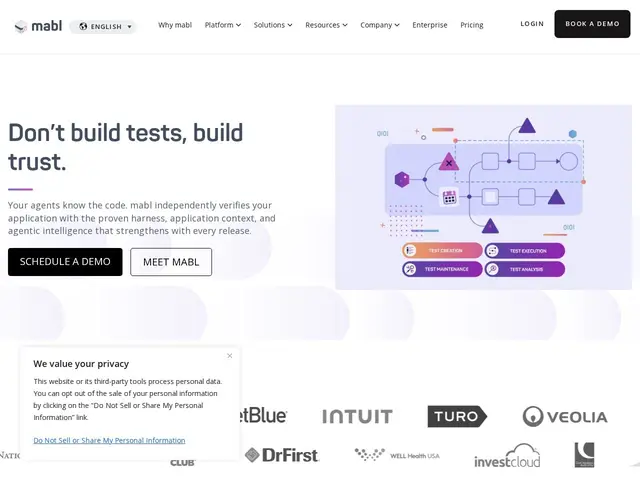
Description
Automated software tests are notoriously fragile: change one button's position on a webpage and a whole suite of tests can break, even though the app itself works fine. mabl uses AI to write tests from how the app actually behaves, and — when the app changes — automatically updates the tests to match instead of making a human fix them one by one.
mabl is an AI-native, agentic testing platform that creates, executes and maintains test coverage across web, mobile and API applications. Its "auto-healing" capability detects when a test breaks because of a legitimate UI change and repairs it automatically, and it covers functional, performance and accessibility testing with CI/CD pipeline integration. It's positioned explicitly around a 2026 problem: AI coding agents now ship code faster than manual QA can keep up with test coverage, so mabl aims to close that gap automatically. Pricing is fully custom/quote-based (no published price list), though every customer gets 500 credits/month for cloud test runs, a 14-day free trial, and optional add-ons like mobile app testing and a dedicated technical account manager. It's SOC 2 Type II compliant.
💬 Our review
The short version: mabl's pitch is that AI-generated code needs AI-generated test coverage to keep up, and its auto-healing tests genuinely cut the maintenance burden that makes most teams abandon test automation within a year.
Test fragility — not test creation — is the real reason automated testing programs fail in practice, so auto-healing that recovers from UI changes without manual fixes addresses the actual bottleneck rather than a superficial one; mabl's claimed 85% reduction in test maintenance and 3x faster release velocity, if representative, would be a meaningful win. Covering web, mobile, API, performance and accessibility testing in one platform also avoids stitching together Playwright plus a separate mobile tool plus a separate a11y scanner. The honest trade-off: pricing is entirely quote-based with nothing published, which makes it hard to compare costs upfront against open-source options like Playwright (free) or lighter competitors, and being a fully managed SaaS platform means no self-hosted option for teams with strict data-residency needs. For teams whose test suites keep breaking on every UI change, mabl's auto-healing is worth evaluating; teams comfortable maintaining their own test scripts may find open-source Playwright or Selenium sufficient at zero licensing cost.
💰 Pricing
📊 Global score
🤖 AI-enriched data
Fully custom/quote-based pricing, no published price list. 14-day free trial. All customers get 500 credits/month for cloud test runs. Optional add-ons: Mobile App Testing, Technical Account Manager.
Pros
Auto-healing tests recover from UI changes without manual fixes
Covers web, mobile, API, performance and accessibility testing in one platform
SOC 2 Type II compliant
Cons
No published pricing — quote-only, hard to budget upfront
Fully managed SaaS, no self-hosted option for data-residency needs